Event link building means getting backlinks by being part of events. You can sponsor them, host them, speak at them, team up with someone to run them, or simply go and write about them. Events create a lot of web pages: sponsor lists, speaker bios, event calendars, news stories, and recap posts. If your brand is involved, many of those pages will link to you.
Most event link building advice stops at “sponsor a conference and ask for a link.” That’s the easy part. The hard part is picking the right events, making sure the link actually shows up, sending it to the right page, staying within Google’s rules on paid links, and knowing if it was worth the money. This guide covers each one in plain steps.
What Is Event Link Building?
Event link building is a way to earn backlinks from websites tied to an event. These links usually come from sponsor pages, speaker profiles, event calendars, news coverage, partner posts, and recaps. Because the event is real, the site already has a reason to mention you. You don’t have to talk them into it.
With a guest post, you have to give the site a reason to link to you. Event link building flips that around. The organizer has to list sponsors anyway. The conference site has to show who’s speaking. The local paper covering a charity run will name the people behind it.
It’s a branch of link acquisition where a real event does the convincing.
Why Event Link Building Works
Event link building works because the links are hard to fake and easy to explain. They come from sites in your industry or your city, your competitors can’t just buy the same ones, and they bring real visitors and brand searches along with them. That mix is what makes Google take them seriously.
- They’re relevant. An industry conference links to companies in that industry. A city event links to local businesses. That kind of match is what makes relevant backlinks worth more than random ones.
- They’re hard to copy. A competitor can buy the same guest posts you bought. They can’t buy your talk at last year’s summit, or the three years you’ve backed the local tech meetup.
- They get your name out. People see your brand next to the topics and people in your field. More of them search for you by name later, and more sites mention you without being asked.
- They come back. Yearly events re-link returning sponsors.
One thing to know upfront: if you pay for a sponsor spot, that link will often carry a sponsored or nofollow tag. That’s normal. The links that pass full value usually come from what happens around the event, like news stories, speaker pages, and recaps.
Events That Earn the Best Backlinks
The best events for event link building are the ones your customers go to and your industry’s websites write about. Conferences, trade shows, webinars, local community events, meetups, awards, and university events can all work. Each one brings different kinds of links, so choose based on who attends first and what links you need second.
| Event type | Where the links come from | Good for | Cost |
|---|---|---|---|
| Industry conferences | Speaker bios, session pages, sponsor pages, trade press | B2B, SaaS, agencies | High to sponsor, low to speak |
| Trade shows | Exhibitor lists, show news, partner posts | Manufacturers, e-commerce | High |
| Webinars and virtual summits | Co-host pages, speaker sites, recording pages | SaaS, education, global brands | Low |
| Local community events | Chamber of commerce, city calendars, local news | Local businesses | Low to medium |
| Meetups and workshops | Organizer sites, member blogs | Startups, developers, niche B2B | Low |
| Awards | Winner and finalist pages, badges | Brands with a good story | Low to enter |
| University events | Student club pages, career fair listings | Tech, finance, hiring brands | Low to medium |
If you run a local business, start with community events. Links from city calendars and local news help the same local rankings that local citations do, so it makes sense to work on both at the same time.
One warning: if you start your own awards, use real judges. Handing a badge to anyone who pays is a link scheme, and Google sees it that way.
5 Ways to Get Event Backlinks
You can get event backlinks in five ways: sponsor an event, host one, speak at one, co-host with a partner, or attend and write about it. Sponsoring is quickest but costs most. Speaking and recaps cost your time. Hosting is the most work but brings the most links.
| Route | Cost | How much control you have | Typical links |
|---|---|---|---|
| Sponsor | Medium to high | High, if it’s in the contract | Sponsor page, emails, recap |
| Host | Medium to high | Full | Listings, press, partners, attendees |
| Speak | Low | Medium | Speaker bio, session page, podcast invites |
| Co-host | Low | Medium | Partner pages, joint posts |
| Attend and write about it | Low | Low | Speakers and organizers sharing your recap |
Sponsor. Treat the link as something you’re paying for, not a favor. Put it in writing. If you sponsor often, add a simple “Events we support” page to your site. Organizers will start coming to you.
Host. Run a meetup, workshop, or yearly summit. Speakers, sponsors, and local press will all link to your event page, and it can keep collecting links for years.
Speak. This is the most overlooked route in event link building. Almost every speaker page links to the speaker’s company. One good talk can also lead to slides, a recording, and podcast invites.
Co-host. Team up with a business that serves the same people but doesn’t compete with you. You each promote it and link to each other.
Attend and write about it. Go to an event and write the best recap of it. Post it within two days, quote each speaker by name, and send each of them a short note with the link. Speakers love sharing good write-ups of their own talks, and that note is what turns a recap into backlinks.
How to Find Event Link Building Opportunities
The quickest way to find event link building opportunities is to look at which events already link to your competitors. After that, use a few Google searches, speaker-call websites, local calendars, and simply ask your clients and partners which events they go to. Keep it all in one spreadsheet.
Start with your competitors
- Put a competitor’s site into Ahrefs Site Explorer and open the backlinks report.
- Search the linking pages for words like sponsor, speaker, summit, meetup, and awards.
- Use Ahrefs Link Intersect with three to five competitors. Any event site that links to two or more of them, but not to you, is worth a closer look.
- Check what kind of link each one got and where it sits on the page. Now you know what a sponsorship really gives you before you spend a cent.
Our Ahrefs backlink checker guide shows where to click.
Then fill in the gaps
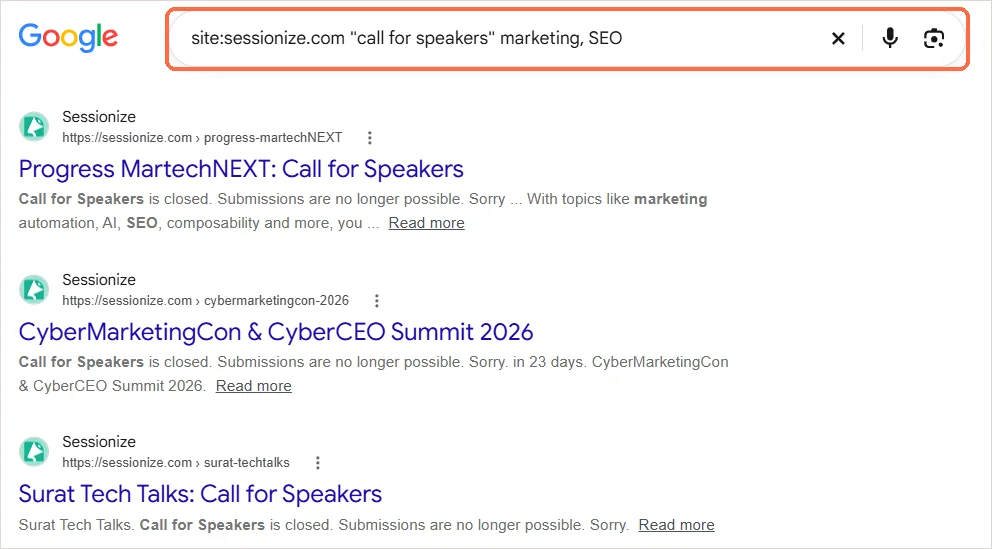
- Google: try
"[industry] summit" "become a sponsor",intitle:"call for speakers" [topic], or"[city]" "our sponsors". - Speaker calls: Sessionize and PaperCall list events looking for speakers, often months in advance.
- Event sites and local calendars: search Eventbrite and Meetup by topic and city, then check your chamber of commerce and nearby universities.
- Your own people: ask your sales team which events your customers attend.
How to Evaluate an Event Before You Commit
Before you spend anything, check who attends, what the page holding your link looks like, if the site gets real traffic, how long old links have stayed up, and what else you get besides the link. Don’t go by domain rating alone. A big site with a messy sponsor page can be worth less than a small, focused one.
Give each event a score out of 100 using this simple sheet:
| What to check | Points | Warning sign |
|---|---|---|
| Are the attendees your customers? | 30 | The crowd isn’t who you sell to |
| Is the link page any good? | 20 | Not indexed, logos only, or 100+ sponsors |
| Does the site get real traffic? | 15 | High DR but almost no visitors |
| Will the link last? | 15 | Last year’s sponsor page is gone |
| What else do you get? | 20 | No leads, talk, or content, just a logo |
Go for anything scoring 70 or more. At 50 to 69, ask for extras like a speaking spot. Below 50, walk away.
Three quick checks help. First, search Google for site: followed by the sponsor page address to see if Google has indexed it. Second, open the page source and make sure sponsor links are normal <a href> links, not just images in a slider (our guide to crawlable links explains why this matters). Third, look up last year’s sponsor page on the Wayback Machine to see if those links survived.
How to Secure the Link
Decide which page you want the link to point to, reach out to the right person early, and get the link details in writing. For sponsorships, that means putting it in the agreement. For talks and news coverage, it means a short, specific pitch. After the event, always check the link is there, because it’s often missing.
Pick the page first
Sponsor links work best pointing to a page made for that event’s audience, or your homepage. Speaker bios should point to your team or author page. Event listings should point to your own event page. If someone mentions your talk, send them to your slides or data. Organizers rarely change links later, so decide first.
Put it in the sponsorship agreement
- The exact link address, plus a short written profile, not just a logo
- A spot on the sponsor page, in attendee emails, and in the recap post
- Your brand name or logo as the clickable link
- The page kept online after the event, not deleted
- A speaking slot or a chance to write something, if possible
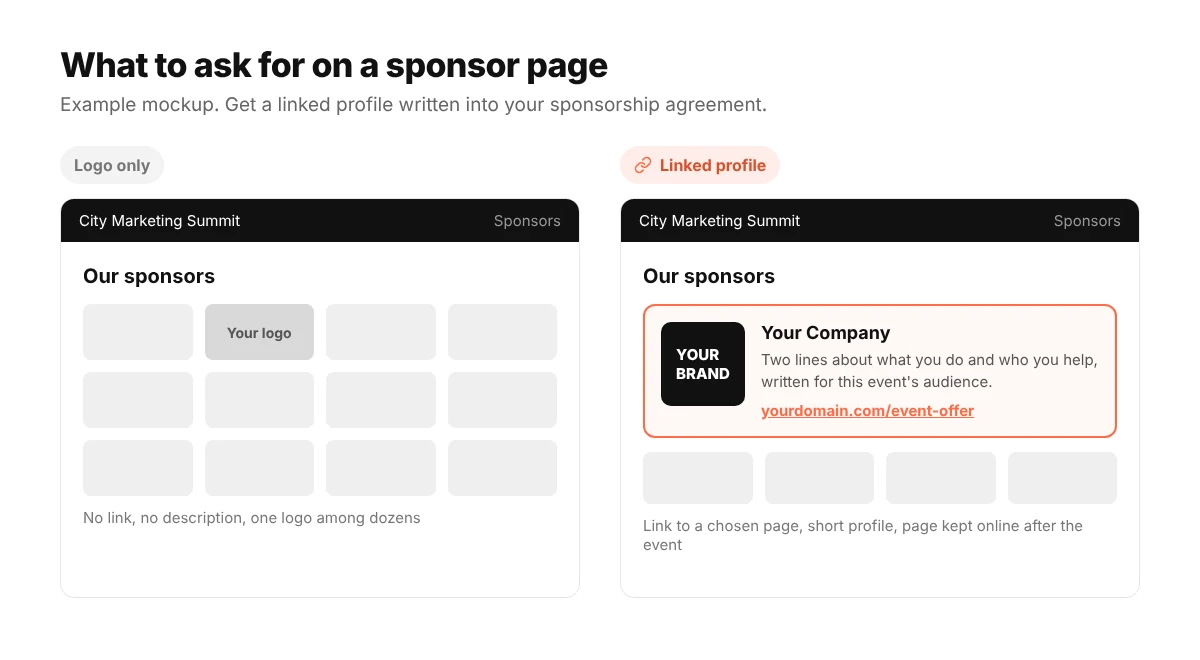
The organizer will probably add rel="sponsored" to a paid link. Let them. The extras above bring the stronger links.
How to land a speaking slot
Speaker bios are some of the best links an event can give you, so treat speaker applications as part of event link building. Pitch a real problem, not your product. Back it up with numbers or a story from your own work, and promise two clear takeaways. Organizers turn down talks that sound like sales pitches.
Subject: Talk idea: [Talk title]
Hi [Name], I’m [Name], [role] at [Company]. I’d love to give a 25-minute talk at [Event Name] about [specific problem], using [data or example] from our own work. People will walk away with [takeaway one] and [takeaway two]. Happy to turn it into a panel or workshop if that fits better. Thanks, [Your name]
Two more emails you’ll need
Subject: Supporting [Event Name] 2027
Hi [Name], a lot of our customers go to [Event Name], so we’d like to support this year’s event. Could you send over your sponsor options? We’re most interested in packages that include a talk or workshop and a short company profile on your site. Thanks, [Your name], [Company]
Subject: Thanks for [Event Name] + one small fix
Hi [Name], thanks again for having us. Quick one: our logo on the sponsor page isn’t linked yet. Could you point it to [URL]? We also wrote up the [session] here: [URL], in case your attendees would like it. Cheers, [Your name]
More tips on emails that get replies are in our guest post outreach guide.
How to Build Links to Your Own Event
When you host, event link building starts with your own page. Send every link to one main event page and make that page worth linking to. Add event schema if it’s in person, give speakers and sponsors something easy to share, and pitch the press with a real story. After the event, publish what came out of it so the links keep coming.
- Keep one address forever. Use
/summit/, not/summit-2026/. That way every link still works next year. Move old editions to pages under it. - Give people something to link to. Add the agenda, speaker bios, who it’s for, photos from past years, and an FAQ. A page that’s just a sign-up form won’t earn links.
- Add event schema for in-person events. Google’s event structured data guide asks for the
name,startDate, and alocationwith an address. Google says Eventbrite saw a 100% jump in its usual yearly growth of search traffic after adding it. Online-only events can’t use it. - Make sharing easy. Send each speaker and sponsor a short blurb with the link in it, plus a badge. With 20 speakers and 8 sponsors, that’s up to 28 sites with a reason to link back.
- Give reporters a story. They cover news, not events. Lead with new data, a well-known speaker, or a local problem the event tackles.
- Publish what the event creates. Survey results, recordings with summaries, and slides make great linkable assets that earn links long after the event.
Event Link Building Timeline: Before, During, and After
Start event link building about 8 to 12 weeks before the event and keep going for around six weeks after. Most links get locked in before the event or earned after it. The event days themselves are mostly for collecting quotes, photos, and data, and for checking that the links you were promised are live.
Before
8 to 12 weeks out
- Score and pick events
- Get link terms in writing
- Publish your event page
- Send sharing kits
- Pitch press and bloggers
During
Event days
- Collect quotes and photos
- Run a quick attendee survey
- Check sponsor links are live
After
Up to 6 weeks after
- Post your recap within a week
- Chase missing links
- Ask for links on mentions
- Recheck at 30, 90, 180 days
Speaker applications are the exception. Many close three to six months ahead, so track them separately.
Link Building for Virtual Events and Webinars
Event link building for online events works through partners and content rather than venues and local news. Your links come from co-hosts, speakers’ own websites, and the recording pages you publish. They cost less and keep working long after the live session ends, but you lose the local SEO boost and Google’s event search features.
The best online setup is a webinar series with a different non-competing partner for each session. Six sessions with six partners can mean six new, relevant sites linking to you.
Give each recording its own page with a written summary, timestamps, and slides. People link to pages they can read and quote, not a bare video. If your event is both in person and online, keep the venue in your schema so you can still show up in Google’s event results.
Event Links and Google’s Rules on Paid Links
If you pay for a link, Google wants it marked with rel="sponsored" or rel="nofollow". A paid sponsor link counts, so it should be marked. Links you earn for free, from news stories, speaker pages, partner posts, and recaps, don’t need any tag. A good event link building campaign gives you both kinds.
| Link | Paid or earned? | Tag it should have |
|---|---|---|
| Sponsor logo or profile you paid for | Paid | sponsored or nofollow |
| Free calendar listing | Added by you | Often ugc or nofollow |
| Speaker bio | Earned | None needed |
| News or trade coverage | Earned | None needed |
| Partner post (no money involved) | Earned | None needed |
| Someone’s recap of the event | Earned | None needed |
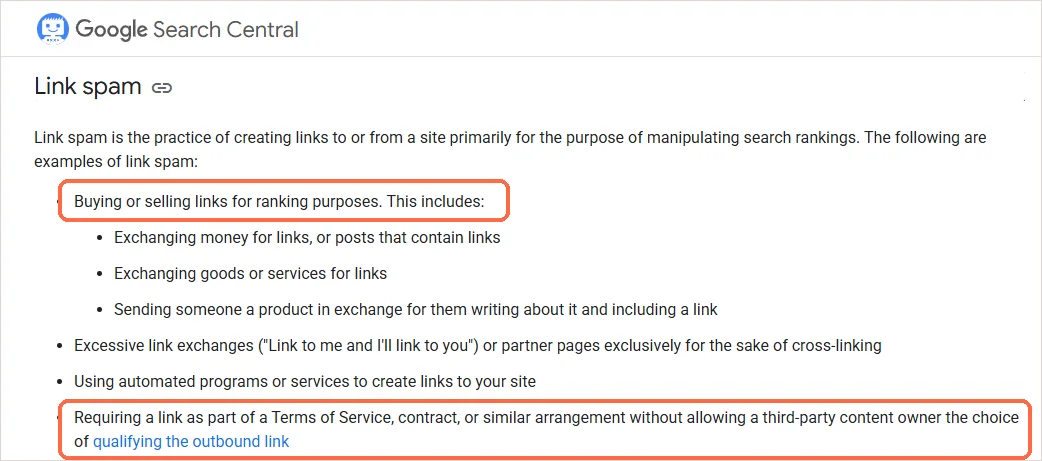
This comes straight from Google’s spam policies. They call buying links to boost rankings link spam, but say paid links are fine when they carry nofollow or sponsored. So don’t push an organizer for a “dofollow” sponsor link. It breaks Google’s rules for them and makes your links look bought.
Marked links still help. Google has treated these tags as hints rather than strict rules since 2020, and they still send visitors your way. Our guide to sponsored links covers the details. On sponsor pages and listings, use your brand name or web address as the link text. Save keyword-rich anchor text for articles, where it reads naturally.
How Much Does Event Link Building Cost?
Event link building can cost as little as a ticket if you’re speaking or writing a recap, or thousands for a big sponsorship. There’s no set price for sponsorships, so compare events by cost per link instead. Take what you spent, subtract the value of any leads or other benefits, and divide by the number of good links you got.
A made-up example: You spend $3,000 on a local sponsorship. The leads you get are worth about $1,500 to you. You end up with four good links. So each link cost you ($3,000 − $1,500) ÷ 4 = $375. A vetted guest post with us costs about $69 to $389. If an event costs more per link than that, it needs to pay off in other ways, like brand awareness, leads, or new contacts.
On a small budget, start with speaking, co-hosting, and recaps. Add local sponsorships next. Pay for big conferences only when the attendees are your buyers and the deal includes a talk. And if you need links in the next two weeks, or don’t have a good page for them to point to yet, events aren’t the right fit right now.
How to Measure Event Link Building Results
Measure event link building on three things: the links themselves, the traffic and visibility they bring, and the business results. Write down where you stand a week before you start, then check again 30, 90, and 180 days after the event. That shows you which events were worth it.
| What to track | Where to find it |
|---|---|
| Links you got, and if they’re still live | Your spreadsheet, checked against the real pages |
| New websites linking to you | Ahrefs or Semrush, filtered by date |
| Visitors from those links | GA4, under Traffic acquisition |
| People searching your brand name | Google Search Console |
| Rankings of the pages you linked to | Your rank tracker or Search Console |
| Sign-ups and leads | GA4 key events and your CRM |
Add UTM tags only to links you control, like sponsor pages. Event pages get redesigned and deleted a lot, so recheck your links on schedule, or use backlink monitoring tools to get alerts. If a news story or recap mentions you without a link, send a friendly note asking them to add one. This is known as link reclamation.
Common Event Link Building Mistakes to Avoid
Most wasted event link building budgets come down to a few simple mistakes: paying for a logo with no link agreed, picking events by domain rating instead of audience, using dated web addresses, starting too late, and not following up. Each one leads to links that never show up, don’t help, or disappear within a year.
- No link in the contract. Agree on the link, the profile text, and how long the page stays up before you pay.
- Picking events by DR. A small event your buyers attend beats a big one they skip.
- Sending every link to the homepage. Point links at the page you actually want to rank.
- Dated event addresses. Use one address that stays the same every year.
- Starting six weeks out. Start 8 to 12 weeks ahead, and earlier for speaker applications.
- Keywords as sponsor link text. Use your brand name or logo instead.
- Fake events or pay-to-win awards. Google treats these as link spam.
- No follow-up. Chase missing links and unlinked mentions within a week.
Example: A 90-Day Event Link Building Plan
Here’s how a B2B software company could spend three months on event link building using three routes together: sponsoring a regional conference, speaking at it, and running a webinar series with partners. It’s a sample plan, not a real case study, but it shows how each step sets up the next one.
| Weeks | What to do | Links you’re aiming for |
|---|---|---|
| 1 to 2 | Study competitor backlinks and score your shortlist | None yet |
| 3 to 4 | Apply to speak and agree sponsor link terms in writing | None yet |
| 5 to 8 | Sign the sponsorship, line up webinar partners, send sharing kits | Sponsor profile, partner pages |
| 9 to 10 | Run the first webinar, give your talk, collect survey answers | Speaker bio, session page, partner shares |
| 11 to 12 | Post your recap and survey results, pitch the data to trade press | News mentions, recap links |
| 13 | Chase missing links, check everything, work out cost per link | Recovered links, plan for next quarter |
Quick event link building checklist
- Find events through competitor backlinks and score them
- Choose the page each link should point to before you reach out
- Get link details in writing for every sponsorship
- Apply to speak three to six months ahead
- Send sharing kits and pitch the press with a real story
- Post your recap and data within a week
- Chase missing links and recheck at 30, 90, and 180 days
Each step feeds the next: the sponsorship gets you a talk, the talk gets you data, and the data gets reporters interested. That chain is where most event link building wins come from.
Event link building works best as one part of a bigger link building plan, alongside regular editorial links. If you’d rather have someone else handle the outreach, that’s what our managed link building team does.
Frequently Asked Questions About Event Link Building
What is event link building in SEO?
It’s getting backlinks by taking part in events: sponsoring, hosting, speaking, co-hosting, or writing about them. The links come from sponsor pages, speaker bios, event listings, news stories, and recaps.
Are event backlinks dofollow?
Paid sponsor links should be marked rel=”sponsored” or rel=”nofollow”. Links you earn for free, like speaker bios, news stories, partner posts, and recaps, are usually normal followed links.
Do sponsored event links still help SEO?
Yes, just not directly. Google treats the tags as hints, and the links still bring visitors, get your name seen, and often lead to news coverage with stronger links.
How early should I start event link building?
Start 8 to 12 weeks before the event for sponsorships, listings, and press. For speaking, apply three to six months ahead. Keep following up for about six weeks after.
Can small businesses do event link building on a small budget?
Yes. Sponsor a local team or charity run, speak at local meetups, run a free workshop with a nearby business, and write up community events you attend.
Can virtual events earn backlinks?
Yes. Webinars earn links from co-hosts, speakers’ websites, and the recording pages you publish. They just can’t show up in Google’s event search results if they’re online only.
Where should event backlinks point?
Point sponsor links to an event landing page or your homepage, speaker bios to your team or author page, and listings to your own event page. Mentions of your talk should point to your slides, recording, or data.
Is event link building white hat?
Yes, as long as the event is real and paid links are marked. It becomes a link scheme when the event only exists to sell links.
