
Sponsored links are links placed as part of a paid promotion, advertising arrangement, sponsorship, or other commercial relationship. They can appear in sponsored blog posts, paid reviews, influencer campaigns, affiliate content, native advertising, and other forms of sponsored content.
Because paid links can create confusion about whether a link was earned naturally or placed commercially, search engines provide link attributes that help website owners identify the relationship. The rel=”sponsored” attribute is specifically designed for links created as part of advertisements, sponsorships, or other paid arrangements.
Understanding sponsored links is important for businesses, publishers, marketers, and SEO professionals. Using the correct link attribute helps search engines understand the nature of a link and allows businesses to benefit from paid marketing activities without relying on manipulative tactics designed to influence rankings.
Sponsored links can still generate valuable referral traffic, brand awareness, leads, and conversions. However, they should be part of a broader digital marketing and SEO strategy that also includes high-quality content, editorial backlinks, digital PR, internal linking, and other legitimate link-building activities.
Table of Contents
What Are Sponsored Links?
Sponsored links are links included in content or advertising because of a commercial relationship between the website placing the link and the business being promoted.
For example, a company may pay a publisher to create a sponsored article about its software. The article may include a link to the company’s website. Because the link is part of a paid arrangement, it should be clearly identified as sponsored.
Common examples include:
- A paid article on an industry website
- A sponsored blog post
- A paid product review
- An influencer campaign
- An affiliate partnership
- A sponsored newsletter
- A native advertising placement
- A paid brand mention
- A sponsored event or campaign
The key difference between a sponsored link and an editorial backlink is how the link was acquired.
An editorial backlink is typically included because a publisher independently believes a page, brand, or resource is valuable to its audience. A sponsored link exists because of a commercial arrangement, payment, sponsorship, or similar business relationship.
For example, imagine a marketing website publishes an independent article about SEO tools and links to a company because the editor considers its guide useful. That is an editorial link.
Now imagine a software company pays the website to publish promotional content that includes a link to its product page. That link is part of a commercial arrangement and should be treated accordingly.
Sponsored links are not automatically bad. Paid advertising and sponsorships are legitimate marketing activities. The important issue is transparency and using the correct link attributes when necessary.
What Does rel=”sponsored” Mean?
rel=”sponsored” is an HTML link attribute used to identify links created as part of advertisements, sponsorships, or other paid arrangements.
A basic sponsored link may look like this:
<a href=”https://example.com” rel=”sponsored”>Visit Example</a>
The attribute tells search engines that the link is associated with a commercial relationship.
You may also see multiple attributes used together. For example:
<a href=”https://example.com” rel=”sponsored nofollow”>Visit Example</a>
The rel=”sponsored” attribute is particularly relevant when a link is placed in exchange for payment or sponsorship. It helps distinguish paid links from links that were included naturally by an editor or website owner.
When should you use rel=”sponsored”?
Use it when a link is part of a paid or commercial relationship, such as:
- Advertisements
- Sponsored articles
- Paid placements
- Affiliate links
- Paid product reviews
- Influencer campaigns
- Commercial partnerships involving links
The goal is not to prevent users from clicking the link. A sponsored link can still send valuable visitors to your website. The attribute simply provides additional information about the relationship behind the link.
Businesses should also ensure that sponsored content is clearly disclosed to readers where required by applicable advertising and consumer protection rules. The link attribute and the visible disclosure serve different purposes: one helps describe the link relationship to search engines, while the other helps readers understand that the content is sponsored.
Sponsored Links vs Nofollow vs UGC
Google supports several rel values that help website owners describe different types of links.
| Attribute | Main Purpose | Common Use | SEO Consideration |
| rel=”sponsored” | Identifies paid or commercial links | Ads, sponsorships, paid placements | Helps identify commercial relationships |
| rel=”nofollow” | Indicates that a link should not be treated as a typical endorsement | When the publisher does not want to associate with or endorse the linked page | Can still provide traffic and visibility |
| rel=”ugc” | Identifies user-generated content links | Comments, forum posts, community content | Helps distinguish user-created links |
A website can also combine attributes when appropriate.
For example:
<a href=”https://example.com” rel=”sponsored nofollow”>Sponsored Resource</a>
The correct attribute depends on the reason the link exists.
Sponsored links are used for paid or commercial relationships.
Nofollow links can be used when a publisher does not want to signal a typical editorial endorsement.
UGC links identify links created by users, such as links in comments or forum discussions.
These attributes help search engines better understand the context and relationship behind links. Website owners should avoid choosing attributes simply because they believe one will produce a better ranking outcome. The attribute should accurately describe the link.
Do Sponsored Links Help SEO?
Sponsored links can support SEO indirectly, but they should not be treated as a shortcut for manipulating search rankings.
The direct SEO value of a sponsored link depends on how search engines interpret and process the link. Paid links should be properly identified, and businesses should not purchase links specifically to manipulate ranking signals.
However, sponsored links can still provide meaningful marketing and SEO-related benefits.
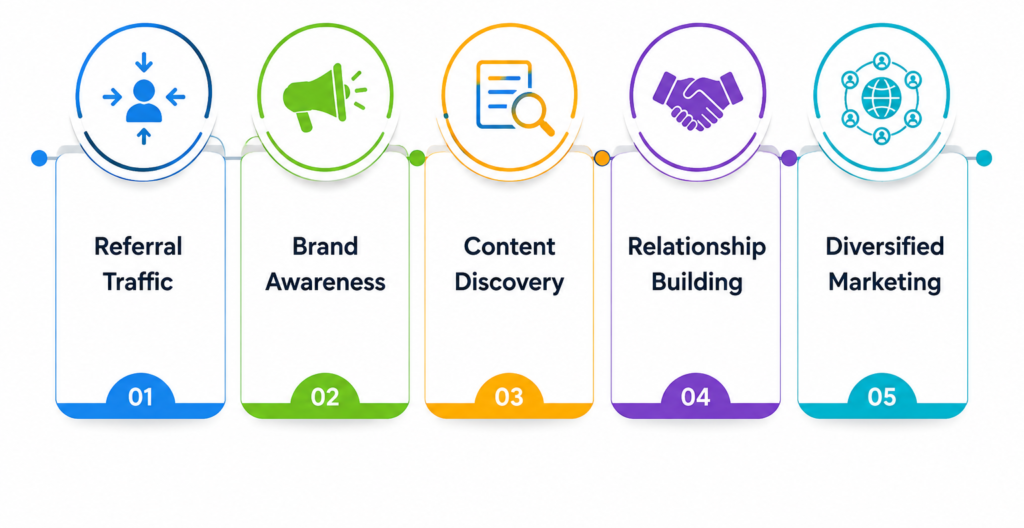
Referral traffic
A sponsored link on a relevant website can send visitors directly to your business. If the publisher has an audience that matches your target market, the traffic may generate leads, sign-ups, sales, or other valuable actions.
For example, a SaaS company featured in a sponsored article on a respected technology website may attract visitors who are actively researching software solutions.
Brand awareness
Paid placements can introduce your business to audiences that may not discover it through search engines alone. Repeated exposure across relevant publications can help build familiarity and brand recognition.
Content discovery
Sponsored promotion can help more people discover your guides, research, tools, and other resources. Once your content becomes visible to more readers, journalists, bloggers, and industry professionals may find it and reference it independently.
This can create opportunities for natural editorial backlinks.
Relationship building
Commercial partnerships can sometimes lead to longer-term relationships with publishers, creators, industry organizations, and businesses. These relationships may create opportunities for interviews, collaborations, events, research, and other forms of legitimate exposure.
Diversified marketing
A strong SEO strategy should not depend entirely on organic search. Sponsored campaigns can support content distribution while other activities focus on earning editorial links, improving technical SEO, publishing useful content, and building brand authority.
The important distinction is that sponsored links should support a broader strategy rather than replace organic link earning.
Are Sponsored Links Bad?
Sponsored links are not automatically bad. The problem arises when businesses purchase links specifically to manipulate search rankings or participate in schemes designed to pass ranking signals unnaturally.
Paid advertising itself is a legitimate marketing activity. Businesses regularly pay for advertisements, sponsorships, influencer campaigns, and promotional content.
The risk comes from confusing advertising with editorial endorsement.
For example, a business may pay a website to publish a promotional article and then attempt to link appear as though it was an independent editorial recommendation. This can create problems if the commercial relationship is not properly handled.
Sponsored links are generally appropriate when:
- The commercial relationship is legitimate
- Sponsored content is clearly identified where required
- The link uses an appropriate attribute
- The placement provides value to the audience
- The campaign is not designed solely to manipulate rankings
Potential problems include:
- Buying links specifically for PageRank
- Participating in link schemes
- Publishing low-quality sponsored content at scale
- Using irrelevant websites solely for links
- Hiding commercial relationships
- Creating excessive paid links with no real audience value
The safest approach is to focus on the actual marketing value of the campaign. Would the placement reach a relevant audience? Does the content provide useful information? Is the relationship transparent? Would you still consider the placement valuable if search engines did not count the link as a ranking signal?
If the answer is yes, the campaign is more likely to be built around legitimate marketing value rather than manipulation.
When Should You Use Sponsored Links?
Sponsored links can be useful in several marketing situations.
Sponsored blog posts
A business may pay a publisher to create or publish content related to its product, service, or industry. The article may include links to relevant pages on the company’s website.
The content should provide genuine value rather than simply repeat promotional messaging.
Influencer collaborations
Influencers may promote products or services through blogs, videos, social media, or newsletters. If the campaign includes links as part of a paid partnership, the commercial relationship should be handled transparently.
Paid reviews
A company may sponsor a product review or demonstration. The content should clearly communicate the nature of the relationship, and the link should be treated appropriately.
Affiliate partnerships
Affiliate marketing involves compensation based on referrals, sales, or other actions. Affiliate links are commercial links and should be handled using suitable link attributes.
Native advertising
Native ads are designed to fit naturally within the surrounding content or platform experience. Because they may look similar to editorial content, clear disclosure is especially important.
Sponsored events and partnerships
Businesses may sponsor conferences, industry events, webinars, or professional organizations. Links from related sponsorship pages can help people discover the business and its resources.
The focus should always be on reaching the right audience rather than collecting the highest possible number of paid links.
Common Sponsored Link Mistakes
Missing rel=”sponsored”
One of the most common technical mistakes is failing to identify a paid link correctly. If a link exists because of sponsorship or payment, review whether rel=”sponsored” is appropriate.
Buying links specifically to manipulate rankings
Purchasing links solely because you want to influence ranking signals creates unnecessary SEO risk. Paid placements should be evaluated for their audience, relevance, and marketing value.
Overusing sponsored links
A large number of paid placements across unrelated websites can make a campaign look unnatural and waste marketing resources. Quality and relevance should guide your decisions.
Ignoring relevance
A sponsored link on a website with no connection to your audience may generate little traffic or business value. A smaller, highly relevant website can often be more useful than a large but unrelated publication.
Working with low-quality websites
Some websites exist primarily to sell links or publish large volumes of low-quality sponsored content. Before investing in a placement, review the site’s content quality, audience, publishing standards, and overall reputation.
Failing to disclose sponsorships
Readers should be able to understand when content has a commercial relationship. Clear disclosure is an important part of responsible sponsored content.
Using the same anchor text repeatedly
Repeatedly using exact-match commercial keywords in paid placements can make a link profile look unnatural. Anchor text should be descriptive and appropriate for the content.
Ignoring the landing page
Even a high-visibility sponsored placement cannot compensate for a poor destination page. Make sure visitors land on a useful, fast, relevant page that clearly delivers on the promise of the content.
Best Practices for Sponsored Links
A responsible sponsored link strategy should focus on relevance, transparency, and user value.
Choose relevant websites. Select publishers whose audience is genuinely interested in your products, services, or industry.
Prioritize quality over quantity. A few relevant placements can produce more meaningful traffic and brand exposure than dozens of low-quality links.
Disclose sponsorships. Make commercial relationships clear to readers in accordance with applicable rules and platform requirements.
Use appropriate link attributes. Review whether rel=”sponsored” is appropriate for links created through paid relationships.
Create useful sponsored content. Avoid producing articles that exist only to place a link. Content should inform, educate, or help the audience.
Use natural anchor text. Write links for users rather than forcing exact-match keywords.
Mix marketing channels. Combine sponsored promotion with content marketing, digital PR, editorial outreach, guest posting, and other legitimate SEO activities.
Measure business outcomes. Track referral traffic, conversions, engagement, brand visibility, and lead quality instead of focusing only on link counts.
Review publishers carefully. Look at topical relevance, content quality, audience engagement, traffic patterns, and editorial standards before accepting a placement.
Think beyond rankings. A sponsored link can be valuable even when its primary benefit is traffic, visibility, or brand awareness.
Sponsored Links vs Editorial Links
Sponsored and editorial links serve different purposes.
| Factor | Sponsored Links | Editorial Links |
| Cost | Usually involve payment or commercial value | Usually earned naturally |
| Trust | Depends on transparency and publisher credibility | Often viewed as independent recommendations |
| SEO value | Should not be used to manipulate ranking signals | Can contribute to organic authority when naturally earned |
| Traffic | Can be strong when placed on relevant websites | Can be strong when placed in relevant content |
| Sustainability | Depends on continued campaigns and relationships | Can continue generating value after publication |
| Risk | Higher when used for ranking manipulation | Generally lower when genuinely editorial |
| Primary goal | Promotion, visibility, and audience reach | Independent recommendation and reference |
Editorial backlinks generally provide stronger long-term SEO value because they are earned based on the usefulness or relevance of content.
For example, a journalist may independently link to an original study because it supports a news story. A blogger may reference a detailed guide because it provides useful information to readers. These links are editorial decisions.
Sponsored links can still support marketing goals. They may help businesses reach specific audiences, promote content, generate referral traffic, and build brand awareness.
The two strategies should not be viewed as direct replacements. A balanced marketing strategy may use sponsored promotion to increase visibility while using content creation, digital PR, and outreach to earn editorial links over time.
How BrimCove Helps Businesses Build a Natural Backlink Profile
A strong backlink profile should reflect a variety of legitimate marketing and content activities rather than relying on one type of link.
BrimCove approaches link building by combining strategies such as editorial outreach, digital PR, guest posting, resource link building, and strategic link-building services based on a business’s goals and industry.
Editorial outreach focuses on identifying relevant publishers and presenting useful content or resources that may genuinely benefit their audiences.
Digital PR helps businesses create research, insights, data, and stories that can attract attention from journalists and industry publications.
Guest posting can help brands contribute valuable content to relevant websites while building industry visibility and relationships.
Resource link building focuses on finding pages where a genuinely useful guide, tool, study, or resource may improve the existing content.
The objective is not to collect random backlinks. A sustainable strategy focuses on relevance, quality, content value, and long-term authority.
Businesses can also combine professional link-building services with their own content marketing, social media promotion, partnerships, and public relations efforts. This creates a broader approach to visibility instead of depending on paid placements alone.
Frequently Asked Questions
Are sponsored links good for SEO?
Sponsored links can support SEO indirectly through referral traffic, brand visibility, content discovery, and opportunities to earn natural editorial backlinks. However, paid links should not be purchased specifically to manipulate search rankings. Sponsored links are most valuable when they support legitimate marketing goals and reach a relevant audience.
Do sponsored links pass PageRank?
Sponsored links should not be used as a method for passing ranking signals through paid placements. The purpose of the rel=”sponsored” attribute is to identify links created through advertising, sponsorship, or other commercial relationships. Paid links should be handled according to search engine guidelines and should not be purchased solely to manipulate rankings.
What is rel=”sponsored”?
rel=”sponsored” is an HTML link attribute used to identify links associated with advertisements, sponsorships, or other paid relationships. A typical example is <a href=”https://example.com” rel=”sponsored”>Example</a>.
Should I use sponsored or nofollow?
The appropriate attribute depends on the relationship behind the link. Use rel=”sponsored” for links created through paid or commercial arrangements. rel=”nofollow” may be appropriate in situations where a publisher does not want to associate with or endorse a linked page. The attributes can also be combined when appropriate.
Can sponsored links increase traffic?
Yes. A sponsored link placed on a relevant website can send qualified referral traffic to your website. The amount of traffic depends on the publisher’s audience, the placement, the content, and how relevant the offer is to readers.
Are sponsored links safe?
Sponsored links can be part of a legitimate marketing strategy when the commercial relationship is handled transparently and the links are not purchased solely to manipulate search rankings. Businesses should avoid link schemes, low-quality websites, and campaigns focused only on acquiring ranking signals.
What is the difference between sponsored links and paid links?
The terms are often used similarly because both involve a commercial relationship. A paid link is generally a link acquired through payment or another form of compensation. rel=”sponsored” is the link attribute used to identify links associated with advertising, sponsorships, or similar paid relationships.
Can sponsored content rank in Google?
Sponsored content can potentially appear in search results if it provides useful information and meets search engine quality requirements. However, the fact that content is sponsored does not guarantee rankings. Content quality, relevance, technical SEO, competition, and many other factors influence search visibility.
Are sponsored links better than editorial backlinks?
Not necessarily. Editorial backlinks are generally stronger from an organic authority perspective because they are independently earned. Sponsored links can still be valuable for traffic, brand exposure, and content promotion. The best strategy depends on the campaign’s goals.
Should businesses use sponsored links in their SEO strategy?
Businesses can use sponsored links as part of a broader marketing strategy. They should combine sponsored promotion with useful content, editorial link earning, digital PR, technical SEO, and other activities that build long-term authority.
Conclusion
Sponsored links are links created as part of advertising, sponsorships, affiliate relationships, paid content, or other commercial arrangements. The rel=”sponsored” attribute helps identify these relationships and provides search engines with additional context about the link.
Sponsored links should not be treated as a shortcut for manipulating search rankings. Their strongest value often comes from referral traffic, brand awareness, content discovery, audience reach, and the opportunity to introduce useful resources to people who may later reference them naturally.
The most effective approach is to:
- Choose relevant and reputable publishers
- Create useful sponsored content
- Use appropriate link attributes
- Disclose commercial relationships
- Avoid buying links solely for ranking manipulation
- Measure traffic, engagement, leads, and conversions
- Combine sponsored campaigns with editorial link building and digital PR
A healthy backlink strategy is built on more than one tactic. Sponsored links can support marketing goals, while editorial outreach, guest posting, resource link building, and digital PR help businesses earn genuine authority over time.
Need help building a powerful backlink strategy? Explore BrimCove’s professional link-building services.
