Backlinks remain one of the strongest ranking signals in SEO, but they are also fragile. A high-quality link today can disappear tomorrow because of a site redesign, a content update, or a webmaster’s decision. Even worse, toxic or spammy links can quietly damage your rankings without you noticing.
This is exactly why backlink monitoring tools have become essential for anyone serious about SEO. These tools continuously track your backlinks, alert you to changes, detect toxic links, and help you protect your hard-earned rankings.
In this complete 2026 guide, you’ll learn what backlink monitoring tools are, why they matter, the key features to look for, a detailed comparison of the best tools, how to choose the right one for your needs, and a practical step-by-step workflow to monitor backlinks effectively. Whether you’re a beginner, blogger, affiliate marketer, or SEO professional, this guide will help you make an informed decision and use the tools to their full potential.
Table of Contents
What are backlink monitoring tools?
Backlink monitoring tools are specialized SEO software that continuously track the backlinks pointing to your website (and often to your competitors’ sites as well).
Unlike a simple backlink checker that gives you a one-time snapshot of your link profile, a monitoring tool works 24/7. It scans the web regularly, detects when new links appear, when existing links are lost or changed, and flags potentially harmful or toxic links.
The best backlink monitoring tools also provide alerts via email or dashboard notifications, detailed reports, anchor text analysis, toxicity scoring, and competitor insights. They turn raw backlink data into actionable intelligence that helps you protect your rankings and make smarter link-building decisions.
In simple terms, a backlink checker tells you what your link profile looks like today. A backlink monitoring tool tells you how it changes over time and warns you before problems hurt your SEO.
Backlink monitoring has evolved significantly. In the early days of SEO, a one-time backlink check was enough. Today, with frequent algorithm updates and increasingly sophisticated spam detection, continuous monitoring is necessary to stay safe and competitive. Without it, you risk losing valuable links or suffering from toxic links that drag down your rankings.
Many website owners only check their backlinks once or twice a year, or when they notice a traffic drop. By then, the damage may already be done. A good monitoring tool prevents this by giving you early warning signs and allowing you to act quickly.
The importance of continuous monitoring cannot be overstated. Search engines like Google update their algorithms frequently, and what was a safe link yesterday can become toxic tomorrow. Monitoring tools act as your early warning system, helping you stay ahead of potential problems before they impact your traffic and rankings.
Why backlink monitoring is important
Backlinks are not static. They can disappear, change from dofollow to nofollow, or become toxic overnight. Without monitoring, you might never know when valuable links are lost or when harmful ones appear.
Here are the main reasons backlink monitoring is critical in 2026:
- Detect lost or broken backlinks — High-quality links can vanish due to site redesigns, content updates, or webmaster decisions. Monitoring helps you spot these quickly and attempt recovery before the traffic impact becomes noticeable.
- Identify spam or toxic links — Low-quality or spammy links can trigger Google penalties or algorithmic demotions. Early detection allows you to disavow them before damage occurs.
- Track SEO performance — Monitoring shows how your link profile evolves and helps you measure the impact of your link-building efforts over time.
- Competitor analysis — Seeing where your competitors are gaining or losing links gives you strategic insights for your own campaigns and helps you stay ahead.
A real-world example: A mid-sized e-commerce site lost several high-authority links after a supplier updated their resource page. Because they had monitoring in place, they noticed the drop within days, reached out, and recovered most of the links. Without monitoring, they might have discovered the loss months later after a noticeable traffic drop.
Another common scenario: A blogger unknowingly accumulated several toxic links from low-quality PBNs. The monitoring tool flagged them early, allowing the blogger to disavow the links before Google’s next spam update caused a ranking drop.
In today’s fast-changing SEO landscape, backlink monitoring is no longer optional — it’s a core part of protecting and growing your organic traffic. Ignoring it is like driving a car without checking the oil or tire pressure — you might be fine for a while, but eventually, problems will catch up with you.
Many SEO professionals now consider backlink monitoring as important as content creation or keyword research. It is the safety net that prevents small issues from becoming major ranking disasters. Regular monitoring also helps you understand which types of content attract the best links, so you can create more of what works.
Key features to look for in backlink monitoring tools
Not all tools are created equal. When evaluating backlink monitoring tools, focus on these essential features that separate good tools from great ones:
- New & lost link alerts — Real-time or daily notifications when links are gained or lost. This is the most important feature for proactive management.
- Toxic link detection — Automatic scoring that flags potentially harmful links so you can review or disavow them before they cause damage.
- Competitor analysis — Ability to monitor competitors’ backlinks to spot opportunities and threats. This gives you a strategic edge.
- Anchor text tracking — Analysis of anchor text distribution to avoid over-optimization signals that could look unnatural to Google.
- Reporting & dashboards — Clear, customizable reports that are easy to understand and share with clients or team members.
- Historical data — The ability to see how your link profile has changed over time. This helps you spot trends and measure progress.
- Integration with other tools — Seamless connection with Google Search Console, Google Analytics, or your favorite SEO platform for a complete view.
The best tools combine powerful data with user-friendly interfaces and actionable alerts. Tools that only provide raw data without context or alerts are much less valuable in daily practice. Look for tools that not only show you the data but also help you understand what to do with it.
Advanced users also appreciate features like custom tagging of links, export options for reports, and the ability to set different alert thresholds for different domains. These features make it easier to manage multiple clients or large sites efficiently.
Best backlink monitoring tools in 2026
1. SE Ranking
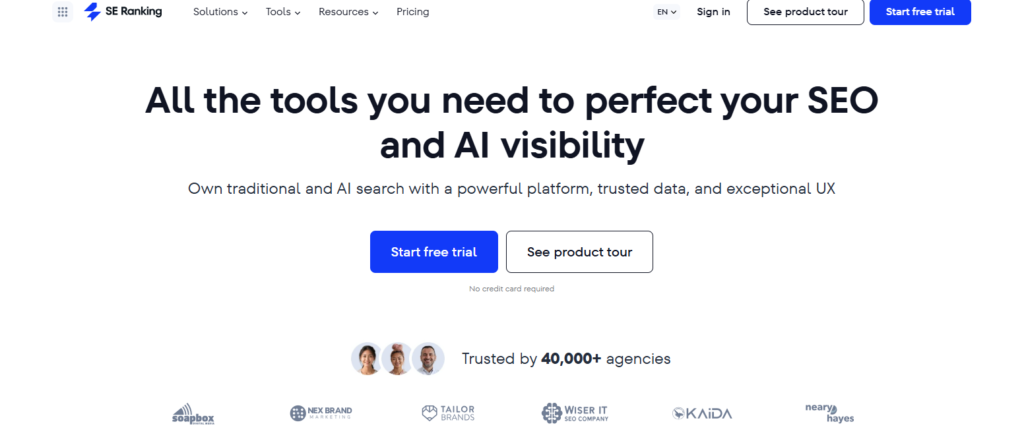
Here is a detailed breakdown of the top backlink monitoring tools available in 2026. Each includes an overview, key features, pros and cons, approximate pricing, and best use case.
Overview: Pairs backlink-profile analysis with SEO and GEO tracking
Key features: Backlink Checker and Monitor, new/lost/broken link detection, Toxicity Score, anchor text distribution, competitor backlink analysis.
Pros: Continuous new/lost link tracking with dynamic charts from 7 days to 12 months, integration with SE Ranking’s broader SEO and GEO platform, backlink data also accessible via API and MCP.
Cons: The raw backlink index is smaller than Majestic’s, and coverage for some niche domains can be thinner than Ahrefs.
Pricing: Plans start at $129/month.
Best for: Agencies and mid-market SEO teams that want backlink monitoring and toxicity control inside a wider SEO and AI-search platform.
2. Ahrefs
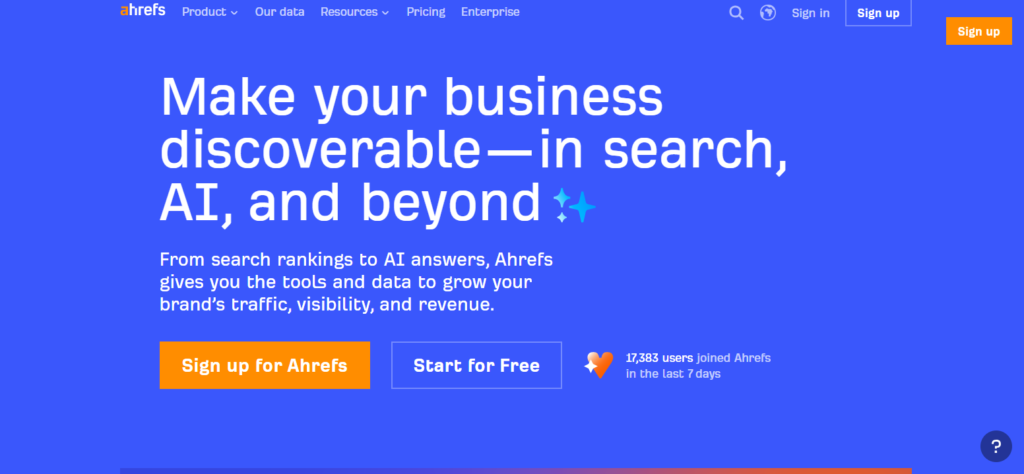
Overview: One of the most powerful and popular SEO toolkits with excellent backlink monitoring capabilities.
Key features: Massive index, new/lost link alerts, toxic link scoring, competitor analysis, anchor text breakdown, and detailed reports.
Pros: Extremely comprehensive data, fast updates, great competitor insights, and one of the largest backlink indexes available.
Cons: Higher price point, steeper learning curve for complete beginners.
Pricing: Starts around $129/month.
Best for: SEO professionals and agencies who need deep data and competitor intelligence.
3. Semrush
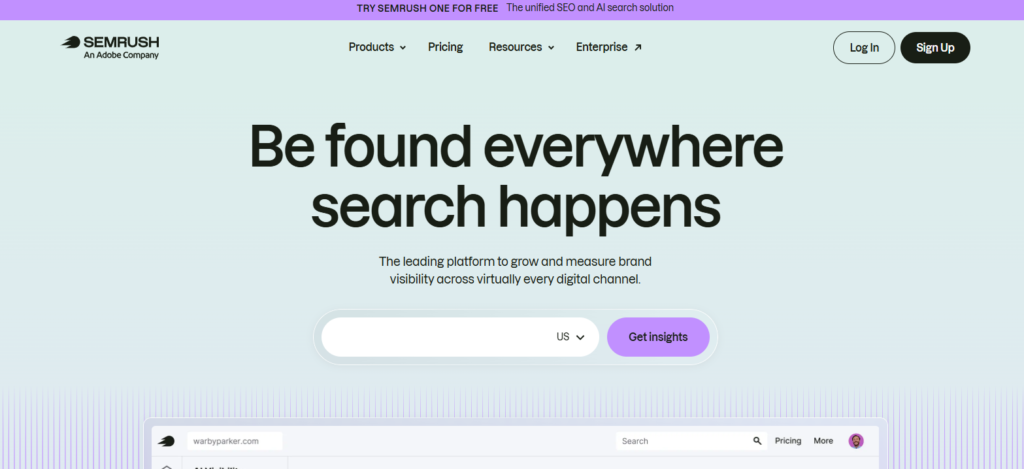
Overview: All-in-one platform with strong backlink monitoring and toxicity detection.
Key features: Backlink audit tool, toxicity score, lost link alerts, competitor tracking, and easy-to-use dashboards.
Pros: User-friendly interface, excellent toxicity detection, good integration with other Semrush tools, and strong spam filtering.
Cons: Slightly smaller index than Ahrefs in some niches.
Pricing: Starts around $129/month.
Best for: Teams and agencies that want an all-in-one solution with strong spam detection.
4. Moz
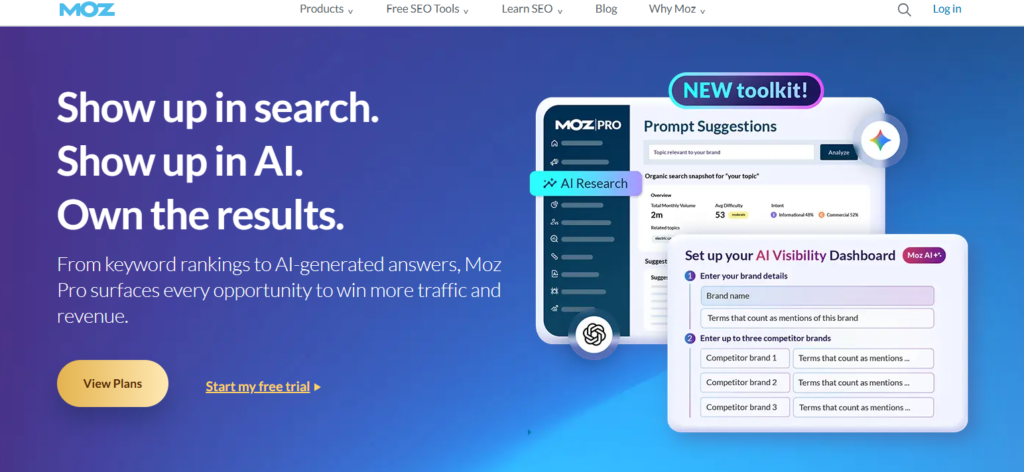
Overview: Known for its Domain and Page Authority metrics, Moz also offers solid backlink monitoring.
Key features: Link Explorer, spam score, new/lost alerts, and easy reporting.
Pros: Simple interface, good for beginners, strong authority metrics, and clear explanations.
Cons: Smaller index compared to Ahrefs and Semrush.
Pricing: Moz Pro starts around $99/month.
Best for: Beginners and small businesses who want straightforward monitoring.
5. Collaborator Free Backlink Checker
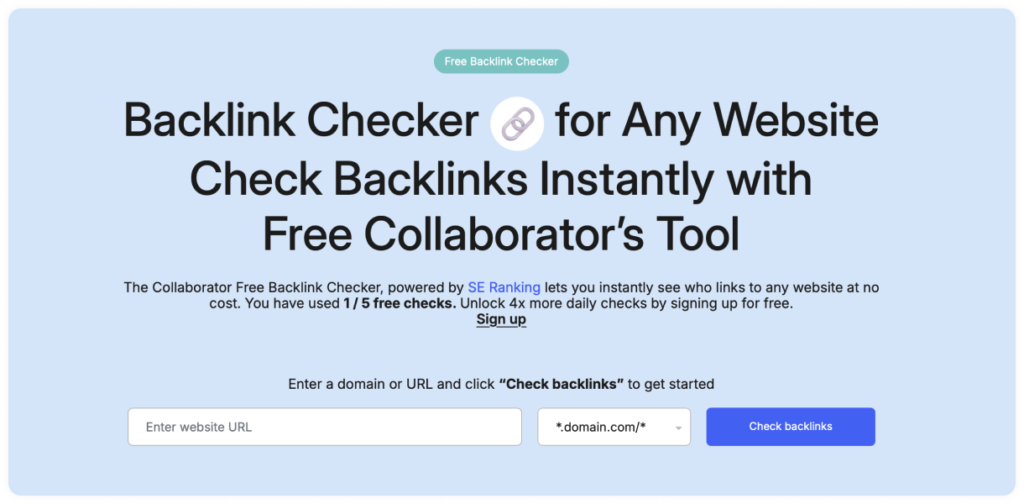
Overview: Collaborator Free backlink checker powered by SE Ranking for backlink analysis of any website, monitoring, and competitor analysis.
Key features: Up to 100 backlinks per search (50 strongest + 50 newest), referring domains, anchor text, first seen/last seen attributes.
Pros: No registration required, easy-to-use interface, and shows which websites are available in the Collaborator marketplace.
Cons: Limited historical analysis.
Pricing: Free.
Best for: SEO specialists, link builders, and agencies looking for quick backlink analysis and prospecting in one tool.
6. Monitor Backlinks
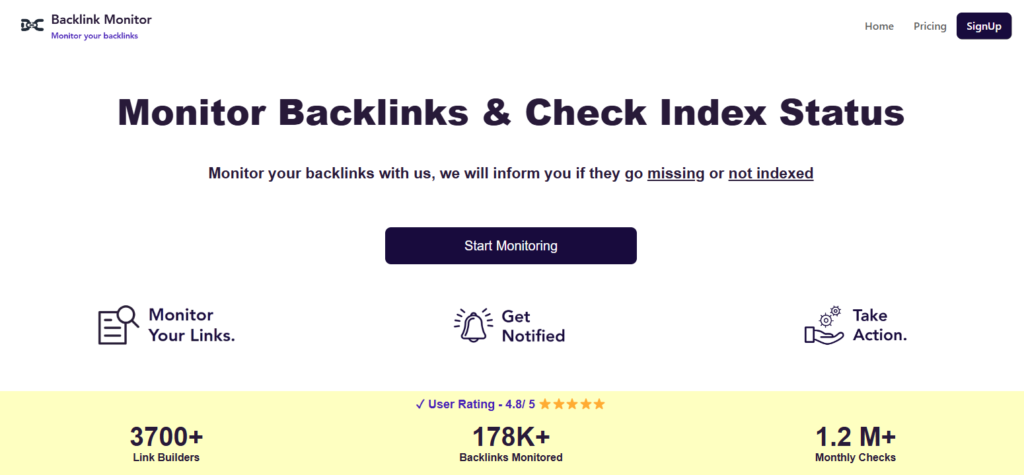
Overview: Dedicated backlink monitoring tool focused on simplicity and alerts.
Key features: Real-time alerts, lost link recovery focus, and easy setup.
Pros: Very affordable, straightforward, great for lost link recovery.
Cons: Fewer advanced features than full SEO suites.
Pricing: Starts around $29/month.
Best for: Small businesses and bloggers who want simple, reliable monitoring.
7. Majestic
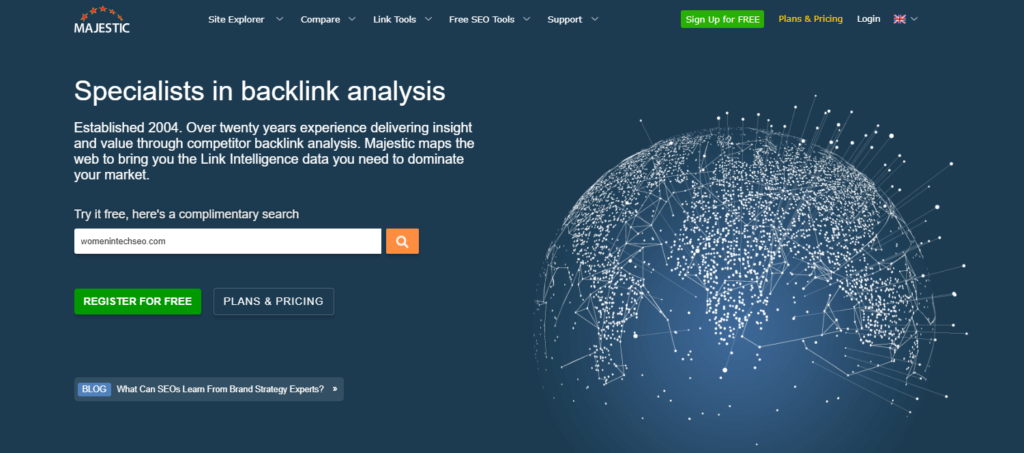
Overview: Specialized in backlink analysis with strong trust and citation flow metrics.
Key features: Detailed backlink data, historic index, and freshness tracking.
Pros: Excellent for trust-based analysis, large historic index.
Cons: Less emphasis on real-time alerts compared to others.
Pricing: Starts around $49.99/month.
Best for: Advanced users who need deep trust and citation analysis.
8. Google Search Console
Overview: Free tool from Google with basic backlink data.
Key features: Links report, indexing status, and manual disavow tool.
Pros: Completely free, direct from Google, and very reliable for indexing data.
Cons: Limited data, no toxicity scoring, no real-time alerts.
Best for: Beginners starting with free monitoring or supplementing paid tools.
9. Linkody
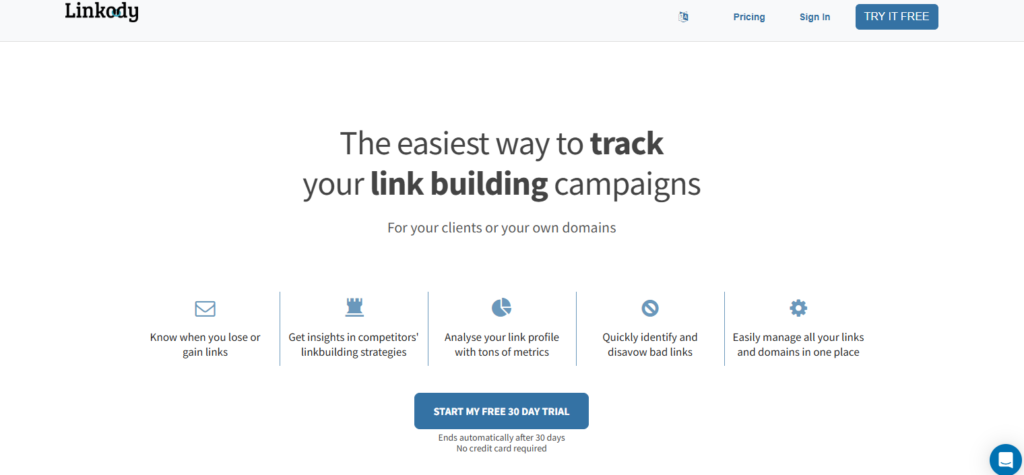
Overview: Simple and affordable dedicated monitoring tool.
Key features: Daily monitoring, alerts, and multi-domain support.
Pros: Very budget-friendly, easy to use.
Cons: Smaller feature set.
Pricing: Starts around $14.90/month.
Best for: Small sites and freelancers on a tight budget.
10. MonitoLink
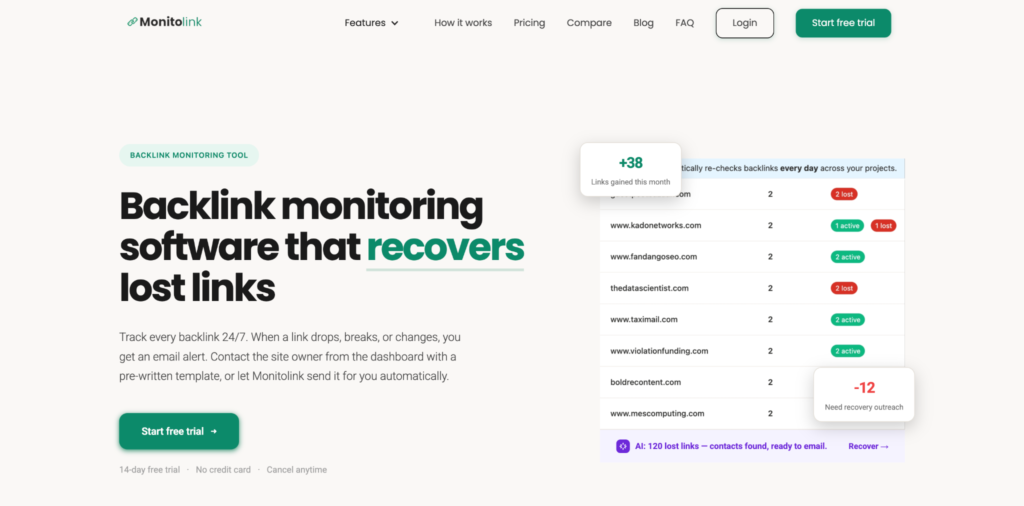
Overview: Dedicated backlink monitoring and recovery tool built around 24/7 tracking and automated outreach.
Key features: Real-time monitoring, automated link recovery outreach, AI-powered anchor and toxicity insights, and competitor backlink intelligence.
Pros: Built-in outreach to reclaim lost links automatically, fast same-day alerts, and client-ready white-label reporting.
Cons: Newer platform.
Pricing: Starts around $29/month.
Best for: Agencies and in-house teams that want to actively recover lost backlinks.
Comparison table of backlink monitoring tools
| Tool | Best For | Starting Price | Key Strength | Main Weakness |
| SE Ranking | Agencies & mid-market teams | $129/mo | Backlinks in wider SEO platform | Smaller index than Majestic/Ahrefs |
| Ahrefs | Professionals & agencies | $129/mo | Deep data & competitor insights | Higher cost |
| Semrush | All-in-one teams | $129/mo | Strong toxicity detection | Can feel overwhelming |
| Moz | Beginners | $99/mo | Simple interface | Smaller index |
| Collaborator Free Backlink Checker | SEO specialists, marketers & agencies | FreeFree | Shows websites available for link building in the Collaborator marketplace with their placement prices. | Limited data |
| Monitor Backlinks | Lost link recovery | $29/mo | Simple alerts | Basic interface |
| Majestic | Trust analysis | $49.99/mo | Strong historical data | Fewer real-time alerts |
| Google Search Console | Free basic monitoring | Free | Direct from Google | Limited data |
| Linkody | Small sites & freelancers | $14.90/mo | Very affordable | Limited advanced features |
| MonitoLink | Agencies and in-house teams | $29/mo | Automated backlink recovery & 24/7 monitoring | Newer platform |
How to choose the right backlink monitoring tool
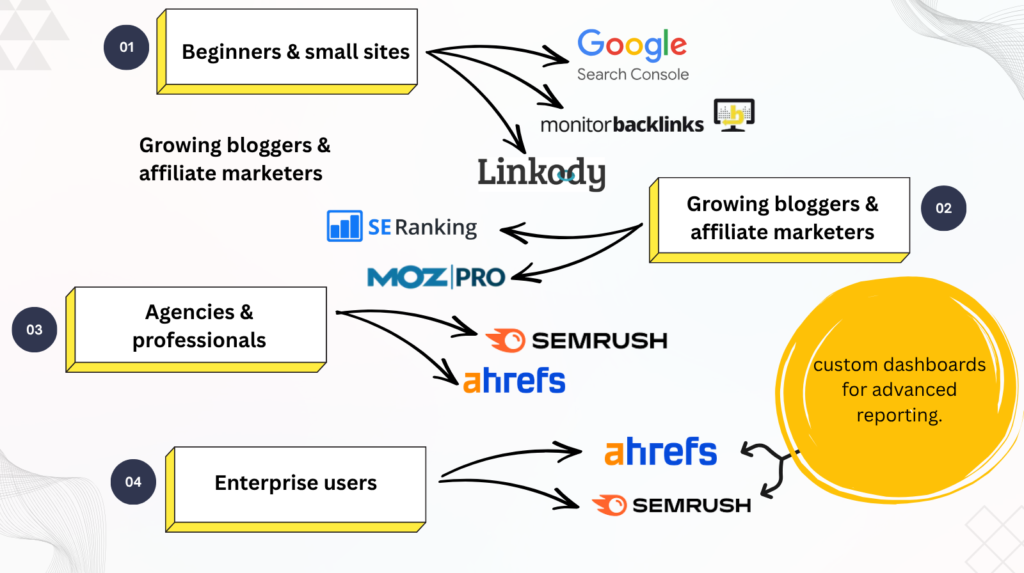
Choosing the right tool depends on your budget, website size, and goals.
- Beginners & small sites: Start with Google Search Console (free) + a simple tool like Linkody or Monitor Backlinks. Focus on learning the basics before investing in expensive suites.
- Growing bloggers & affiliate marketers: SE Ranking or Moz Pro offer a good balance of features and price.
- Agencies & professionals: Ahrefs or Semrush provides the depth and competitor insights needed for client work.
- Enterprise users: Combine Ahrefs/Semrush with custom dashboards for advanced reporting.
Key questions to ask yourself:
- How many domains do I need to monitor?
- Do I need strong toxicity detection?
- Is competitor analysis important?
- What is my monthly budget?
- Do I prefer an all-in-one platform or a dedicated monitoring tool?
Test tools with free trials or limited free plans before committing. The best tool is the one you will actually use consistently.
How to monitor backlinks effectively (step-by-step)
Here’s a practical workflow you can follow every week:
- Set up monitoring — Add your main domain (and competitors if needed) to your chosen tool.
- Configure alerts — Set up notifications for new links, lost links, and toxic links.
- Review weekly — Check the dashboard every Monday for changes and prioritize lost high-value links.
- Analyze link quality — Use toxicity scores and manual review to identify harmful links.
- Take action — Reach out to recover valuable lost links and disavow toxic ones.
- Monitor competitors — Spot new opportunities by watching where competitors are gaining links.
- Document everything — Keep records of recovered links and disavowed links for future reference.
Make this process a habit. Consistent monitoring turns backlink management from a reactive chore into a proactive strategy that protects your rankings and helps you grow sustainably.
Common mistakes to avoid
- Ignoring lost backlinks until traffic drops
- Not checking toxicity scores regularly
- Relying on only one tool without cross-checking
- Failing to monitor competitors and missing opportunities
- Over-relying on automated alerts without manual review
Avoiding these mistakes will help you get maximum value from your backlink monitoring tools.
Free vs paid backlink monitoring tools
Free tools like Google Search Console provide basic data and are great for beginners. However, they lack real-time alerts, toxicity scoring, and competitor insights.
Paid tools become worth the investment once you have more than a handful of important links or manage multiple sites. The time saved and protection provided usually pay for themselves quickly through recovered links and prevented ranking drops.
Start with free tools to learn the basics, then upgrade to a paid solution when your needs grow.
Final thoughts
Backlink monitoring tools are essential for protecting your rankings and maintaining a healthy link profile in 2026. They go far beyond simple backlink checkers by providing continuous tracking, alerts, and risk detection.
The best approach is to choose a tool that fits your budget and needs, set up proper monitoring, and make it a regular part of your SEO routine. Whether you’re a beginner, blogger, or professional, consistent monitoring will help you catch problems early and make smarter link-building decisions.
Start today by adding your domain to one of the tools mentioned above and setting up your first alerts. Small, consistent actions with the right tools will protect your hard-earned rankings and help your site grow sustainably.
The most successful SEO professionals treat backlink monitoring as an ongoing process, not a one-time task. Make it part of your weekly routine, and you’ll stay ahead of potential problems while spotting new opportunities.
