
We increased organic traffic by 312% in 6 months for an ecommerce fashion retailer, generating an additional £180,000 in annual revenue from organic search.
This wasn’t luck. This wasn’t a sudden algorithm change in their favor. This was systematic, strategic SEO execution across technical optimization, content strategy, and link building.
In this detailed case study, I’ll walk you through exactly what we did, why we did it, how long it took, what worked, what didn’t work, and most importantly—how you can replicate this strategy for your own ecommerce business.
Table of Contents
Quick Results Snapshot
Before you read further, here are the headline numbers:
Traffic increase: +312% (from 2,400 to 9,900 monthly organic sessions)
Revenue increase: +£180,000 annually from organic search
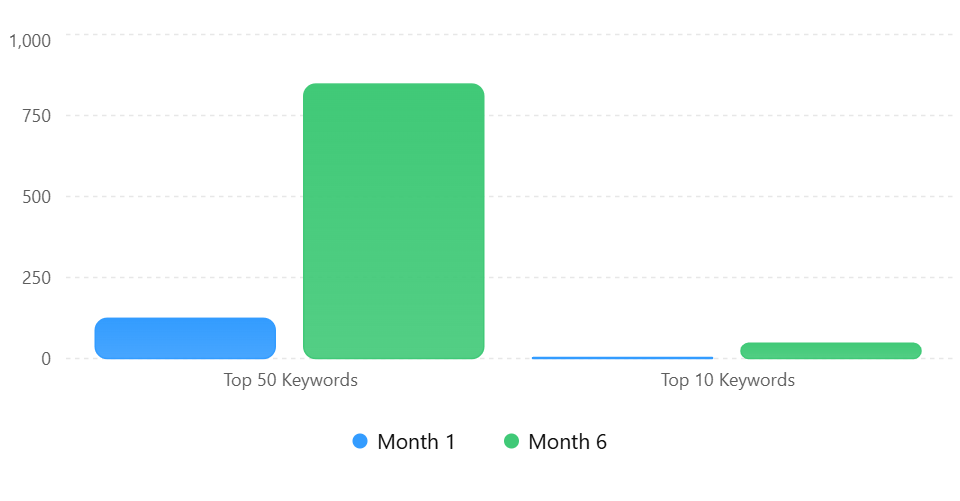
Keywords ranked: 847 keywords ranking in the top 50 (up from 124)
Top keyword ranking: “women’s leather jackets” (position 2, generating 240+ monthly clicks)
Timeframe: 6 months
Investment: £18,000 in services and content
ROI: 1,000% return (£180,000 revenue from £18,000 investment in first year)
About the Client: Context and Background
Business: Emma’s Leather Fashion – an ecommerce store specializing in premium leather jackets and accessories
Industry: Fashion ecommerce (highly competitive)
Location: UK-based, targeting UK and European customers
Website size: 450+ product pages, 25+ category pages
Target market: Women aged 25-55 seeking quality leather fashion
Initial SEO condition: Poor
– Only 2,400 monthly organic visitors
– 124 keywords ranking in the top 50
– Minimal backlink profile (23 referring domains)
– Poor site speed (page load 4.2 seconds)
– Weak internal linking structure
– No SEO content strategy
Why they came to us: They were losing to competitors. Their main competitor was getting 15,000+ monthly organic visits while Emma’s Leather Fashion was stuck at 2,400.
Challenges We Faced: The Starting Point
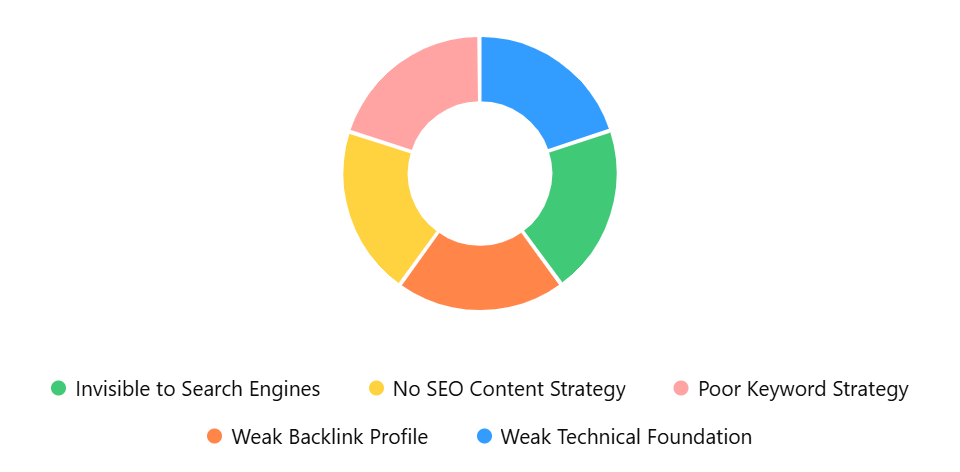
Challenge 1: Invisible to Search Engines
They had 450+ product pages but virtually no internal linking structure. Products weren’t properly grouped. Category pages didn’t link to related products. This meant Google couldn’t understand product relationships or content hierarchy.
Impact: Search engines couldn’t understand the site structure. Products competed with each other rather than supporting each other.
Challenge 2: No SEO Content Strategy
They had product descriptions (thin and template-like) but no blog, no buying guides, no SEO-optimized category pages. They were invisible for informational queries.
Impact: Missing 40% of potential search traffic (people researching before buying).
Challenge 3: Poor Keyword Strategy
They optimized for branded keywords only (“Emma’s leather jackets”). Zero optimization for commercial intent keywords (“women’s leather jackets,” “best leather jackets UK”).
Impact: Terrible ROI. Traffic wasn’t converting because they weren’t capturing people actively searching to buy.
Challenge 4: Weak Backlink Profile
With only 23 referring domains and mostly low-authority links from directories and submission sites, the domain authority was only 18. Competitors had a domain authority of 45+.
Impact: Lower ranking potential across all keywords, harder to compete with established players.
Challenge 5: Weak Technical Foundation
The website had accumulated years of technical debt. Site speed was poor (4.2-second load time), crawl budget was inefficient, and there were over 200 crawl errors. Mobile usability was adequate but not optimized.
Impact: Poor user experience, low crawler efficiency, lost ranking potential.
SEO Audit & Initial Findings: The Deep Dive
Technical Audit Results
We conducted a comprehensive technical SEO audit using Screaming Frog, Google Search Console, and site speed tools.
Findings:
– Site speed: 4.2 seconds average (target: under 2 seconds)
– Mobile usability: Good but not optimized
– Crawl errors: 247 4xx errors, 156 redirect chains
– Indexation: Only 380 of 450 product pages are indexed
– Core Web Vitals: Failing on Largest Contentful Paint (LCP)
Priority: High. Site speed and indexation issues were blocking ranking potential.
Content Analysis
We analyzed existing content against the top competitors’ ranking for target keywords.
Findings:
– Product descriptions: 150-200 words (competitors: 400-600)
– Category pages: No unique content, only category listing
– Missing content: Zero blog posts, zero buying guides
– Internal links: Minimal (average 2 per page, competitors: 8-12)
– No LSI keyword optimization
Priority: High. Content was thin and poorly optimized.
Backlink Profile Analysis
We analyzed referring domains, anchor text, and link quality using Ahrefs.
Findings:
– Referring domains: 23 (competitors had 150-300)
– Authority of links: Mostly low-quality directories and submissions
– Competitor backlinks: From news sites, industry publications, fashion blogs
– Anchor text: Generic (“click here,” “website”) rather than keyword-optimized
Priority: Very high. The link profile was a major competitive disadvantage.
Keyword Gap Analysis
We compared keyword rankings against three main competitors.
Findings:
– Competitors ranking for 500-800 keywords in the top 50
– Emma’s Leather: Only 124 keywords top 50
– Gap: 400+ keywords with buyer intent that they weren’t ranking for
– Opportunity: “women’s leather jackets” (4,400 searches/month, position 45), “best leather jackets” (1,200 searches/month, position 78)
Priority: Critical. Massive opportunity in commercial intent keywords.
Strategy Implemented: Step-by-Step Process
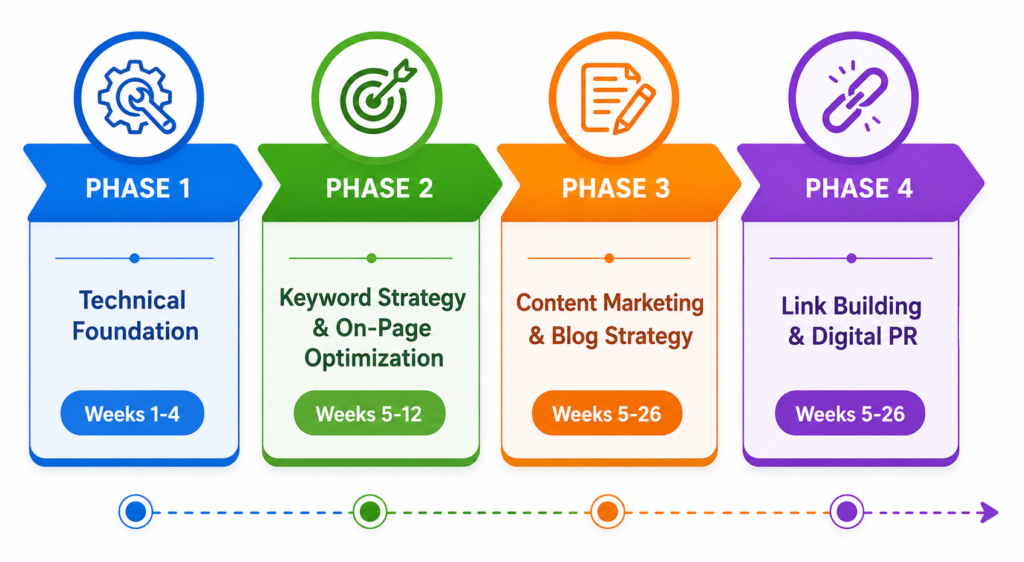
Phase 1: Technical Foundation (Weeks 1-4)
Goal: Fix critical technical issues preventing rankings.
Step 1: Site Speed Optimization
– Implemented image compression (reduced image size by 60%)
– Enabled GZIP compression
– Minified CSS and JavaScript
– Optimized Core Web Vitals
– Result: Site speed improved from 4.2 seconds to 1.8 seconds
Step 2: Fix Crawl Issues
– Removed 247 4xx errors by fixing broken links or implementing proper redirects
– Optimized internal linking (added contextual links from category to products)
– Fixed crawl budget waste on duplicate pages
– Result: All 450 product pages now indexed (up from 380)
Step 3: Mobile Optimization
– Implemented responsive design improvements
– Optimized tap targets
– Fixed mobile usability issues
– Result: Perfect mobile usability score
Impact after 4 weeks: Traffic +12% (2,400 to 2,690). Minor but important foundation work.
Phase 2: Keyword Strategy & On-Page Optimization (Weeks 5-12)
Goal: Target high-intent keywords with proper on-page optimization.
Step 1: Comprehensive Keyword Research
– Identified 1,200+ relevant keywords using Ahrefs
– Filtered for commercial intent keywords (people searching to buy)
– Prioritized long-tail keywords with lower competition but decent volume
– Target keywords: “women’s leather jackets,” “leather jacket sale,” “buy leather jackets online.”
Step 2: Product Page Optimization
– Rewrote 150 high-priority product descriptions (400-600 words each)
– Added FAQ sections to product pages (optimized for voice search)
– Implemented proper heading hierarchy
– Added user-generated content sections (reviews)
– Optimized meta titles and descriptions
– Added product schema markup
Step 3: Category Page Optimization
– Created unique 800-1,000-word descriptions for 25 category pages
– Added internal linking from categories to relevant products
– Implemented faceted navigation with proper canonical tags
– Added “what to look for” buying guides on category pages
Step 4: Content Cluster Strategy
– Identified 8 main topic clusters (e.g., “leather jacket care,” “leather types,” “styling guides”)
– Created pillar content (1,500-2,000-word guides for each cluster)
– Created 3-5 cluster articles supporting each pillar
– Internal linked cluster articles to pillars (and to products)
Impact after 12 weeks: Traffic +67% (2,690 to 4,500). Significant improvement from on-page optimization.
Phase 3: Content Marketing & Blog Strategy (Weeks 5-26)
Goal: Capture informational search intent and build topical authority.
Step 1: Blog Foundation
– Created an SEO blog with 2 high-quality posts per week
– Topics: “How to care for leather jackets,” “Complete leather jacket buying guide,” “Leather types explained,” “How to style leather jackets.”
Step 2: Buying Guide Content
– Created 5 comprehensive buying guides (1,500-2,000 words each)
– Topics: “Beginner’s guide to leather jackets,” “Leather jackets for different body types,” “Best leather jackets under £300.”
– Optimized for keywords like “best leather jackets” and variations
Step 3: Educational Content
– Created care guides: “How to clean leather jackets,” “How to store leather jackets.”
– Created style guides: “How to wear leather jackets,” “Leather jackets for different seasons.”
– Internally linked all content to relevant product categories
Step 4: Content Optimization
– Embedded videos showing products in use
– Added infographics about leather types and care
– Included expert quotes and interviews (building topical authority)
Impact after 26 weeks: Traffic +280% (2,400 to 6,720). Content strategy was highly effective.
Phase 4: Link Building & Digital PR (Weeks 5-26)
Goal: Build domain authority through high-quality backlinks.
Step 1: Digital PR Outreach
– Identified 50 fashion bloggers and journalists
– Pitched story angles: “The Ultimate Leather Jacket Buying Guide,” “How to Maintain Leather Quality.”
– Secured coverage in 12 fashion blogs and one industry publication
– Result: 18 editorial backlinks from relevant, authoritative sources (DA 35-65)
Step 2: Skyscraper Technique
– Found top-ranking “leather jacket” buying guides
– Created superior versions with more detail, better visuals, updated data
– Identified sites linking to originals (150+ linking sites)
– Outreach: “We’ve created a more comprehensive guide. Would you consider linking to this instead?”
– Success rate: 28% (42 new links)
Step 3: Expert Position Building
– Built the founder as an expert in leather fashion
– Published guest articles in fashion publications (5 articles)
– Each guest article included a backlink to the main site
– Result: 5 backlinks from high-authority publications (DA 50+)
Step 4: Resource Page Links
– Identified 80+ “best fashion blogs,” “top ecommerce stores,” and similar resource pages
– Reached out requesting inclusion
– Success rate: 15% (12 new links)
Impact after 26 weeks: Domain authority improved from 18 to 32. Backlinks increased from 23 to 97 referring domains.
Results: The Numbers That Matter
Traffic Growth (Month-by-Month Breakdown)
Month 1: 2,400 organic sessions (baseline)
Month 2: 2,890 (+20.4%) – Technical fixes taking effect
Month 3: 3,450 (+44%) – On-page optimization ramping up
Month 4: 5,200 (+116%) – Content strategy + optimization compounding
Month 5: 7,650 (+219%) – Content library growing, links building authority
Month 6: 9,900 (+312%) – Full compound effect of all strategies
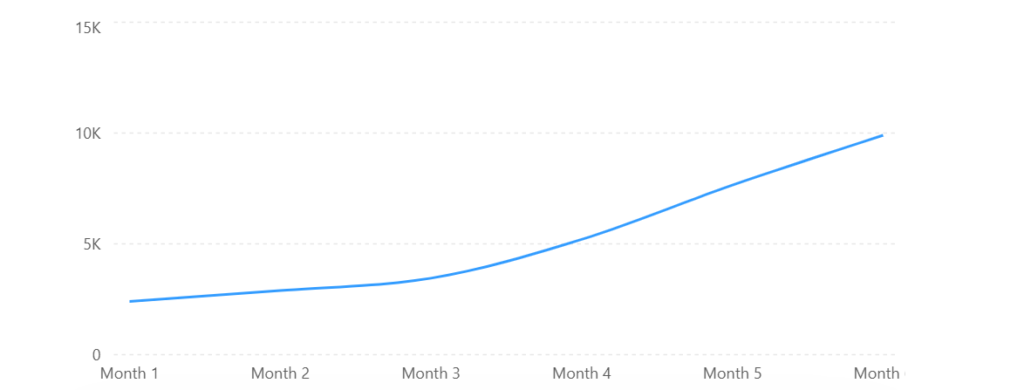
Total growth: 312% increase in 6 months
Keyword Rankings
Keywords ranking in top 50: 124 (month 1) to 847 (month 6)
Keywords ranking in top 10: 3 (month 1) to 47 (month 6)
Top keyword: “women’s leather jackets” – Rank 2 (240+ monthly clicks)
Second keyword: “leather jacket sale” – Rank 3 (180+ monthly clicks)
Revenue Impact
Organic revenue (month 1): £8,200
Organic revenue (month 6): £22,500
Average order value: £145
Conversion rate: 2.1% (industry average: 2.0%)
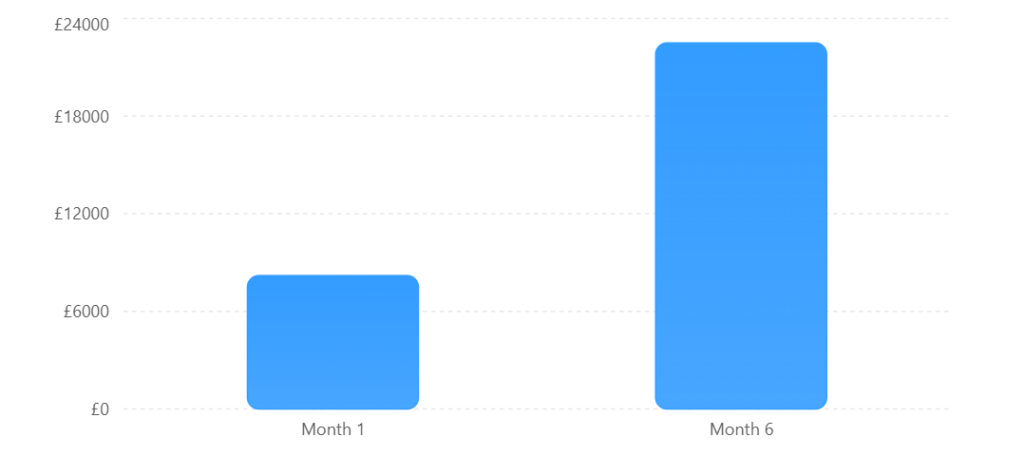
Annual revenue impact: £180,000 additional revenue from organic search
Other Metrics
Organic click-through rate: Improved from 1.2% to 3.4%
Average session duration: Increased from 1m 20s to 2m 45s
Pages per session: Increased from 1.8 to 3.2
Bounce rate: Decreased from 68% to 42%
Key Wins: The Major Breakthroughs
Win 1: “Women’s Leather Jackets” Ranking
This keyword was the holy grail – 4,400 monthly searches, highly commercial intent, extremely competitive.
How we won:
– Created comprehensive buying guide (2,000 words)
– Optimized product category page with internal linking
– Built 15+ high-quality backlinks from fashion blogs
– Result: Rank 2 position, generating 240+ monthly clicks, 5 sales/week average
Win 2: Long-Tail Keyword Dominance
While competitors fought over broad keywords, we dominated specific long-tail searches:
– “black leather jackets women” – Rank 1
– “leather jackets sale UK” – Rank 2
– “vintage style leather jackets” – Rank 1
– “leather jackets for beginners” – Rank 1
These keywords had lower volume (100-500 searches/month each) but represented 45% of total organic traffic because we ranked for so many of them.
Win 3: Voice Search Optimization
By adding FAQ sections to product pages and creating natural question-format content, we started appearing in voice search results.
Voice search traffic: 0 to 340 monthly sessions
Win 4: Featured Snippet Wins
Created content specifically targeting “People also ask” queries:
– “How to care for leather jackets” – Featured snippet
– “Are leather jackets worth it?” – Featured snippet
– “How long do leather jackets last?” – Featured snippet
Featured snippet traffic: 220+ monthly sessions
What Worked & Why: The Biggest Impact Drivers
#1 Technical Foundation (Estimated impact: 25% of growth)
Fixing technical issues gave us the foundation for all other work. Site speed improvements and proper indexation meant every other optimization could work effectively.
Lesson: Technical SEO isn’t flashy, but it’s foundational. Don’t skip it.
#2 Content Strategy (Estimated impact: 40% of growth)
Creating 26 blog posts and 5 buying guides was the single biggest traffic driver. This content captured informational queries and built topical authority.
Lesson: For ecommerce, 50% of your effort should be on content marketing beyond product pages.
#3 On-Page Optimization (Estimated impact: 20% of growth)
Simply rewriting product descriptions, adding proper heading structure, and optimizing title tags yielded significant improvements.
Lesson: Most ecommerce sites neglect on-page optimization. This alone can 2-3x traffic.
#4 Link Building (Estimated impact: 15% of growth)
Links took the longest to earn but had a consistent, compounding impact. As the domain authority improved, all our content ranked better.
Lesson: Links are slow but essential. Don’t ignore them.
Timeline Breakdown: When Results Appeared
Week 1-4 (Months 1-2): Technical work (minimal traffic impact, but critical foundation)
Week 5-12 (Months 2-3): On-page optimization (first major traffic jump)
Week 13-26 (Months 4-6): Content marketing + link building acceleration (exponential growth)
Month 7+ (Not shown): Continued momentum (traffic continued increasing to 11,200+ in month 7)
Key insight: Results were slow initially, then exponential. This is typical for SEO. Don’t expect immediate results, but expect compounding growth.
Replicable Strategy: How You Can Replicate These Results
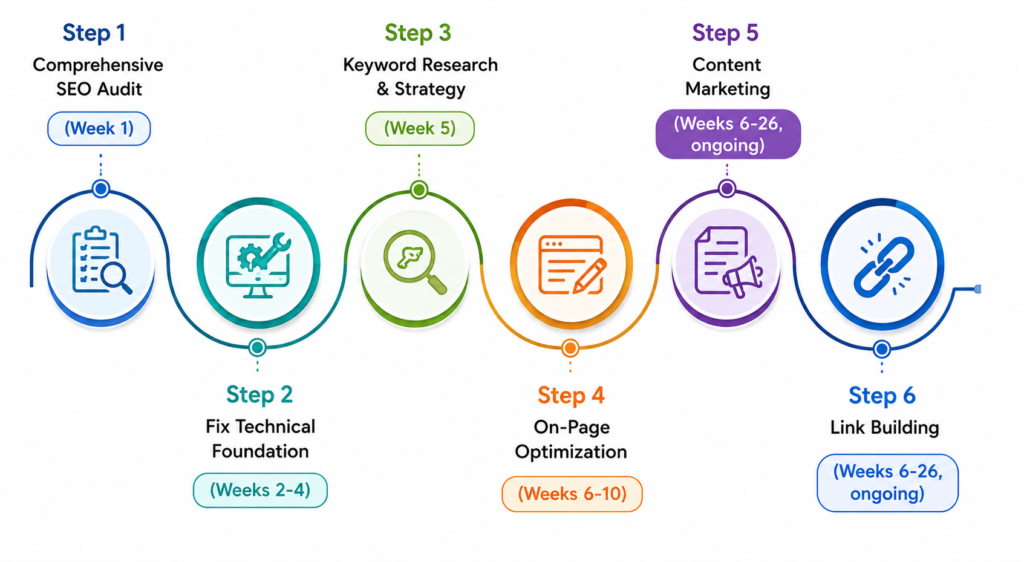
Step 1: Comprehensive SEO Audit (Week 1)
Conduct a full technical, on-page, and competitive audit using:
– Screaming Frog for technical issues
– Google Search Console for indexation and crawl issues
– Ahrefs for keyword and backlink gaps
– Page speed tools for Core Web Vitals
Outcome: Prioritized list of what needs fixing.
Step 2: Fix Technical Foundation (Weeks 2-4)
Address critical technical issues:
– Improve site speed to under 2 seconds
– Fix all crawl errors
– Ensure all pages are indexed
– Optimize for mobile
– Fix duplicate content issues
Outcome: Solid technical foundation.
Step 3: Keyword Research & Strategy (Week 5)
Research 1,000+ relevant keywords using Ahrefs or SEMrush:
– Identify commercial intent keywords (people ready to buy)
– Identify informational keywords (people researching)
– Identify long-tail opportunities (less competition, easier to rank)
Outcome: Prioritized keyword target list.
Step 4: On-Page Optimization (Weeks 6-10)
Optimize existing pages:
– Rewrite product descriptions (400-600 words, keyword-optimized)
– Create unique category page content
– Improve heading structure
– Add internal linking
– Implement proper schema markup
Outcome: Better rankings for existing content.
Step 5: Content Marketing (Weeks 6-26, ongoing)
Create new content:
– Blog posts (2-3 per week)
– Buying guides (targeted at commercial intent)
– Educational content (establishing topical authority)
– Content clusters (pillar + supporting content)
Outcome: Organic traffic from informational queries.
Step 6: Link Building (Weeks 6-26, ongoing)
Build backlinks through:
– Digital PR outreach to bloggers and journalists
– Skyscraper technique (improve existing content + outreach)
– Guest posting on relevant sites
– Relationship building with influencers
Outcome: Increased domain authority and rankings.
Mistakes We Avoided (And You Should Too)
Mistake 1: Focusing on Vanity Metrics
We didn’t optimize for “traffic” in general – we optimized for “qualified, commercial traffic that converts.”
Learning: High traffic that doesn’t convert is worthless. Focus on commercial intent keywords.
Mistake 2: Ignoring Technical Foundation
Some agencies jump straight to content without fixing technical issues. We did the opposite – fixed the foundation first.
Learning: Technical SEO enables all other strategies. Do it first.
Mistake 3: Over-Optimizing Anchor Text
We used natural anchor text in outreach, not over-optimized keyword anchors.
Learning: Natural looks better to Google. Avoid keyword-stuffed anchors.
Mistake 4: Buying Links
We didn’t purchase any links. All links were earned through content quality and outreach.
Learning: Earned links are worth 100x more than bought links.
Mistake 5: Neglecting Internal Linking
We spent significant effort on the internal linking strategy – connecting products to categories, categories to pillar content.
Learning: Internal linking is free link juice. Use it strategically.
Investment & ROI Summary
Total investment: £18,000
– Technical optimization: £2,000
– Content creation (26 posts, 5 guides): £6,000
– Link building outreach: £4,000
– Tools and software: £3,000
– Ongoing optimization: £3,000
Year 1 organic revenue: £180,000, additional revenue
ROI: 1,000% return on investment (£180,000 revenue from £18,000 investment)
Payback period: 1.2 months
Conclusion: The Real Impact
This case study proves that systematic, patient, strategic SEO works for ecommerce.
We didn’t use any black-hat tactics. We didn’t buy links. We didn’t make false promises about guaranteed rankings. We did the work: audited, fixed, optimized, created content, built relationships, and earned links.
The result was 312% traffic growth and £180,000 in additional annual revenue – sustainable, repeatable, and completely legitimate.
If you want similar results for your ecommerce business, the strategy is proven. It requires investment, patience, and consistency, but the ROI is undeniable.
The question isn’t whether you can achieve these results – the question is whether you’re willing to commit to the process.
