AI brand monitoring tools track what people, publishers, and AI assistants say about your brand. That last group is the new part. OpenAI reported 1.2 billion weekly ChatGPT users in late September 2026, and many of them ask it which product to buy before they ever open Google.
So the job has changed. You still need to know when someone mentions you on Reddit or a news site. You also need to know if ChatGPT, Gemini, or Perplexity recommends you, a competitor, or nobody at all.
This guide compares 14 AI brand monitoring tools across both jobs. Each entry lists the starting price (checked November 2026), what it tracks, who it fits, and where it falls short. Most “best tools” lists skip that last part. We don’t.
What are AI brand monitoring tools?
AI brand monitoring tools are software that tracks mentions of your brand and uses AI to sort, score, and explain them. The term covers two kinds of tools: trackers that check how AI assistants like ChatGPT describe your brand, and listening platforms that use AI to analyze mentions across social media, news, and the web.
The two kinds of AI brand monitoring tools answer different questions:
| AI search visibility trackers | AI-powered social and web listening | |
|---|---|---|
| Core question | Does ChatGPT recommend us? | What are people saying about us? |
| Where it looks | ChatGPT, Gemini, Perplexity, Google AI Overviews, AI Mode, Copilot, Claude | Social networks, news, blogs, forums, reviews, podcasts |
| How it works | Runs your prompts on AI engines on a schedule and reads the answers | Crawls public content for your keywords in near real time |
| Main metrics | Mention rate, share of voice, cited sources, position in the answer | Mention volume, reach, sentiment, trending topics |
| Typical owner | SEO and content team | Social, PR, and brand team |
| Examples | Peec AI, Profound, Semrush, Ahrefs Brand Radar | Brand24, Awario, Brandwatch, Meltwater |
The line between them is fading. Brand24, Meltwater, and Talkwalker have all added AI answer tracking in 2026. Semrush and Ahrefs, both SEO suites, now track AI mentions too. Still, each tool is strongest at the job it started with, so pick by your main question.
You will also see the first group called AI visibility trackers, LLM monitoring tools, or generative engine optimization (GEO) tools. The names differ, but the job is the same: show how AI engines talk about your brand so you can improve it.
If you mainly care about links rather than mentions, a backlink monitoring tool is the better fit.
Why AI brand monitoring matters in 2026
AI brand monitoring matters because buyers now get product recommendations from AI answers, often without clicking a single link. If an assistant leaves you out or gets your pricing wrong, you lose the sale and never see it happen. Monitoring is the only way to know where you stand.
Three numbers show why AI brand monitoring tools are now a must-have:
- ChatGPT grew from about 400 million weekly users in February 2025 to 1.2 billion by late September 2026, based on OpenAI’s own announcements.
- 26% of brands had zero mentions in Google AI Overviews in Ahrefs’ study of 75,000 brands.
- Branded web mentions had the strongest link to AI Overview visibility in that same study, with a 0.664 correlation. Backlinks scored 0.218.
That last point changes how you should think about off-page SEO. Ahrefs notes that correlation is not causation. Still, the brands AI talks about are the brands the web talks about. Monitoring shows you that gap, so you can fix it.
AI brand monitoring also catches problems that rank tracking misses:
- An assistant quoting an old price or a dead feature
- A competitor named as “the best option” for your core use case
- A negative Reddit thread that AI engines keep citing as a source
For a broader view of how this changes your link strategy, read our guide on how AI search is reshaping link building.
How we evaluated these tools
We compared all 14 AI brand monitoring tools on the same six criteria, using vendor pricing pages, help docs, and independent pricing trackers checked in November 2026. We also list at least one real drawback for every tool. A list where every product is perfect is an ad, not a review.
The six criteria:
- Coverage. Which AI engines, social networks, and web sources it tracks.
- Price transparency. A published starting price, plus what drives the cost up (prompts, domains, seats, add-ons).
- Cost per tracked prompt. For AI trackers, we divided the entry price by the prompts it includes. This shows real value better than the headline price.
- Insight depth. Sentiment, share of voice, cited sources, and competitor benchmarks.
- Ease of setup. Self-serve signup and a free trial count in a tool’s favor.
- Fit. Which team and budget each tool suits best.
One honest note: pricing in this category changes fast. Profound dropped its self-serve plans in September 2026, Peec AI restructured its pricing in August, and Brand24 raised prices twice this year. Confirm the current price on the vendor’s page before you buy.
AI brand monitoring tools compared
The cheapest way to start tracking AI answers is Otterly.ai at $29 a month. The best value per prompt sits with Peec AI and Trakkr at about $2 per tracked prompt. Enterprise listening platforms like Brandwatch and Meltwater cost five figures a year and only quote through sales.
| Tool | Type | Starting price (Nov 2026) | Main coverage | Free trial | Best for |
|---|---|---|---|---|---|
| Semrush AI Visibility Toolkit | AI visibility | $99/mo per domain | ChatGPT, AI Overviews, AI Mode, Gemini, Perplexity | No | Teams already on Semrush |
| Ahrefs Brand Radar | AI visibility | $199/mo per AI platform | ChatGPT, Perplexity, AI Overviews, AI Mode, Gemini, Copilot | No | Large prompt data sets, competitor research |
| Profound | AI visibility | Custom quote (reported $2,000+/mo) | Up to 10 AI engines | 7 days | Enterprise brands |
| Peec AI | AI visibility | ~$95/mo (50 prompts) | Choose 3 of 6 engines | 7 days | Best value for brands |
| Otterly.ai | AI visibility | $29/mo (15 prompts) | ChatGPT, AI Overviews, AI Mode, Gemini, Claude, Perplexity, Copilot | 14 days | Small budgets |
| Scrunch | AI visibility | $250/mo | 7 engines incl. Claude and Meta AI | 7 days | Mid-market and agencies |
| Trakkr | AI visibility | $100/mo (50 prompts) | 8 engines incl. Claude, Grok, DeepSeek | 14 days | Widest engine coverage |
| Brand24 | Listening + AI | $199/mo | Social, news, blogs, podcasts, reviews | 14 days | SMB and mid-market brands |
| Awario | Listening | $49/mo ($29 annual) | Social, news, blogs, web | Yes | Tight budgets |
| Brandwatch | Listening | Sales quote | Social, forums, news, archive to 2008 | Demo | Consumer research at scale |
| Meltwater | Listening + AI | Sales quote | News, broadcast, social, AI answers | Demo | PR and comms teams |
| Talkwalker / Lumen (Hootsuite) | Listening + AI | Sales quote | Social, news, images, AI answers | Demo | Hootsuite users, global brands |
| Mention | Listening | $599/mo (annual) | Social and web | Yes | Agencies tracking several brands |
| Google Alerts | Web alerts | Free | Indexed web pages | Free | Basic coverage on zero budget |
Swipe sideways to see the full table on mobile.
AI search visibility trackers
AI search visibility trackers run a set of prompts, such as “best CRM for small teams,” on AI engines every day or week. They record if your brand appears, where it ranks in the answer, how it is described, and which web pages the AI cites. These seven AI brand monitoring tools lead the AI search category in 2026.
1. Semrush AI Visibility Toolkit
Best for: SEO teams that already run their work in Semrush
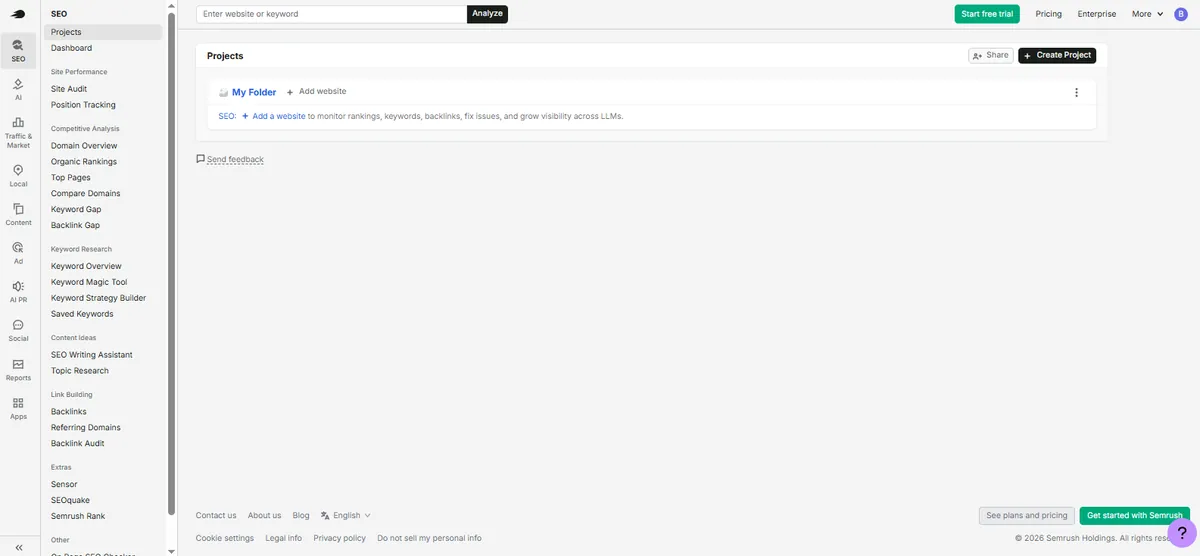
Semrush’s AI Visibility Toolkit is one of the easiest AI brand monitoring tools to adopt. It adds AI answer tracking to the SEO suite many teams already use. It reports your visibility, brand performance against competitors, tracked prompts, and an AI-readiness site audit in one dashboard.
Pricing
$99/month per domain, with 25 tracked prompts. Extra prompts cost $60/month per 50. Semrush One bundles SEO and AI visibility from $199/month ($165.17 billed annually) with 50 prompts.
Key features:
- Prompt research based on Semrush’s keyword data
- Brand Performance reports with share of voice and sentiment
- Cited-source reports showing which pages AI engines pull from
- AI-readiness site audit
Pros
Familiar interface, strong keyword data behind prompt ideas, and SEO plus AI data in one login.
Cons
No free trial for the toolkit. The price is per domain, so tracking three brands costs $297/month. Twenty-five prompts is a small base allowance.
2. Ahrefs Brand Radar
Best for: Teams that want the biggest prompt data set and deep competitor research
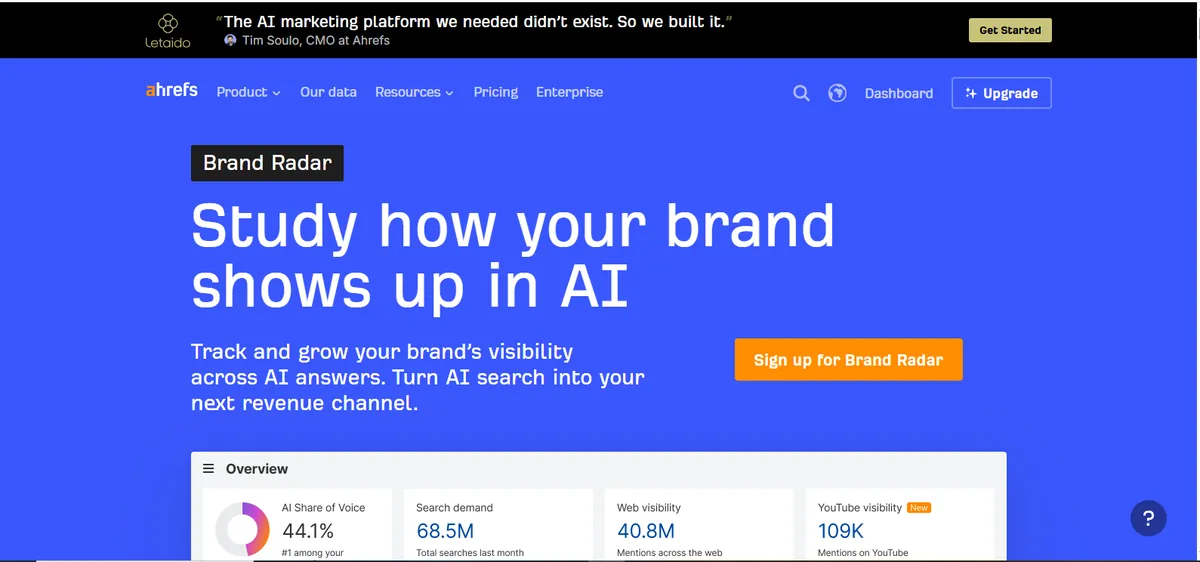
Brand Radar checks any brand’s visibility across a database of 300 million+ search-backed prompts on six AI platforms. Because the data is pre-collected, you can research a competitor’s AI visibility without setting up tracking first.
Pricing
From $199/month for one AI platform index, up to $699/month for all platforms with 2,500 custom prompt checks. Ahrefs lists both add-on and standalone options, so confirm which one your plan needs.
Key features:
- AI Mentions, AI Citations, and AI Share of Voice views
- Coverage of ChatGPT, Perplexity, Google AI Overviews, AI Mode, Gemini, and Copilot
- YouTube and Reddit mention tracking
- Content gap view showing prompts where competitors appear and you don’t
Pros
Huge data set, no prompt setup needed to start, and it sits next to Ahrefs’ backlink index.
Cons
Expensive once you want every platform. Claude and Grok are not covered.
3. Profound
Best for: Enterprise brands with a budget for a sales-led platform
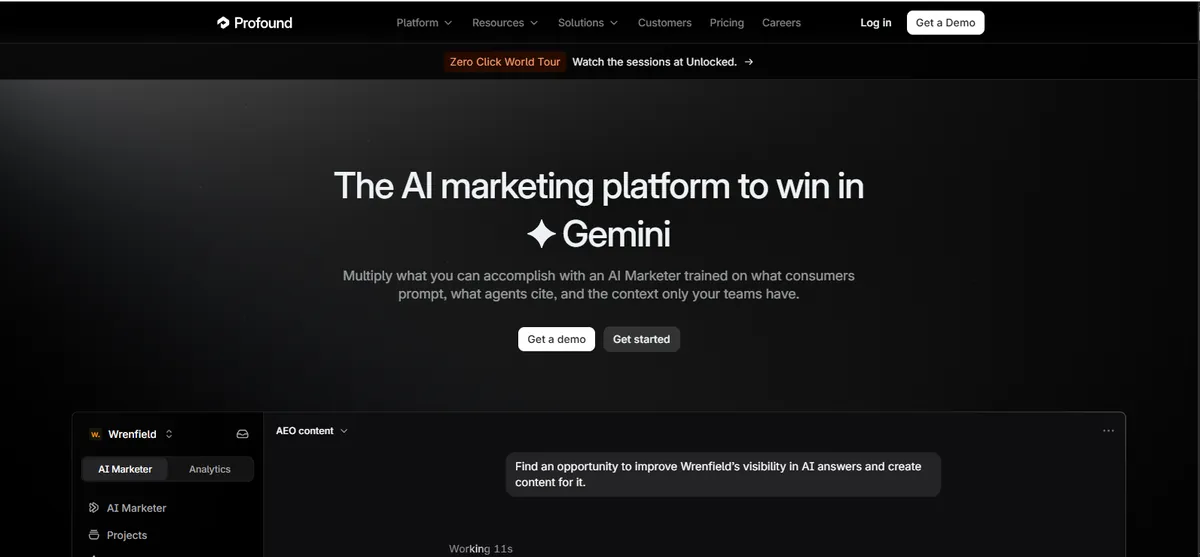
Profound is the best-funded company in this category. It raised a $180 million Series D in September 2026 and lists customers such as Indeed, Chime, Zapier, and Vercel. It tracks share of voice, sentiment, narratives, and cited sources, and adds AI agents for content and PR work.
Pricing
A free 7-day trial tracks 50 prompts daily on ChatGPT, Gemini, and Google AI Overviews. Ongoing tracking runs on custom Enterprise plans covering up to 10 engines. Profound removed its $99 and $399 self-serve brand plans in September 2026, and third-party reports put enterprise plans at $2,000+/month.
Key features:
- Share of voice and sentiment by engine, topic, and region
- Narrative and perception analysis
- Cited-source tracking
- AI agents for answer engine, content, and PR tasks
Pros
Enterprise-grade depth, strong client list, and active product development.
Cons
No published price for ongoing tracking, and the trial covers only three engines. Out of reach for small teams. Many reviews online still quote the old $99 plan.
4. Peec AI
Best for: Brand and marketing teams that want clean reporting at a fair price
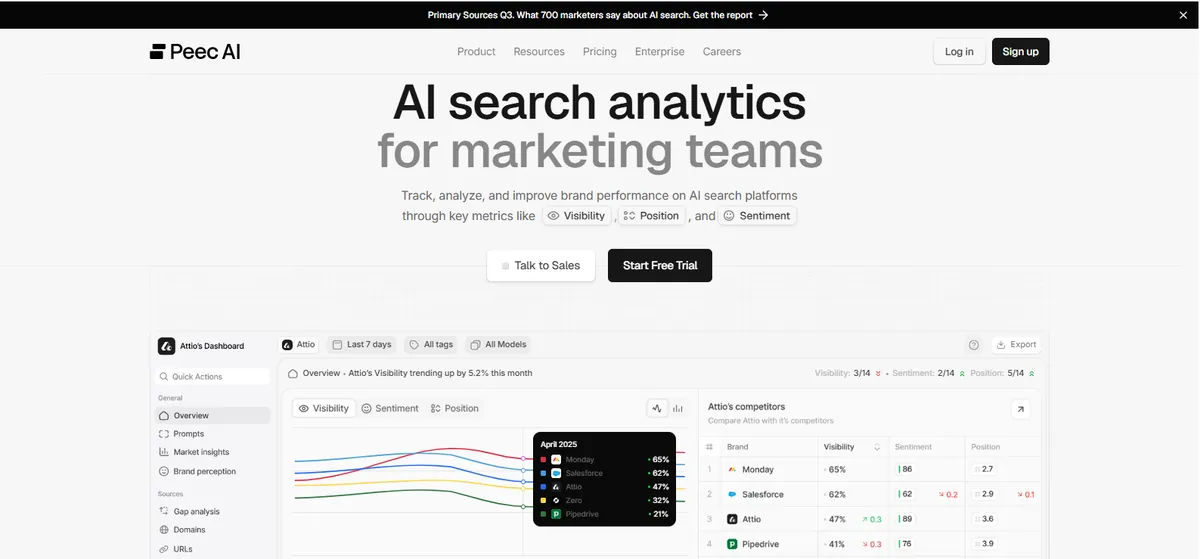
Among AI brand monitoring tools, Peec AI offers some of the best value. It tracks your prompts daily across the AI engines you choose and shows visibility, position, sentiment, and sources. Its brands include Hugo Boss, ElevenLabs, Wix, and Squarespace.
Pricing
Starter is about $95/month on monthly billing for 50 prompts. Pro is about $245 for 150 prompts, and Advanced about $495 for 350. Since an August 2026 restructure, Peec lists region-based euro prices with an annual discount, so your local price may differ.
Key features:
- Daily prompt tracking with unlimited seats on Starter
- Choose 3 of 6 AI engines per plan, with paid add-ons for more
- Competitor benchmarks and source analysis
- No extra charge for tracking more countries or languages
Pros
About $1.90 per prompt on Starter, simple setup, and a 7-day free trial with no card.
Cons
Only three engines per plan unless you pay for add-ons. It reports and recommends but does not create content or fix pages for you.
5. Otterly.ai
Best for: Freelancers, small businesses, and anyone testing AI tracking on a small budget
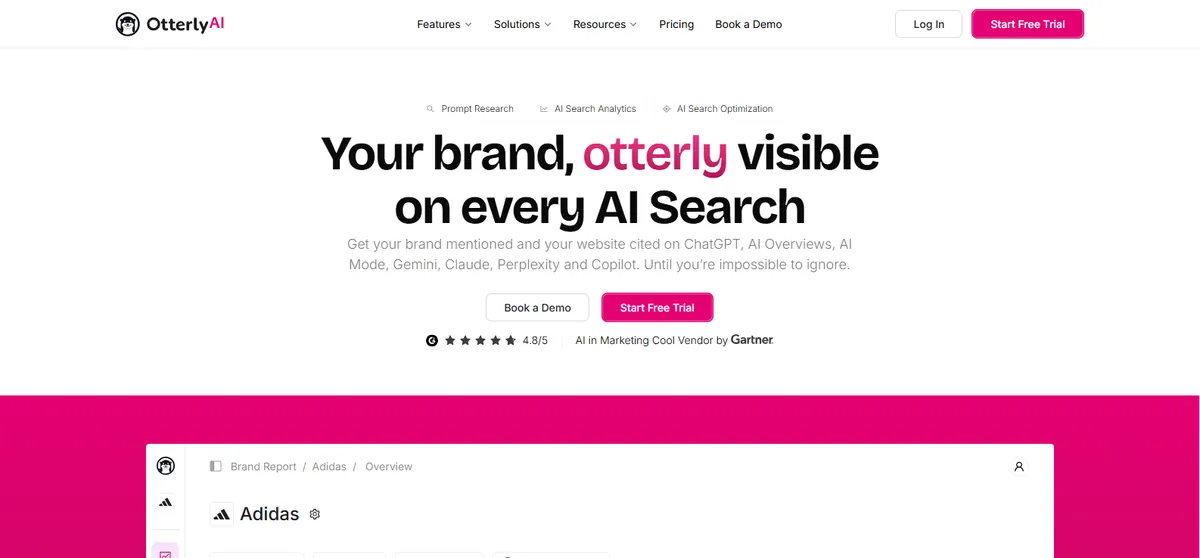
Otterly.ai is the cheapest of the paid AI brand monitoring tools on this list. It now lists ChatGPT, Google AI Overviews, AI Mode, Gemini, Claude, Perplexity, and Microsoft Copilot, and reports brand mentions, rank, sentiment, and linked sources for each.
Pricing
Lite is $29/month for 15 prompts. Standard is $189 for 100 prompts, Premium is $489 for 400, and Enterprise starts at 1,000 prompts. Annual billing saves about 15%.
Key features:
- Brand mention and ranking reports per prompt
- Link and citation tracking with exports
- GEO content audit
- Looker Studio, API, and MCP access on higher plans
Pros
Lowest entry price on this list, public pricing, and a 14-day free trial.
Cons
Lite works out to about $1.93 per prompt, so it is not cheaper per prompt than Peec AI. Not every engine is included on every plan, so check which ones your tier covers before you buy.
6. Scrunch
Best for: Mid-market brands and agencies that want monitoring plus AI-ready site tools
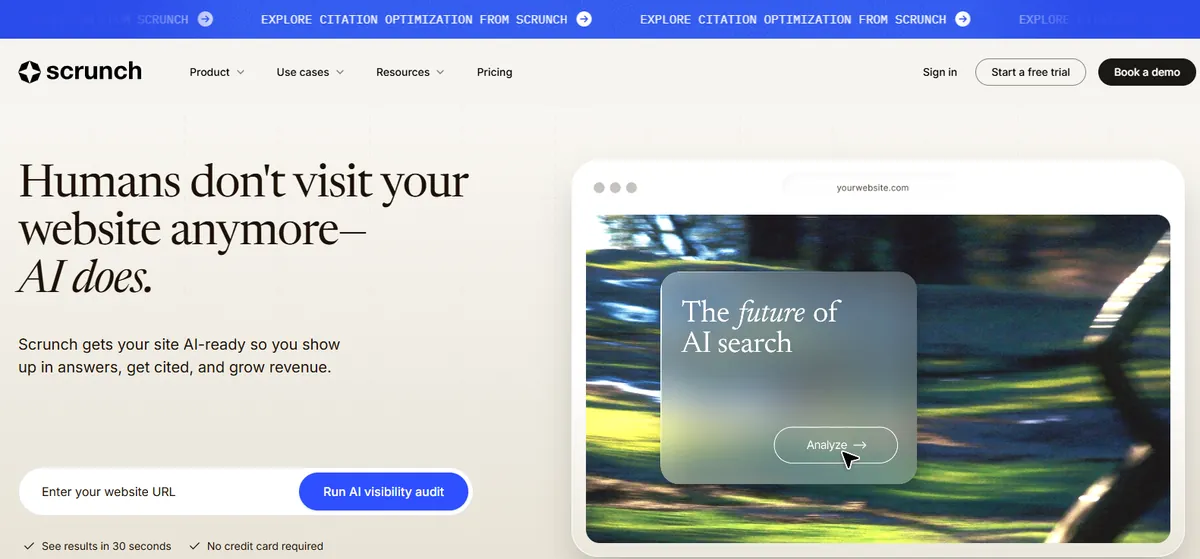
Scrunch tracks seven engines, including ChatGPT, Claude, Gemini, Perplexity, Google AI Mode, AI Overviews, and Meta AI. Sitecore acquired it in June 2026. Its Agent Experience Platform (AXP) serves a machine-readable version of your site to AI agents.
Pricing
Core starts at $250/month (billed annually) for brands. Agency plans start at $500/month. Enterprise is custom.
Key features:
- Seven-engine tracking with prompt and persona sets
- Site audits for AI readiness
- AXP for AI agent traffic
- Separate agency workspaces
Pros
Broad engine coverage, including Claude, and features that go past monitoring.
Cons
Entry price is high for small teams. AXP is still maturing, and serving a parallel version of your site carries SEO risk if done carelessly.
7. Trakkr
Best for: Teams that need the widest list of AI engines for the price
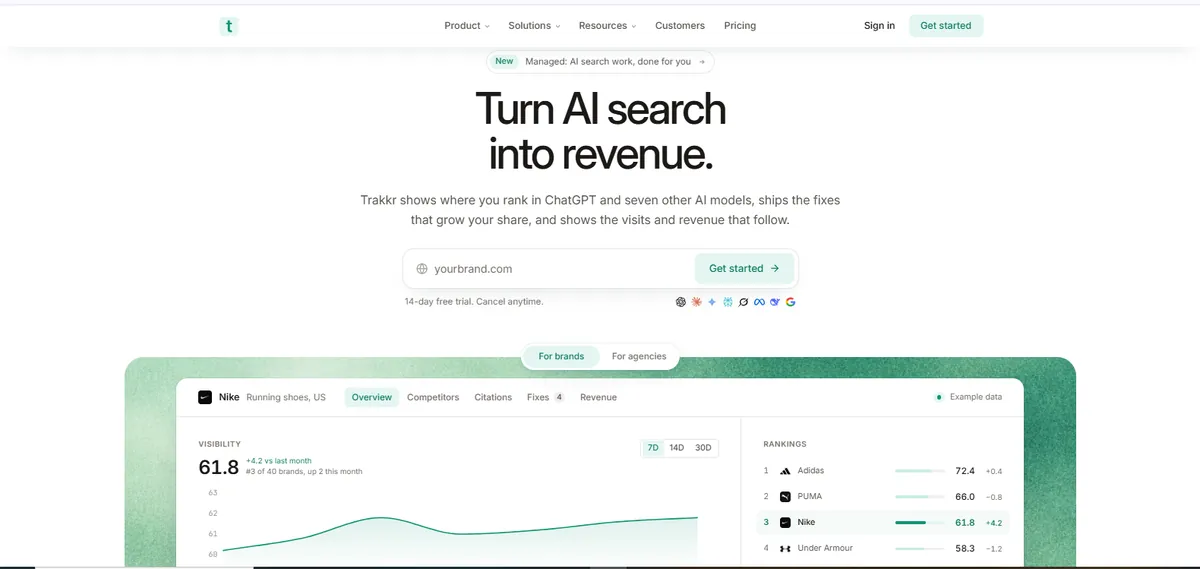
Trakkr covers more engines than most AI brand monitoring tools. It tracks eight AI models on every plan: ChatGPT, Claude, Perplexity, Gemini, Grok, Meta AI, DeepSeek, and Google AI Overviews. Most rivals charge extra for half of those.
Pricing
Growth is $100/month for one brand and 50 prompts. Scale covers 10 brands for $500/month. Enterprise is billed yearly.
Key features:
- All eight engines included on every plan
- 14-day free trial, cancel anytime
- Optional managed service that does the AI search work for you
- Multi-brand plans for agencies
Pros
About $2 per prompt with full engine coverage, and agency-friendly multi-brand pricing.
Cons
A younger product with less third-party review history than Semrush or Ahrefs. Fifty prompts on the entry plan limits deep topic coverage.
AI-powered social and web listening tools
AI-powered listening tools crawl social media, news, blogs, forums, and review sites for your brand name, then use AI to score sentiment, group topics, and flag spikes. They tell you what people say about you right now. Several of them added AI answer tracking in 2026, which makes them hybrid AI brand monitoring tools.
8. Brand24
Best for: Small and mid-sized brands that want listening and AI visibility in one tool
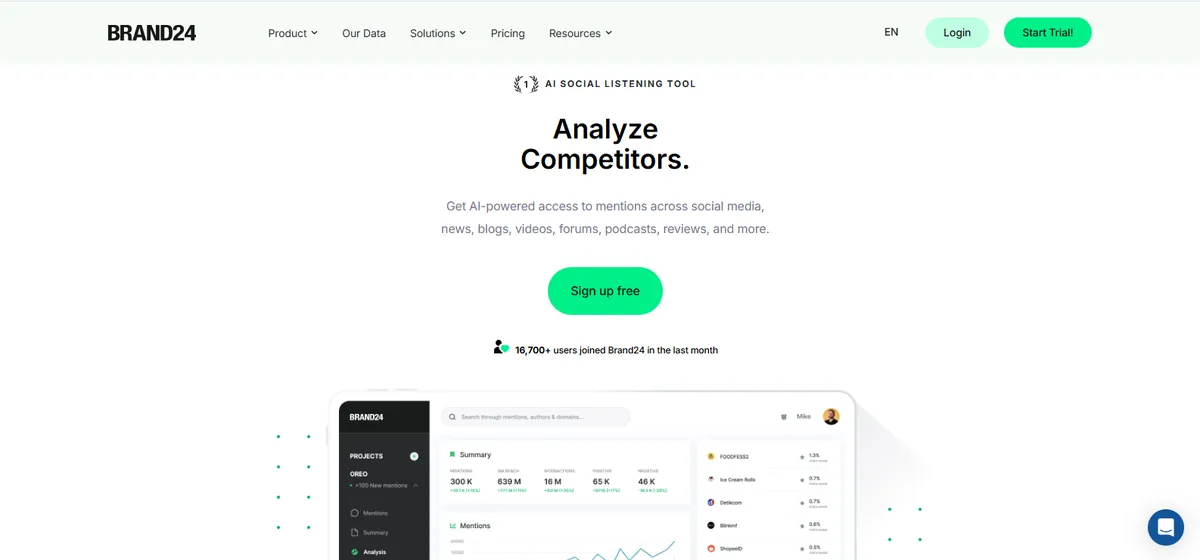
Brand24 is one of the few AI brand monitoring tools that covers both jobs well. It tracks mentions across social networks, news, blogs, podcasts, forums, and reviews. Its AI features summarize conversations, detect emotions, and spot anomalies. It now also offers an AI Visibility feature and MCP support on all plans, so you can query your mention data from an AI assistant.
Pricing
Individual is $199/month. Plans run up to $1,499/month for Enterprise. A 14-day free trial needs no card.
Key features:
- AI mention summaries, emotion analysis, and anomaly alerts
- Coverage of podcasts and reviews, not just social
- AI Visibility tracking for AI answers
- MCP connection for AI assistants
Pros
Easy setup, wide source coverage, and one of the few tools that handles both jobs.
Cons
Brand24 raised prices more than once in 2026, and some AI features cost extra. The entry plan is no longer cheap for solo users.
9. Awario
Best for: Startups and small teams with tight budgets
Awario says it crawls over 13 billion web pages a day, plus social networks, news, and blogs. It offers sentiment analysis, share of voice, and Boolean search for precise queries. Its Leads feature finds posts where people ask for products like yours.
Pricing
Starter is $49/month, or $29/month billed annually. Pro is $149 ($89 annual) and Enterprise is $399 ($249 annual).
Key features:
- Sentiment and share-of-voice reports
- Boolean search for complex queries
- Social selling leads
- Slack and email alerts
Pros
Lowest-cost real listening tool here, with up to 41% off on annual billing.
Cons
No AI answer tracking. Starter includes only one team member and a limited mention quota.
10. Brandwatch
Best for: Enterprise consumer research and insight teams
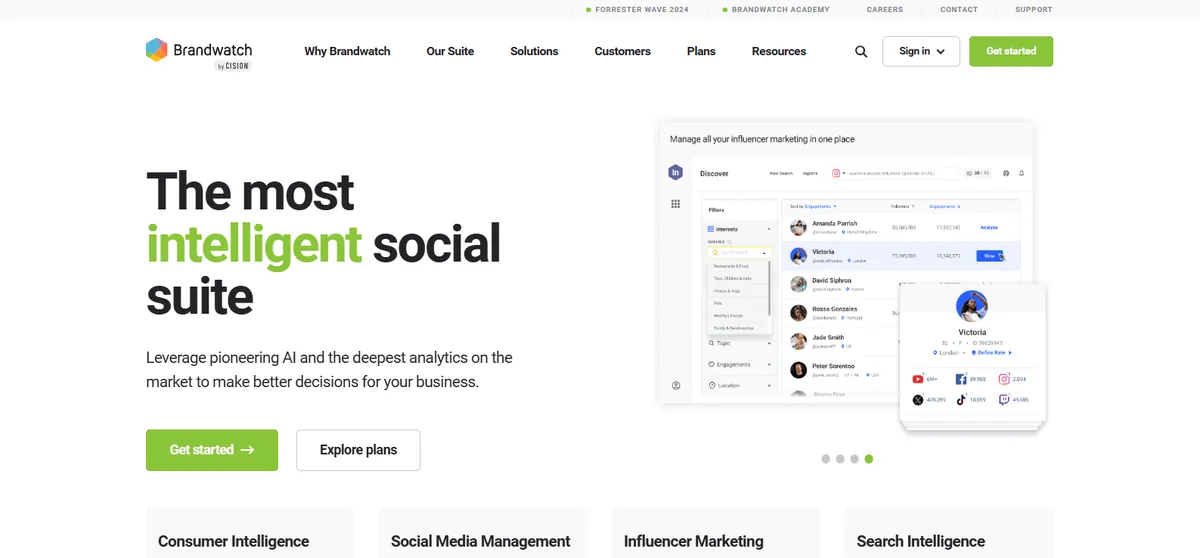
Brandwatch is one of the deepest listening platforms on the market. Its archive goes back to 2008, and its Iris AI summarizes trends, sentiment drivers, and emerging topics. It is now part of Cision.
Pricing
Sales quote only. Third-party buyer reports put the median contract around $80,000 a year.
Key features:
- Historical data back to 2008
- Iris AI analyst for summaries and trend detection
- Image and logo recognition
- Influencer and social management modules
Pros
Unmatched data depth and research tools for large brands.
Cons
High cost, annual contracts, and a learning curve. Overkill if you only need mention alerts.
11. Meltwater
Best for: PR and communications teams that track press coverage
Meltwater combines media monitoring, social listening, and consumer intelligence. Its GenAI Lens feature tracks how AI assistants describe your brand, so PR teams can see earned media and AI answers side by side.
Pricing
Sales quote only. Reported contracts range from about $10,000 to $130,000+ a year.
Key features:
- News, broadcast, and print monitoring
- GenAI Lens for AI visibility
- Journalist database and press release tools
- Social listening and influencer data
Pros
Best news and broadcast coverage on this list, with AI answer tracking built in.
Cons
No public pricing and long contracts. Social listening depth trails Brandwatch.
12. Talkwalker (Lumen by Talkwalker)
Best for: Global brands already on Hootsuite
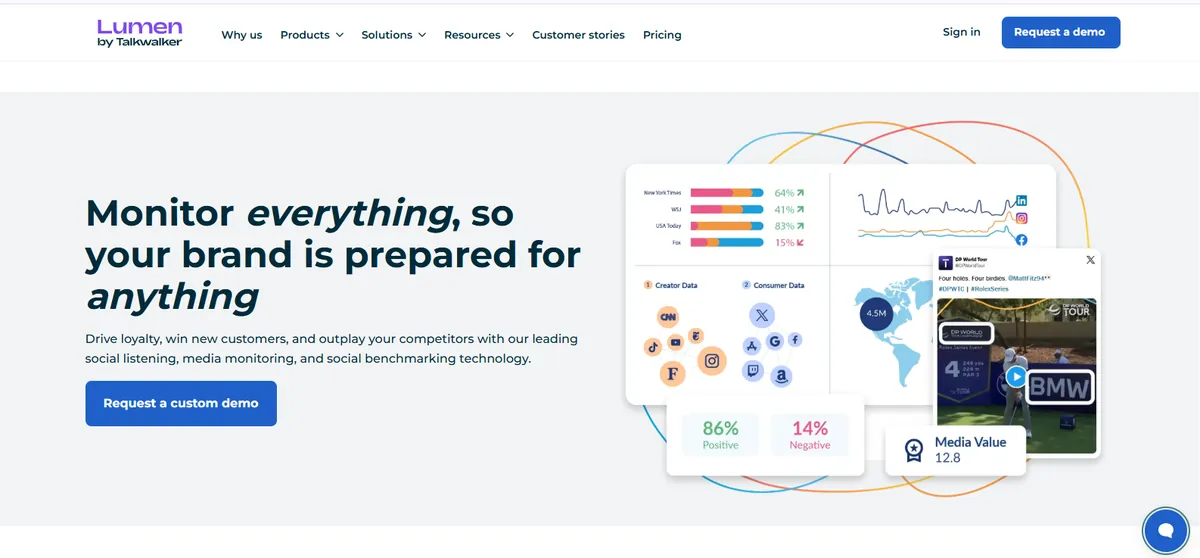
Talkwalker covers social, news, blogs, and images, with strong visual recognition for logos in photos and videos. Its homepage now carries the name Lumen by Talkwalker. Hootsuite owns it, and it added LLM Insights in January 2026 to track brand mentions in AI answers.
Pricing
Sales quote only. Third-party estimates often place it below Brandwatch.
Key features:
- Image and video logo recognition
- LLM Insights for AI answer tracking
- AI summaries and forecasting
- Hootsuite integration
Pros
Strong visual listening and a natural fit for Hootsuite users.
Cons
No public pricing. The platform is still mid-integration into Hootsuite, so packaging can change.
13. Mention
Best for: Agencies and teams tracking several brands at once
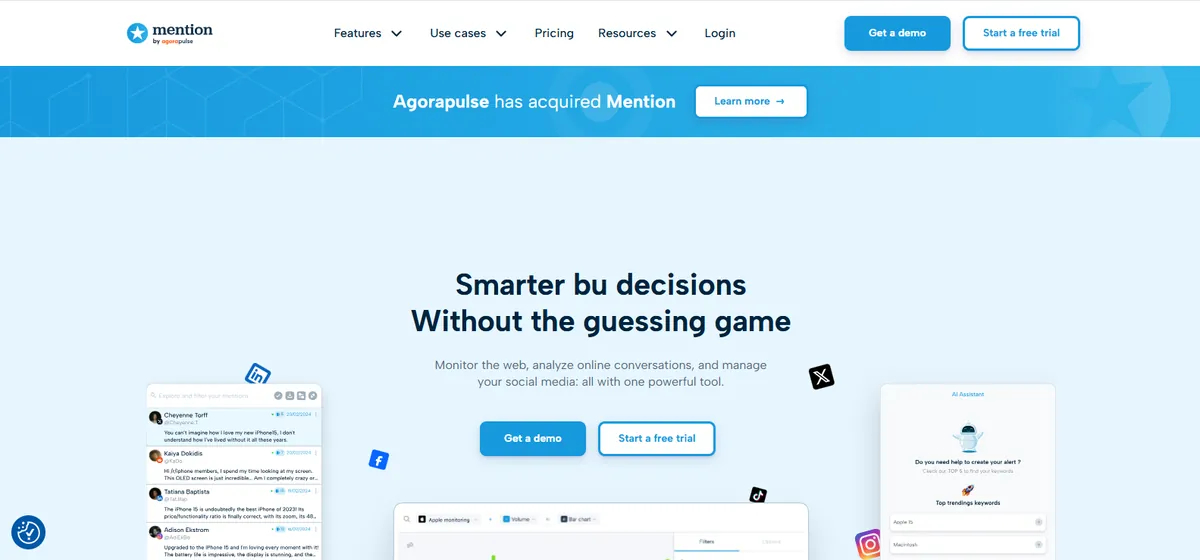
Mention monitors social media and the web for brand and competitor keywords, with real-time alerts and reports. Social media tool Agorapulse has acquired Mention, and the brand now appears as “Mention by Agorapulse.”
Pricing
The Company plan starts at $599/month on an annual contract.
Key features:
- Real-time web and social alerts
- Competitor tracking
- Shareable reports
Pros
Simple, focused monitoring with a long track record, now backed by Agorapulse.
Cons
Pricey for what it offers next to Brand24 or Awario. No AI answer tracking.
The best free AI brand monitoring option
The best free setup combines Google Alerts for web mentions with a monthly manual prompt check in ChatGPT, Gemini, and Perplexity. It costs nothing but an hour a month. It won’t give you daily data or sentiment scores, but it shows if AI engines know your brand at all.
14. Google Alerts (plus manual prompt checks)
Best for: New brands, freelancers, and anyone proving the need before paying
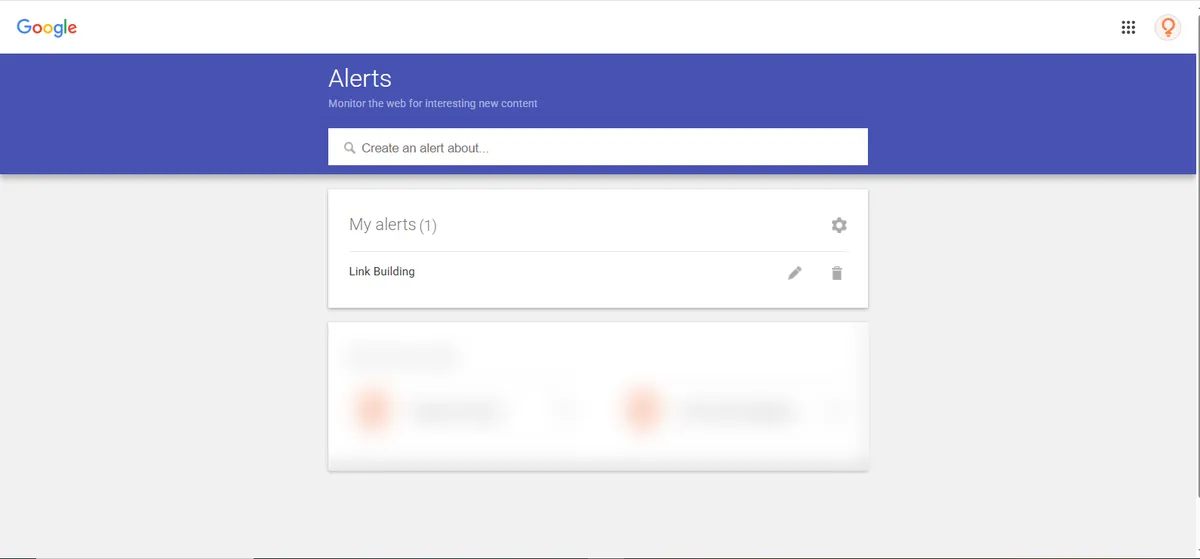
Google Alerts emails you when Google indexes a new page that matches your brand name. Pair it with a simple spreadsheet of 10 to 20 buyer prompts that you run by hand each month.
How to run a manual AI check:
- Write 10 to 20 prompts a buyer would ask, such as “best [category] for [use case]” and “[your brand] vs [competitor].”
- Run each prompt in ChatGPT, Gemini, Perplexity, and Google AI Mode. Use a logged-out or incognito session to limit personalization.
- Log four things per answer: mentioned (yes/no), position, description accuracy, and cited sources.
- Repeat on the same day each month and compare.
Pros
Free and fast to set up.
Cons
Google Alerts misses most social posts and many pages. AI answers change between runs, so a single manual check is a snapshot, not a trend. Once you track more than 20 prompts, a paid tool like Otterly.ai saves real time.
You can also check branded search growth in Google Search Console. A rise in branded queries often follows a rise in AI mentions.
Other AI brand monitoring tools worth knowing
A few more AI brand monitoring tools are worth a look if none of the 14 above fits. They either suit a narrow use case or have less public pricing and review data. Check each one with a free trial before you commit, since this market changes month to month.
| Tool | What it does | Starting price (Nov 2026) | Consider it if |
|---|---|---|---|
| Sprout Social | Social media management with a listening module | From $79/seat/mo; listening is a paid add-on | You already schedule and report in Sprout |
| Hootsuite | Social management with sentiment and alerts; owns Talkwalker | From $99/user/mo | You want publishing and basic listening together |
| AthenaHQ | AI visibility tracking with sentiment and message consistency | From $295/mo (40 prompts) | You want a GEO-focused platform with guided support |
| Rankscale | AI rank tracking across 8+ engines, including Claude, Mistral, and DeepSeek | From $20/mo | You need many engines on a very small budget |
| LLM Pulse | AI visibility tracking with Gemini and AI Mode on every plan | From €49/mo | You track European markets and want euro billing |
| Gumloop | No-code AI workflows you can build into custom mention trackers | Pro from $37/mo | You want a custom monitoring workflow, not a fixed dashboard |
How to choose the right AI brand monitoring tool
Choose by the question you need answered first, then by budget. If you need to know what AI assistants say about you, buy an AI visibility tracker. If you need to catch social posts and press coverage fast, buy a listening tool. If you need both and have under $300 a month, start with Brand24.
Match AI brand monitoring tools to your situation:
| Your situation | Start with | Why |
|---|---|---|
| Solo marketer or small business, under $50/month | Otterly.ai Lite or Google Alerts | Lowest cost to learn where you stand |
| SEO team already paying for Semrush | Semrush AI Visibility Toolkit | One login, prompt ideas from keyword data |
| SEO team already paying for Ahrefs | Ahrefs Brand Radar | Pre-built prompt data, no setup to start |
| Brand team that wants clean AI reports | Peec AI | Low cost per prompt, unlimited seats |
| You need Claude, Grok, or DeepSeek covered | Trakkr or Scrunch | Both include engines most rivals skip |
| Agency tracking many client brands | Trakkr Scale or Scrunch Agency | Multi-brand pricing |
| Social or community team | Brand24 or Awario | Real-time mentions and sentiment |
| PR team tracking press and AI answers | Meltwater | News coverage plus GenAI Lens |
| Enterprise insights team | Brandwatch or Profound | Data depth and support |
Five questions to ask before you buy any AI brand monitoring tools:
- Which AI engines does my audience use? B2B buyers lean on ChatGPT and Perplexity. Consumer searches often start in Google AI Overviews. Don’t pay for engines your buyers ignore.
- How many prompts do I need? Most brands need 50 to 150 prompts to cover their main products, use cases, and competitor comparisons. Do the per-prompt math, not just the headline price.
- How often does the data refresh? Daily tracking catches changes faster. Weekly is fine for small brands.
- Does it show cited sources? This is the most useful report for action. It tells you which sites AI engines trust in your niche.
- Can I export the data? CSV, Looker Studio, API, or MCP access matters once you report to clients or leadership.
If you already track Google rankings, see how these tools fit next to classic rank tracking tools and our list of AI SEO tools.
Metrics to track and a 30-minute setup workflow
The six metrics that matter most in AI brand monitoring tools are mention rate, share of voice, position in the answer, sentiment, answer accuracy, and cited sources. Track them for your brand and your top three competitors. Set up your prompts once, then review the trend every two weeks rather than reacting to single answers.
The six AI brand monitoring metrics:
| Metric | What it measures | Why it matters |
|---|---|---|
| Mention rate | % of tracked prompts where your brand appears | Your basic AI visibility score |
| Share of voice | Your mentions vs competitor mentions across the same prompts | Shows if you are winning or losing the category |
| Position | Where you appear in the answer (first, third, last) | Earlier mentions get more attention |
| Sentiment | Positive, neutral, or negative framing | Catches reputation problems early |
| Accuracy | Correct pricing, features, and facts | Wrong facts cost sales quietly |
| Cited sources | Pages the AI links to or draws from | Your target list for earning mentions |
A 30-minute setup workflow:
- List your brand terms. Include your brand name, product names, common misspellings, and your founder’s name.
- Pick three to five competitors. Use the brands you lose deals to, not the biggest names in your space.
- Write your prompt set. Split it into three groups: category prompts (“best link building agency”), problem prompts (“how to get backlinks for a SaaS site”), and comparison prompts (“[you] vs [competitor]”).
- Add your prompts to the tool and choose the engines your buyers use.
- Set alerts. Get notified on sentiment drops, new negative mentions, and big share-of-voice swings.
- Record a baseline. Save your first two weeks of data before you change anything.
- Review every two weeks. AI answers vary from run to run, so judge trends, not single responses.
What to do with your monitoring data
AI brand monitoring tools only pay off when you act on their data. The fastest wins come from three moves: earn mentions on the pages AI engines already cite, fix wrong facts at their source, and turn unlinked mentions into links. Each one targets the off-site signals that correlate most with AI visibility.
1. Get mentioned on the sources AI engines cite. Open your tool’s cited-sources report. It lists the review sites, roundups, and articles that AI engines draw from for your prompts. If a competitor appears on those pages and you don’t, that page is your next outreach target. This cited-source list is the starting point for any serious brand mention campaign. Ahrefs’ research on branded web mentions found that mentions on highly cited pages compound AI visibility.
2. Fix wrong answers at the source. AI engines repeat what the web says. If ChatGPT quotes your old pricing, find the pages it cites and ask the owners to update them. Then refresh your own pricing, about, and product pages so the correct facts are easy to find.
3. Reclaim unlinked mentions. Listening tools surface articles that name your brand without a link. A polite note to the editor often turns that mention into a link. Our guide to link reclamation walks through the outreach step by step.
4. Answer the conversations AI pulls from. Reddit and YouTube are both tracked by Brand Radar because they correlate with AI visibility. Join relevant threads with real, helpful answers, not promotion.
5. Build steady, earned coverage. Brands with the most web mentions earned up to 10 times more AI Overview mentions than the next group in Ahrefs’ study. One-off spikes fade. A steady flow of editorial mentions on relevant, real sites is what moves share of voice over months.
Your own site still matters too. Clear structure and smart internal linking for AI and SEO help AI crawlers understand what each page covers.
Mistakes to avoid with AI brand monitoring
The most common mistakes are trusting a single AI answer, tracking vanity prompts, and buying a tool before you know which question it should answer. Avoid these six and your monitoring budget turns into decisions instead of dashboards nobody opens.
- Judging by one answer. AI responses change from run to run and user to user. Look at trends across weeks, not one screenshot.
- Tracking only branded prompts. “What is [your brand]?” will almost always mention you. The prompts that matter are the unbranded ones your buyers type before they know you exist.
- Comparing headline prices of AI brand monitoring tools. A $29 plan with 15 prompts and a $95 plan with 50 prompts cost about the same per prompt. Do the math on prompts, engines, and domains.
- Ignoring cited sources. Visibility scores tell you where you stand. Cited sources tell you what to do next. Skip them and you have data with no plan.
- Paying for engines your buyers don’t use. All-engine plans cost more. Start with the two or three engines your audience uses most.
- Monitoring without a follow-up plan. Assign an owner for each alert type, from sentiment drops to wrong facts, before you turn tracking on.
Final verdict: the best AI brand monitoring tools by budget
For most brands, the best AI brand monitoring tools are Peec AI for AI answer tracking and Brand24 for social listening. Start with one tool that answers your most urgent question, track it for a month, then add the second job only if the data shows you need it.
| Monthly budget | AI answer tracking | Social and web listening |
|---|---|---|
| $0 | Manual prompt checks | Google Alerts |
| Under $100 | Otterly.ai, Peec AI Starter, or Trakkr | Awario |
| $100 to $500 | Semrush, Ahrefs Brand Radar, or Scrunch | Brand24 |
| Enterprise | Profound | Brandwatch, Meltwater, or Talkwalker |
FAQs about AI brand monitoring tools
What is the best AI brand monitoring tool?
There is no single best tool. Peec AI offers the best value for tracking AI answers, Semrush and Ahrefs suit teams already on those suites, and Brand24 is the best all-round pick for social listening plus AI visibility. Enterprise teams usually choose Profound, Brandwatch, or Meltwater.
How much do AI brand monitoring tools cost?
Paid AI visibility trackers start at $29/month (Otterly.ai) and most mid-range plans cost $95 to $250/month. Listening tools start around $49/month (Awario). Enterprise platforms such as Brandwatch and Meltwater use custom quotes that often reach $10,000 to $80,000+ a year.
Can I monitor ChatGPT mentions for free?
Yes, by hand. Run a fixed set of buyer prompts in ChatGPT each month and log if your brand appears, its position, and the sources cited. Free trials from Peec AI, Profound, and Trakkr let you test real tracking for one to two weeks before you pay.
What is the difference between AI brand monitoring and social listening?
Social listening tracks what people post about your brand on social media and the web. AI brand monitoring, in the newer sense, tracks what AI assistants say about your brand in their answers. Many teams now need both, and tools like Brand24 and Meltwater cover both.
How often should I check my AI visibility?
Most AI brand monitoring tools refresh daily or weekly. Review the trend every two weeks and do a deeper review each month. AI answers vary between runs, so short-term swings are often noise.
Which AI engines should I track?
Start with ChatGPT, Google AI Overviews, and Perplexity, since most AI brand monitoring tools include them by default. Add Gemini, AI Mode, Copilot, or Claude when your audience uses them.
How do I get mentioned more in AI answers?
Earn mentions on the pages AI engines already cite, keep facts about your brand accurate across the web, and build a steady flow of editorial coverage. In Ahrefs’ study of 75,000 brands, branded web mentions correlated more strongly with AI Overview visibility than backlinks did.
Do brand mentions without links help SEO?
They help AI visibility. Ahrefs found unlinked and linked web mentions together had the strongest correlation with AI Overview presence. Turning unlinked mentions into links adds classic SEO value on top.
Are AI brand monitoring tools accurate?
They are accurate about what they saw, but AI answers vary by run, location, and user. Good tools run each prompt many times and report averages. Treat their numbers as trends and directions, not exact rankings like a classic SERP position.
What is the difference between AI brand monitoring and GEO?
AI brand monitoring measures how AI engines mention your brand. Generative engine optimization (GEO) is the work you do to improve those mentions, such as earning coverage on cited sources and fixing wrong facts. Monitoring tells you where to focus your GEO effort.
