
If you’ve been doing SEO for any length of time, you’ve probably seen the term “Page Authority” or its abbreviation “PA.” It appears in many SEO tools and is often discussed alongside Domain Authority. But what exactly does it mean, and how important is it for your website’s success?
Page Authority is a metric developed by Moz that predicts how well a specific page is likely to rank in search engines. It is scored on a scale from 1 to 100, with higher scores indicating a stronger potential to rank. Unlike Domain Authority, which looks at the overall strength of an entire website, Page Authority focuses on the strength of a single page.
Understanding Page Authority can help you make smarter decisions about content creation, link building, and internal linking. In this comprehensive guide, you’ll learn exactly what Page Authority is, how it differs from Domain Authority, what a good PA score looks like, and most importantly, practical, actionable steps you can take to improve it in 2026.
Whether you’re just starting in SEO or already have experience, this guide will give you clear explanations and useful strategies you can apply right away. We’ll cover real-world examples, common misconceptions, and a complete roadmap so you can start improving your pages immediately.
Table of Contents
What is Page Authority in SEO?
Page Authority (PA) is a comparative metric created by Moz that estimates how well a specific webpage is likely to rank in search engine results pages (SERPs).
It is not a Google ranking factor. Google does not use Page Authority in its algorithm. Instead, Moz developed it as a predictive tool based on its own analysis of what correlates with strong rankings across thousands of search results. The score ranges from 1 to 100, with higher numbers suggesting a page has a better chance of ranking well for its target keywords.
The main factors Moz uses to calculate Page-Authority are the quality and quantity of backlinks pointing to that specific page, the strength of the linking domains, and various other link-related signals. Because it is based primarily on link profile strength, Page-Authority tends to be higher for pages that have attracted many high-quality backlinks over time.
It is important to understand that Page-Authority is a relative metric, not an absolute one. A score of 50 on one page doesn’t mean the same thing as a score of 50 on another page in a different niche. The score is most useful when comparing pages within the same competitive landscape or tracking changes over time for the same page.
Many beginners mistakenly treat Page-Authority as a direct ranking signal or a guarantee of success. In reality, it is simply one of many helpful SEO metrics that can guide your strategy when used correctly. Moz updates its model periodically to keep the predictions as accurate as possible based on current ranking patterns.
Think of Page-Authority like a report card for a single page. It tells you how strong that page’s link profile is compared to others, helping you decide where to focus your efforts. A new blog post might start with a low PA score, but with targeted link building and content updates, you can watch that score climb over months.
Page Authority vs Domain Authority
Page Authority and Domain Authority are two of Moz’s most popular metrics, but they measure different things and serve different purposes.
Domain Authority (DA) predicts the overall ranking strength of an entire domain or website. It looks at the collective strength of all pages and backlinks across the whole site. It is a broader, site-level score that gives you a sense of how powerful your entire website is in the eyes of search engines.
Page Authority (PA), on the other hand, focuses on the predicted ranking strength of a single, specific page. It zooms in on one URL and evaluates its individual link profile and potential.
Here’s a clear comparison table to highlight the key differences:
| Aspect | Page Authority (PA) | Domain Authority (DA) |
| What it measures | Strength of one individual page | Overall strength of the entire domain |
| Score range | 1–100 | 1–100 |
| Main focus | Backlinks to that specific page | All backlinks across the whole site |
| Best used for | Comparing specific pages, content planning | Comparing entire websites or competitors |
| Changes over time | Can increase faster with targeted links | Changes more slowly as it’s domain-wide |
| Example use case | Deciding which blog post to promote | Evaluating competitor website strength |
Understanding this difference is crucial. You might have a strong Domain Authority but still have individual pages with low Page Authority if they lack good backlinks. Conversely, a newer site with lower Domain Authority can have some pages with surprisingly high Page-Authority if those pages have attracted strong, relevant links.
When doing competitive analysis, many SEOs look at both metrics together to get a fuller picture. For example, if your competitor’s homepage has a high DA but the specific ranking page has a lower PA than yours, you may have a real opportunity to outrank them with targeted efforts on that page.
In practice, Page-Authority is often more actionable for day-to-day content work, while Domain Authority is better for big-picture site comparisons and link prospecting.
How Page Authority is calculated
Moz calculates Page Authority using a complex machine learning model that analyzes hundreds of factors, with the strongest emphasis on link-related signals.
The main inputs include:
- The quality and quantity of backlinks pointing specifically to that page
- The authority and relevance of the domains linking to the page
- Various other link profile characteristics, such as the diversity of linking domains and the freshness of links
Moz’s model is trained on real ranking data, so it tries to predict which pages are most likely to rank well based on patterns it has observed across millions of search results. The algorithm is updated periodically to stay aligned with current ranking behaviors.
It is important to remember that Page Authority is a predictive, relative metric. It does not tell you exactly where a page will rank. Instead, it gives you a useful comparative score that helps you understand relative strength.
Because it relies heavily on backlinks, improving Page Authority usually involves improving the link profile of that specific page. However, other factors such as content quality, user engagement signals, on-page optimization, and technical performance also play supporting roles in actual rankings. Moz’s model tries to account for these correlations, but the strongest predictor remains the quality of incoming links.
In 2026, Moz continues to refine its machine learning model to better reflect modern ranking factors, including elements related to E-E-A-T and user experience signals. This means Page Authority scores are becoming more nuanced, but they still primarily reflect link strength at the page level.
What is a good Page Authority score?
There is no universal “good” Page Authority score because the metric is relative and highly competitive.
Here are realistic ranges to help you interpret PA scores in practice:
- 1–20: Very low authority. Common for new pages or sites with almost no backlinks. These pages usually struggle to rank unless the competition is extremely weak.
- 20–40: Below average. Typical for newer or smaller sites that are just starting to build links. Improvement is possible with consistent effort.
- 40–60: Average to good. Many established blog posts and important pages fall in this range. This is often a solid benchmark for mid-tier content.
- 60–80: Strong. Indicates a page has attracted solid, relevant backlinks from authoritative sources. Pages in this range have good ranking potential in many niches.
- 80–100: Excellent. Usually seen on highly authoritative pages from major websites or flagship content that has earned exceptional links over time.
The most important thing is not the absolute number but how your page’s PA compares to your competitors for the same keywords. A page with PA 45 might rank well if competing pages have lower scores. Conversely, a page with PA 70 might struggle if competitors have PA 85+.
Always compare Page Authority within your specific niche and against the actual pages you are competing with in search results. Tools like Moz Link Explorer make this easy by letting you check PA for top-ranking pages.
Remember that Page Authority can change over time. A page that starts low can climb significantly with targeted link building and content improvements. Tracking progress month by month gives you a clear picture of whether your efforts are paying off.
Why Page Authority Matters in SEO
Even though Page Authority is not a Google ranking factor, it remains a valuable metric for several practical reasons.
First, it helps you understand the relative ranking potential of individual pages. This is useful when deciding which content to promote, update, or build links for. Instead of spreading efforts evenly, you can focus on pages that have the best chance of moving the needle.
Second, it provides a quick way to evaluate competitive strength. By checking the Page Authority of top-ranking pages for your target keywords, you can get a sense of how strong the competition is and what level of link profile you may need to compete effectively.
Third, tracking changes in Page Authority over time helps you measure the effectiveness of your link-building and content efforts. If you see PA scores rising after a link-building campaign or content update, it’s a positive signal that your work is having an impact on the page’s perceived strength.
Finally, Page Authority encourages a page-level rather than domain-level mindset. Many SEOs focus too much on growing overall Domain Authority while neglecting individual pages. Paying attention to Page Authority reminds you that specific pages can become powerful ranking assets when given proper attention and links.
In competitive analysis, combining Page Authority with other metrics like Domain Authority, organic traffic estimates, and backlink quality gives you a well-rounded view. It helps you identify opportunities where your page might outperform competitors even if your overall site authority is lower.
For bloggers and small business owners, Page Authority is especially useful because it lets you focus efforts on high-potential pages without needing a massive budget. A single well-optimized page with growing PA can drive significant traffic and leads.
How to increase Page Authority
Improving Page Authority requires a focused, consistent effort. Here are the most effective, practical strategies you can start implementing today:
- Build high-quality, relevant backlinks. The strongest way to increase PA is to earn links from authoritative, relevant pages. Focus on creating link-worthy content — in-depth guides, original research, tools, or resources that solve real problems. Then reach out to sites that would genuinely benefit from linking to you. One strong link from a high-authority page can have more impact than dozens of low-quality ones.
- Optimize internal linking. Strong internal links from high-authority pages on your own site can help pass authority to target pages. Create logical internal linking structures that support your most important content. For example, link from older, well-established posts to newer pillar pages. This helps distribute authority across your site and strengthens individual page signals.
- Create and update high-quality content Pages that provide exceptional value tend to attract more natural links over time. Regularly update older content to keep it fresh and relevant. Add new data, examples, or sections based on current trends. Updated content often earns renewed attention and links, which can boost Page Authority.
- Remove or disavow toxic links. Low-quality or spammy backlinks can hold a page back. Use tools to audit your link profile and disavow harmful links when necessary. Cleaning up a toxic link profile can sometimes lead to noticeable improvements in Page Authority and overall site health.
- Promote content strategically. Share your best content in relevant communities, on social media, and through thoughtful outreach to increase the chances of earning natural links. Focus on places where your audience already gathers and where the content fits naturally.
- Earn links from high-authority pages. Target quality over quantity. One strong link from a high-PA page can have more impact than many links from low-PA pages. Prioritize outreach to authoritative sites in your niche.
Improving Page Authority is a long-term process. Focus on consistent, high-quality work rather than looking for quick fixes. Track your progress monthly using Moz Link Explorer or similar tools, and adjust your strategy based on what’s working.
In 2026, combining link building with strong E-E-A-T signals (Experience, Expertise, Authoritativeness, Trustworthiness) is especially effective. Pages that demonstrate real expertise through author bios, original data, and transparent sourcing tend to attract better links and see stronger Page Authority growth.
Page Authority tools
The most popular tool for checking Page Authority is Moz Link Explorer. A free account gives you limited checks per month, while paid Moz Pro plans provide unlimited access along with additional features like backlink analysis and rank tracking.
Other helpful tools include:
AHREF
Shows similar page-level metrics, backlink data, and competitive insights. Excellent for in-depth link analysis.

SEMRUSH
Offers authority scores and competitive insights. Useful for comparing your pages against competitors.

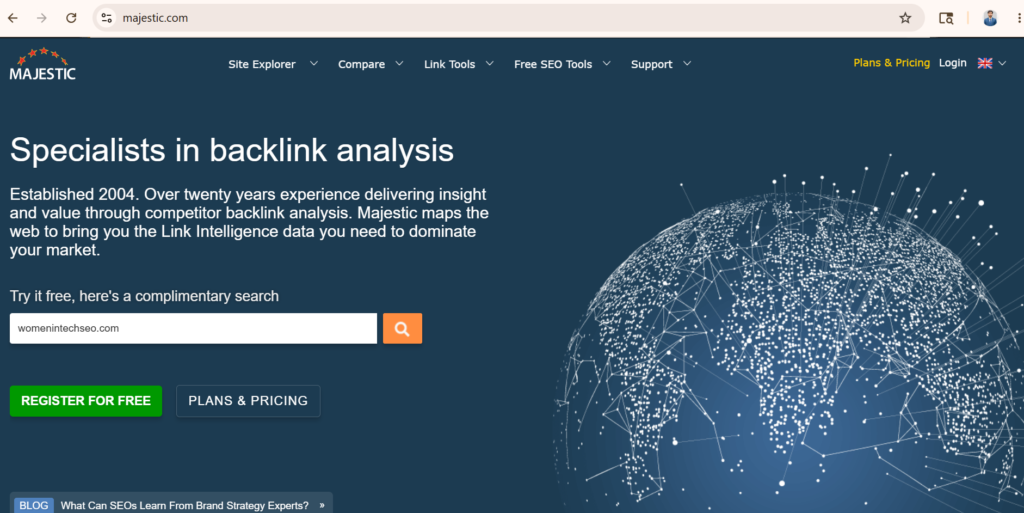
MAJESTIC
Strong on trust flow and citation flow metrics that complement Moz’s Page Authority.
Use these tools to benchmark your pages against competitors and track progress over time. Remember that different tools use slightly different methodologies, so treat the scores as directional guidance rather than absolute truth. Cross-reference multiple tools for a more balanced view.
For beginners, start with Moz’s free tools. As you grow, investing in a paid plan can save time and provide deeper insights.
Common misconceptions about Page Authority
Several myths about Page Authority still confuse many SEO learners:
- “High Page Authority guarantees good rankings.” Reality: PA is predictive, not guaranteed. Many other factors influence actual rankings, including content quality, user experience, and technical performance.
- “Page Authority is a Google ranking factor.” Reality: Google does not use Moz’s Page Authority metric. It is a third-party tool designed to estimate ranking potential based on observed patterns.
- “You should only focus on increasing Page Authority.” Reality: A balanced SEO strategy that includes content quality, user experience, technical optimization, and E-E-A-T signals is far more effective. Page Authority is just one piece of the puzzle.
- “Page Authority never changes.” Reality: PA can and does change over time as backlinks are gained or lost and as Moz updates its model.
Understanding these realities helps you use Page Authority as the helpful comparative tool it is meant to be, rather than treating it as a magic ranking number. It is best used for benchmarking, competitive analysis, and tracking the impact of your efforts over time.
Final thoughts
Page Authority is a useful metric that helps you understand the relative strength of individual pages and make smarter SEO decisions. While it is not a direct Google ranking factor, it provides valuable insights into link profile strength and competitive positioning.
The best way to improve Page Authority is through consistent, high-quality work: creating valuable content that solves real problems, earning relevant backlinks from authoritative sources, optimizing internal linking, and maintaining a clean, trustworthy link profile.
Focus on long-term value rather than chasing scores. Pages that genuinely help users and earn natural links tend to see their Page Authority grow naturally over time.
Start by checking the Page Authority of your most important pages today using Moz Link Explorer. Then create a simple plan to improve the ones that matter most. With patience and smart effort — focusing on quality content, strategic outreach, and continuous optimization — you can steadily increase Page Authority and improve your overall SEO performance.
The journey to better rankings is built on quality, not shortcuts. Use Page Authority as one of many tools to guide your strategy, and you’ll be well on your way to sustainable success in 2026 and beyond.
Take the first step today. Pick one important page on your site, audit its current PA score, and identify one actionable improvement you can make this week — whether it’s updating content, reaching out for a relevant link, or strengthening internal links. Small, consistent actions compound into significant gains over time.
