
B2B link building is fundamentally different from B2C link building—yet most guides treat backlinks as a one-size-fits-all solution.
For B2B companies, backlinks do more than improve rankings. They signal authority to a niche audience of decision-makers. They drive qualified traffic from industry-relevant sources. They build credibility with prospects in lengthy sales cycles who research thoroughly before buying.
In 2026, B2B link building has become an essential infrastructure for companies selling to other businesses. Whether you’re a SaaS platform, software vendor, consulting firm, or enterprise service provider, high-quality backlinks from relevant B2B sources dramatically improve your ability to be found and trusted by potential customers.
This comprehensive guide explains what B2B link building is, how it differs from B2C, the eight proven strategies that work in 2026, the tools that enable scalability, the challenges you’ll face, and whether you should build links in-house or hire an agency.
Table of Contents
What Is B2B Link Building?
B2B link building is the process of acquiring backlinks from industry-relevant, authoritative websites to improve your domain authority, rankings, and credibility with B2B decision-makers.
Unlike generic link building, B2B link building focuses specifically on quality over quantity. You’re not trying to rank for millions of keywords. You’re trying to rank for high-intent, commercial keywords where your prospective customers are searching.
Why B2B Link Building Matters
Authority Signals to Niche Audiences
B2B buyers are sophisticated. They don’t just Google your company—they research extensively. When they see your site linked from industry-trusted sources (competitor mentions, analyst reports, industry publications), it validates your credibility.
Lead Generation Through Referral Traffic
B2B backlinks from relevant sources drive qualified traffic. A link from an industry publication sends people actively interested in your space. This traffic converts at higher rates than generic search traffic.
Ranking Improvements for Commercial Keywords
B2B keywords are highly competitive but have a lower volume than B2C. High-quality backlinks from relevant B2B sources rank you better for keywords where your actual customers are searching.
Relationship Building
B2B link building often creates relationships with other companies, media, analysts, and influencers in your space. These relationships lead to partnerships, mentions, and future opportunities beyond just backlinks.
How B2B Link Building Differs from B2C
This is where most generic guides fail. B2B and B2C require different strategies.
Key insight: B2B link building requires fewer links from higher-authority sources. B2C link building requires more links from broader sources.
Best B2B Link Building Strategies: Proven Methods in 2026
Strategy 1: Guest Posting on Industry-Relevant Publications
Guest posting remains effective for B2B when done strategically.
How it works:
– Identify industry publications your prospects read
– Research their guest post requirements
– Pitch topic ideas relevant to their audience
– Write high-quality content
– Include a backlink in the author bio or a contextual link
Why it works: Industry publications have built-in audiences of relevant professionals. Your article reaches decision-makers actively interested in your space.
Real example:
A B2B project management software company guest posts on “Asana vs Monday.com” on a productivity blog read by 50,000 project managers monthly. The article generates 150 clicks to their site from qualified prospects actively evaluating software solutions.
Best use case: When you have strong thought leadership and can write quality content.
Timeline: 4-8 weeks per article
Strategy 2: Digital PR Through Original Research
Data and original research are linkable assets that B2B audiences actually want to reference.
How it works:
– Conduct original research relevant to your industry
– Publish findings in a comprehensive report
– Reach out to journalists, analysts, and bloggers with story angles
– Media coverage includes backlinks to your research
Why it works: Journalists and analysts constantly look for data to cite. Original research gives them something new to report on.
Real example:
A B2B HR software company surveys 1,000 companies about remote work trends. Key finding: 73% of companies plan to maintain hybrid models through 2027. They pitch this to HR publications, workplace trends reporters, and business media. Result: 24 media mentions from publications like Forbes, HR Dive, and Fast Company. Each mention includes a backlink to the comprehensive research.
Best use case: When you have a budget for research and can wait 3-4 months for results.
Timeline: 8-12 weeks
Strategy 3: Create Linkable Assets (Tools, Templates, Calculators)
B2B professionals link to assets that solve their problems.
How it works:
– Create something genuinely useful (calculator, template, tool, benchmark data)
– Make it accessible (free signup or no signup required)
– Promote through outreach and content marketing
– Track links from natural discovery and outreach
Why it works: Practitioners working in your space link to tools that help them do their jobs better.
Real example:
A B2B email marketing company creates a free “Email Campaign ROI Calculator” where marketers input their data and calculate expected ROI. The tool becomes so useful that thousands of blogs, articles, and resources link to it. Within 6 months: 500+ referring domains, 10,000+ monthly visitors.
Best use case: When you have the technical capability to build tools.
Timeline: 3-6 months to see meaningful link volume
Strategy 4: Resource Page Outreach
Many B2B sites maintain “resources” pages listing the best tools, guides, and companies in their space.
How it works:
– Use Ahrefs to find resource pages in your niche
– Qualify them (traffic, relevance, maintenance)
– Find contact information
– Pitch your resource for inclusion
– Success rate: 15-25% of outreach
Why it works: Curators actively want to update resource pages. If your resource is genuinely valuable, they’re interested.
Real example:
A B2B analytics platform identifies 200 resource pages about data analysis. They pitch their free data analysis template. 40 pages, add it to their resources. Result: 40 new relevant backlinks over 2 months.
Best use case: When you have quality resources and good outreach skills.
Timeline: 2-3 months to see results
Strategy 5: Broken Link Building
Find broken links on industry sites, create better replacement content, and suggest your content.
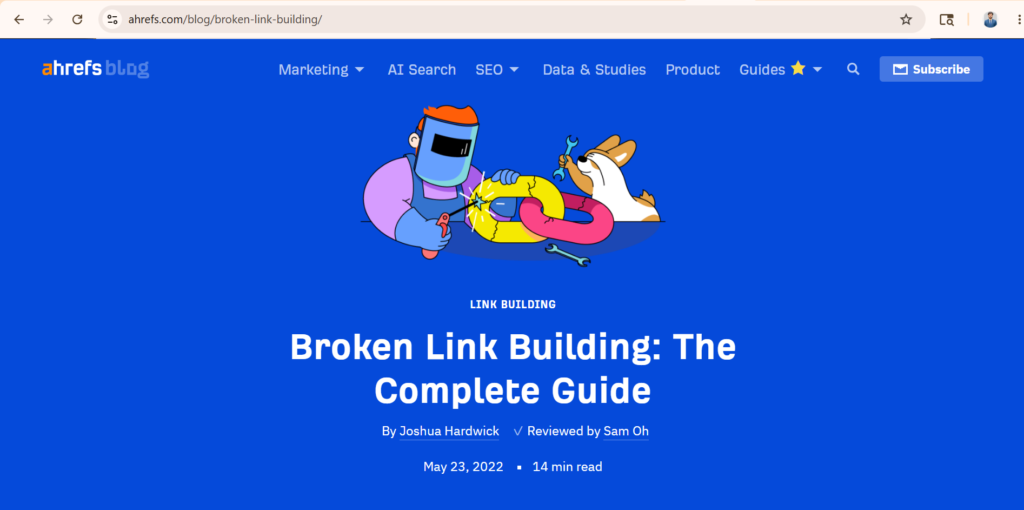
How it works:
– Use Ahrefs or SEMrush to find broken links on industry sites
– Analyze what the broken link was about
– Create better content on that topic
– Contact the webmaster, suggesting your content as a replacement
– Success rate: 20-30% of outreach
Why it works: Webmasters prefer active links to broken ones. If you offer high-quality replacement, many will use it.
Real example:
A B2B consulting firm finds a broken link on a major industry publication that was linking to an outdated “2023 Consulting Trends Guide.” They created the “2026 Consulting Trends Guide” with more data and insights. They contact the site. The editor updates the link. Result: link from the DA 75 site.
Best use case: When you have content better than what was broken.
Timeline: 2-4 weeks per successful link
Strategy 6: SaaS/Product Partnership Pages
Many B2B companies link to partners and integrations from partnership pages.
How it works:
– Identify companies that integrate or partner with similar solutions
– Pitch partnership
– If accepted, you earn a backlink from their partnership page
– Examples: app directories, integration pages, partner networks
Why it works: Partnership pages naturally link to partners. It’s expected and beneficial for both sides.
Real example:
A B2B marketing automation platform partners with 50 complementary software companies (CRM, analytics, email providers). Each partnership includes a link from the partner’s “integrations” or “partners” page. Result: 50 backlinks from relevant B2B sites.
Best use case: When your product genuinely complements other solutions.
Timeline: 1-3 months to establish partnerships
Strategy 7: HARO and Expert Quote Contributions
Help A Reporter Out (HARO) connects journalists with expert sources.
How it works:
– Sign up for HARO (daily email with journalist queries)
– Respond with expert insights when relevant
– If your response is used, the journalist includes attribution + backlink
– Success rate: 5-15% of submissions result in publication
Why it works: Journalists need expert sources. If you provide great insight, they’ll quote you and link.
Real example:
A B2B cybersecurity executive responds to 20 HARO queries monthly for 6 months. 15 of her responses get published in major publications (Forbes, TechCrunch, Security magazine). Result: 15 high-authority backlinks to the company site over 6 months.
Best use case: When you have time and expertise to provide quality responses.
Timeline: 1-2 weeks from publication to link
Strategy 8: Competitor Backlink Gap Analysis
Analyze where your competitors get links, identify patterns, and pursue similar opportunities.
How it works:
– Use Ahrefs to analyze competitor backlink profiles
– Identify their top-referring domains
– Filter for those who link to competitors but NOT to you
– Reach out with a reason they should link to you
– Success rate: 10-20% of outreach
Why it works: If a site links to your competitor, they’re already interested in your space. You just need to show why you deserve a link, too.
Real example:
A B2B marketing agency analyzes where the top 3 competitors get links. They find 50 industry blogs linking to competitors but not them. They reach out, emphasizing their unique approach. 8 of those sites add them. Result: 8 relevant backlinks.
Best use case: When you have a competitive advantage to highlight.
Timeline: 2-3 months for results
Best Tools for B2B Link Building
Ahrefs — Industry leader for backlink analysis, competitor research, and keyword research. Essential for B2B link-building strategy planning.
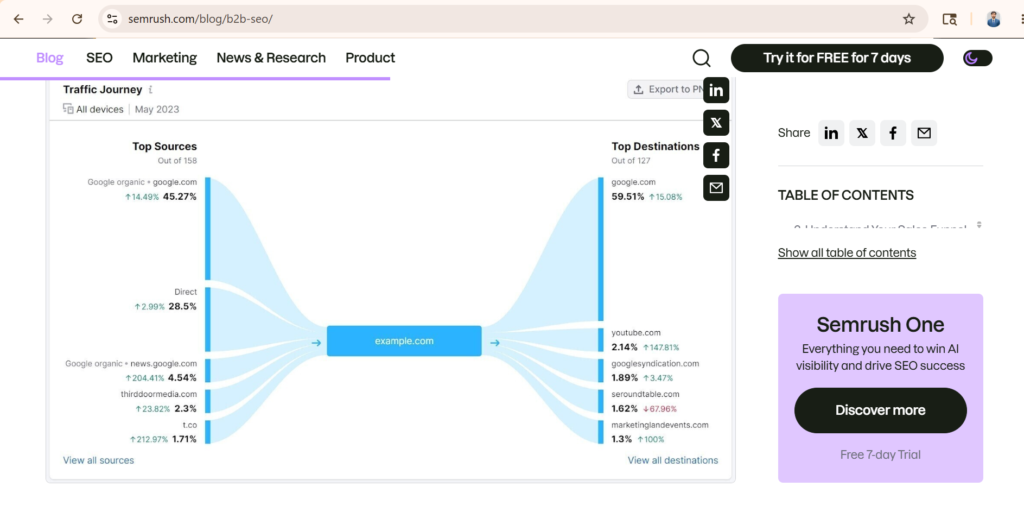
Semrush — Similar to Ahrefs, with strong competitive analysis. Good alternative or complement.
BuzzStream — Outreach management platform. Track contacts, manage outreach campaigns, and monitor responses.
Hunter.io — Find email addresses of journalists, bloggers, and prospects. Essential for outreach.
Screaming Frog — Technical SEO and content audits. Find broken links, analyze site structure.
Common B2B Link Building Challenges
Challenge 1: Small Prospect Pool
B2B niches have fewer relevant sites to pursue.
Solution: Go deeper with each prospect. Build relationships, not just one-off placements. One good relationship might generate 5+ links over time.
Challenge 2: Hard-to-Earn Links
Niche sites don’t link easily. They’re selective about what they promote.
Solution: Create genuinely valuable assets. The only way to earn selective links is to have something worth linking to.
Challenge 3: Long Outreach Cycles
B2B outreach takes time. Journalists are busy; decision-makers take months.
Solution: Start outreach early. Pipeline your efforts so results compound over time.
Challenge 4: Low Response Rates
B2B journalists get hundreds of pitches. Response rates are 1-5%.
Solution: Personalize heavily. Refer to their previous articles. Make your pitch about them, not you.
Challenge 5: Content Not Link-Worthy
Generic whitepapers don’t get links. You need something differentiated.
Solution: Create research, tools, or insights competitors don’t have. Ask: “Why would someone link to this instead of 100 other resources?”
B2B Link Building KPIs to Track
Track these metrics to understand impact:
Referring Domains: How many unique domains link to you? Target: +5-10 per month.
Domain Authority Growth: Your domain authority (DA) growth over time. Target: +2-5 DA points per quarter.
Organic Traffic: Traffic from organic search. This is the ultimate impact metric.
Keyword Rankings: Track rankings for 20-30 target keywords. Target: +5-10 positions per quarter.
Demo/Trial Sign-ups from Organic: Track conversions. This proves ROI. Target: +20-30% organic conversion increase.
Cost per Link: For agencies, understand cost-per-link. Target: £500-2,000 per link, depending on quality.
In-House vs Agency: Which Approach Is Right?
In-House B2B Link Building
Pros:
– Complete control over strategy
– Long-term relationship knowledge
– Deeper understanding of your business
– No agency markup on costs
Cons:
– Requires hiring specialist ($50K-80K salary)
– Time to effectiveness (3-6 months to competence)
– Limited scalability
– Relationship network starts from zero
Best for: Large companies with a budget, long-term thinking, and commitment to sustainability.
B2B Link Building Agency
Pros:
– Immediate expertise and experience
– Established relationships and networks
– Scalable process and systems
– Results-focused accountability
Cons:
– Cost (£2,000-5,000+ per month)
– Less control over strategy
– Generic approach (same process for all clients)
– Relationship with agency, not your company
Best for: Companies wanting quick results, limited in-house capacity, and who prefer a performance-based approach.
Hybrid Approach (Best for Most)
Hire an agency for 6-12 months while building in-house capability. Transfer knowledge. Transition to in-house when ready.
Who Needs B2B Link Building?
SaaS and Software Companies — Highly competitive keywords, need authority to rank. Essential.
B2B Service Providers — Consultancies, agencies, professional services. Important.
Enterprise Software — High-value deals depend on trust. Essential.
B2B E-commerce — Industrial products, B2B marketplaces. Important.
B2B Information Services — Data providers, research firms, industry analysts. Essential.
Frequently Asked Questions
What Is B2B Link Building?
B2B link building is acquiring backlinks from industry-relevant, authoritative websites to improve domain authority, rankings, and credibility with business decision-makers. Unlike B2C link building, which focuses on volume, B2B emphasizes quality from relevant sources.
How Much Does B2B Link Building Cost?
In-house: £40K-80K annual salary for a specialist. Agency: £2,000-5,000+ monthly depending on quality and results.
How Long Does B2B Link Building Take?
Expect 3-6 months to see meaningful results. Some strategies (guest posting, digital PR) take 2-3 months per link. Linkable assets take 3-6 months to generate volume.
Is Guest Posting Still Effective?
Yes, for B2B. Guest posting on industry-relevant publications reaches your actual audience and generates authority. Less effective for B2C.
What Are Good B2B Backlinks?
Links from: industry publications, analyst firms, competitor sites (being mentioned), business media, professional associations, industry forums, software directories (for SaaS).
Should I Hire a B2B Link Building Agency?
If you need results quickly or lack in-house expertise: yes. If you’re thinking long-term and can invest in building capability, consider a hybrid approach.
Do Backlinks Still Matter for B2B SEO?
Yes. Backlinks remain a top 3 ranking factor. For B2B, they’re especially important because decision-makers often research competitors by looking at who links to them.
Conclusion: B2B Link Building as a Strategic Investment
B2B link building isn’t a quick tactic. It’s a strategic investment in your company’s visibility, credibility, and lead generation capacity.
The companies dominating their B2B markets aren’t just creating content—they’re building authority through strategic backlinks from sources their prospects trust and read.
Whether you build links in-house or hire an agency, commit to the process. Track results. Adjust strategy based on what works. Over 6-12 months, you’ll see compounding returns in rankings, traffic, and ultimately, lead generation.
The eight strategies in this guide work. The challenge isn’t knowing what to do—it’s committing to doing it consistently and measuring results ruthlessly.
Start with one strategy aligned with your resources (guest posting if you have strong writers, digital PR if you have a budget, broken link building if you have time). Build momentum. Add strategies as you learn. Within a year, you’ll have built meaningful authority in your space.
