
Launching a great SaaS product is only the beginning. To attract qualified users consistently, your website needs strong visibility in search engines. That’s where a well-planned SaaS SEO Checklist becomes essential.
y competitive markets where buyers spend time researching solutions before signing up. Your website must answer questions, solve problems, demonstrate expertise, and guide visitors from awareness to conversion.
This guide covers every major aspect of SaaS SEO, from keyword research and technical optimization to content strategy, backlinks, and performance tracking. Follow this checklist to build sustainable organic growth and generate qualified leads over time.
What Is a SaaS SEO Checklist?
A SaaS SEO Checklist is a structured framework that helps Software-as-a-Service companies optimize their websites for search engines and users. It includes the essential tasks required to improve rankings, increase organic traffic, and generate more product signups.
Unlike a general SEO checklist, it focuses on SaaS-specific challenges such as:
- Product-led content
- Feature pages
- Long buying journeys
- Competitive keywords
- Trial and demo conversions
- Scalable content marketing
SEO isn’t something you complete once. Successful SaaS companies continuously improve their websites based on performance data, user behavior, and search trends.
Why SaaS SEO Is Different
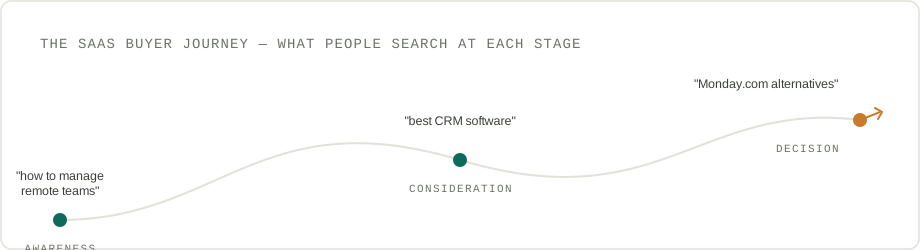
SaaS SEO differs from SEO for eCommerce, local businesses, and blogs because software buyers rarely make immediate decisions. They compare products, read reviews, evaluate features, and explore alternatives before choosing a solution.
Your SEO strategy should support every stage of this journey.
Awareness Stage:
Potential customers search for problems.
Examples:
- How to manage remote teams
- Improve customer retention
- Best project management methods
Consideration Stage:
Users begin comparing solutions.
Examples:
- Best CRM software
- Marketing automation tools
- Help desk software comparison
Decision Stage:
Searches become highly specific.
Examples:
- HubSpot pricing
- Monday.com alternatives
- Best CRM for startups
Ranking across all three stages creates a stronger customer acquisition funnel and reduces dependence on paid advertising.
Complete SaaS SEO Checklist
1. Perform Comprehensive Keyword Research
Keyword research is the foundation of every successful SaaS SEO strategy.
Instead of chasing only high-volume keywords, focus on terms that attract visitors who are likely to become customers.
Research multiple keyword categories.
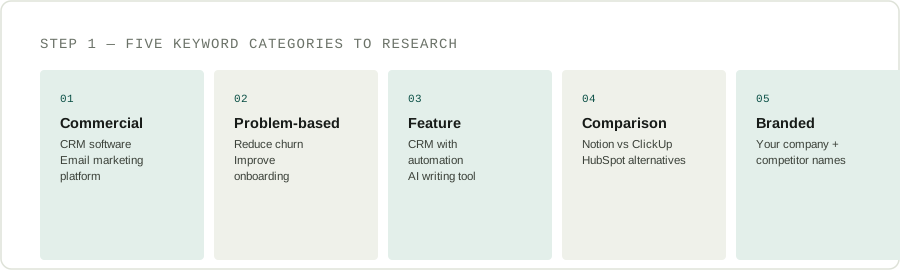
Commercial Keywords:
These indicate strong buying intent.
Examples:
- CRM software
- Email marketing platform
- Employee scheduling software
Problem-Based Keywords:
Users search for solutions before searching for products.
Examples:
- Reduce customer churn
- Improve onboarding
- Increase team productivity
Creating content around these topics positions your product as the solution.
Feature Keywords:
Many buyers search for specific product capabilities.
Examples:
- CRM with automation
- AI writing software
- Time tracking software
Dedicated feature pages often perform well for these searches.
Comparison Keywords:
These attract users evaluating multiple products.
Examples:
- Notion vs ClickUp
- HubSpot alternatives
- Best CRM for small business
Comparison pages typically generate high-converting traffic because users are close to making a purchasing decision.
Branded Keywords:
Monitor searches related to your company and competitors.
Protecting branded searches while identifying opportunities from competitors should be part of every SaaS SEO strategy.
Useful keyword research tools include:
- Google Keyword Planner
- Ahrefs
- Semrush
- Google Search Console
- Moz Keyword Explorer
Always prioritize search intent over search volume. A keyword attracting 300 qualified visitors can deliver more business value than one generating thousands of irrelevant visits.
2. Analyze Your Competitors
Competitive research reveals opportunities to strengthen your SEO strategy.
Study competitors to understand:
- Keywords they rank for
- Top-performing pages
- Content structure
- Internal linking
- Backlink profile
- Content gaps
- Product page optimization
Don’t copy competitor content. Instead, create resources that are more useful, updated, and actionable.
Ask yourself:
- Can this topic be explained better?
- Can newer data be included?
- Can the guide be more practical?
- Can visuals improve understanding?
- Can examples make it easier to follow?
The objective is to become the most helpful resource, not simply the longest article.
3. Match Content With Search Intent
Google rewards content that satisfies user intent.
Every keyword generally falls into one of four categories.
| Search Intent | Example |
| Informational | What is SaaS SEO? |
| Navigational | HubSpot login |
| Commercial | Best CRM software |
| Transactional | Buy CRM software |
Create the right content for each intent.
- Informational keywords need educational guides.
- Commercial keywords work well with comparisons and reviews.
- Transactional searches require pricing or product pages.
- Navigational searches should lead users directly to the intended destination.
Matching search intent improves rankings, engagement, and conversions.
4. Build a Logical Website Structure
A clear site architecture helps both users and search engines understand your website.
Organize pages into logical categories instead of creating isolated content.
A simple SaaS structure might look like this:;
Home
→ Product
→ Features
→ Solutions
→ Pricing
→ Resources
→ Blog
→ Case Studies
→ Help Center
Every important page should be accessible within a few clicks from the homepage.
Good navigation also improves internal linking and distributes authority across your website.
5. Optimize Technical SEO
Technical SEO ensures search engines can crawl, understand, and index your website efficiently.
Review these essentials regularly.
Crawlability:
Make sure important pages aren’t blocked by robots.txt or incorrect noindex tags.
XML Sitemap:
Submit an updated XML sitemap through Google Search Console.
HTTPS:
Use HTTPS across the entire website to improve security and user trust.
Mobile Optimization:
Most searches happen on mobile devices. Ensure every page is responsive and easy to navigate.
Core Web Vitals:
Improve loading speed, visual stability, and responsiveness.
Focus on:
- Largest Contentful Paint (LCP)
- Interaction to Next Paint (INP)
- Cumulative Layout Shift (CLS)
Duplicate Content:
Use canonical tags where necessary to prevent duplicate indexing.
Broken Links:
Regularly identify and fix broken internal and external links.
A technically healthy website provides a stronger foundation for every other SEO effort.
6. Optimize On-Page SEO
Once your website structure is in place, optimize every important page for both search engines and users.
Every page should include the following:
Unique Title Tag:
Write a clear title that naturally includes the primary keyword while encouraging clicks.
Compelling Meta Description:
Summarize the page in 150–160 characters and include a strong value proposition.
Proper Heading Structure:
Use one H1 for the main topic, followed by H2 headings for major sections. Keep headings descriptive and easy to scan.
Keyword Placement:
Include your primary keyword naturally in:
- Title
- URL
- H1
- Introduction
- At least one H2
- Conclusion
Avoid keyword stuffing. Focus on readability.
Optimized URLs:
Keep URLs short, descriptive, and keyword-focused.
Example:
yourdomain.com/saas-seo-checklist
Image Optimization:
Compress images to improve loading speed.
Add descriptive filenames and alt text.
Example alt text:
“SaaS SEO checklist workflow”
Internal Links:
Link to related product pages, feature pages, blogs, and case studies to improve navigation and distribute authority throughout your website.
7. Create a SaaS Content Strategy
Content marketing is one of the biggest drivers of long-term SaaS growth.
Instead of publishing random blog posts, organize your content around topics your audience actively searches for.
Your strategy should include several content types.
Educational Guides:
Help users solve problems.
Examples:
- How to improve customer retention
- Beginner’s guide to CRM software
- Email marketing best practices
Comparison Pages:
Help buyers evaluate products.
Examples:
- Product A vs Product B
- Best alternatives
- Feature comparisons
Use Cases:
Show how different industries benefit from your software.
Examples:
- CRM for healthcare
- Project management for agencies
- Accounting software for startups
Feature Pages:
Create dedicated pages for important features.
Examples:
- Workflow automation
- Reporting dashboard
- AI assistant
Case Studies:
Show real customer success stories with measurable outcomes.
Industry Resources:
Publish templates, calculators, checklists, and free tools that naturally attract backlinks.
A balanced content strategy supports every stage of the customer journey while building topical authority.
8. Optimize Product and Feature Pages
Many SaaS companies spend heavily on blog content while neglecting their most important conversion pages.
Your product pages should answer common questions quickly.
Include:
- Clear value proposition
- Primary features
- Key benefits
- Screenshots
- Product videos
- Customer testimonials
- FAQs
- Pricing information
- Strong call-to-action
Instead of listing features, explain how each one solves a real problem.
For example:
Instead of:
“AI Automation”
Write:
“Automate repetitive workflows and save your team hours every week.”
Focus on outcomes rather than technical specifications.
9. Build an Internal Linking Strategy
Internal links help search engines understand the relationship between pages while making it easier for visitors to explore your website.
Every new article should link to:
- Product pages
- Related blog posts
- Feature pages
- Case studies
- Resource pages
Likewise, older articles should be updated with links to newly published content.
For example, if you publish an article about email marketing automation, link naturally to:
- CRM features
- Marketing automation pages
- Email campaign guides
- Customer onboarding resources
Strong internal linking improves crawlability and distributes authority across important pages.
10. Earn High-Quality Backlinks
Backlinks remain one of Google’s strongest ranking signals.
Rather than buying links or using spammy tactics, focus on earning links through valuable content and outreach.
Effective strategies include:
- Guest posting
- Digital PR
- Original research
- Data studies
- Resource pages
- Linkable assets
- Industry partnerships
- Broken link building
Publishing unique reports, templates, and free tools often attracts natural backlinks over time.
Prioritize quality over quantity.
A handful of links from authoritative, relevant websites can outperform hundreds of low-quality backlinks.
11. Use Programmatic SEO (When Appropriate)
Programmatic SEO allows SaaS businesses to create scalable landing pages using structured data.
This approach works well for websites targeting hundreds or thousands of related searches.
Examples include:
- Industry-specific landing pages
- Integration pages
- Location pages
- Template libraries
- Comparison pages
For example, a CRM platform could create pages like:
- CRM for healthcare
- CRM for real estate
- CRM for education
- CRM for nonprofits
Each page should contain unique, valuable content rather than duplicated text.
Avoid creating thin pages solely for search engines.
12. Improve Core Web Vitals
Website performance directly affects user experience.
Slow websites increase bounce rates and reduce conversions.
Focus on Google’s Core Web Vitals.
Largest Contentful Paint (LCP):
Measures loading performance.
Aim for less than 2.5 seconds.
Interaction to Next Paint (INP):
Measures responsiveness.
Pages should respond quickly to user interactions.
Cumulative Layout Shift (CLS):
Measures visual stability.
Avoid unexpected layout movement while pages load.
Ways to improve performance include:
- Compress images
- Enable browser caching
- Use a CDN
- Minify CSS and JavaScript
- Remove unnecessary plugins
- Optimize server response times
Fast websites improve both SEO and user satisfaction.
13. Implement Schema Markup
Schema markup helps search engines understand your content.
Useful schema types for SaaS websites include:
- SoftwareApplication
- FAQ
- Organization
- Product
- Review
- Breadcrumb
- Article
Although schema doesn’t guarantee higher rankings, it can improve how your pages appear in search results and increase click-through rates.
14. Track Analytics and SEO Performance
SEO is an ongoing process. Regular monitoring helps you identify what’s working and where improvements are needed.
Track these key metrics consistently.
Organic Traffic:
Measure how many visitors arrive through search engines.
Keyword Rankings:
Monitor your target keywords to identify gains and losses.
Click-Through Rate (CTR):
Review Search Console data to see how often users click your pages after seeing them in search results.
Conversions:
Track free trials, demo requests, newsletter signups, and purchases generated through organic traffic.
Bounce Rate and Engagement:
Analyze user behavior to identify pages that need better content or improved user experience.
Backlink Growth:
Monitor new backlinks, referring domains, and lost links.
Useful tools include:
- Google Analytics 4
- Google Search Console
- Ahrefs
- Semrush
- Microsoft Clarity
Regular reporting allows you to prioritize improvements based on data rather than assumptions.
Common SaaS SEO Mistakes
Many SaaS companies invest heavily in SEO but overlook fundamental issues that limit growth.
Avoid these common mistakes.
Targeting Only High-Volume Keywords:
Competitive keywords are valuable, but long-tail and problem-focused keywords often convert better.
Ignoring Search Intent:
Ranking means little if visitors don’t find what they’re looking for.
Publishing Thin Content:
Every page should provide meaningful information instead of repeating what already exists online.
Poor Internal Linking:
Important pages should never become isolated.
Neglecting Technical SEO:
Broken links, crawl errors, slow pages, and duplicate content reduce overall SEO performance.
Creating Content Without Promotion:
Even excellent content needs distribution through outreach, email marketing, and social media.
Ignoring Existing Content:
Refreshing older articles with updated information often produces faster results than creating new content from scratch.
Focusing Only on Traffic:
Qualified leads and conversions matter far more than page views alone.
Essential SaaS SEO Tools
The right tools simplify research, auditing, optimization, and reporting.
| Tool | Primary Use |
| Google Search Console | Performance monitoring, indexing, keyword insights |
| Google Analytics 4 | Traffic, conversions, user behavior |
| Ahrefs | Backlink analysis, keyword research, competitor analysis |
| Semrush | SEO audits, rankings, content research |
| Moz Pro | Domain authority and keyword tracking |
| Screaming Frog | Technical SEO audits and crawl analysis |
| PageSpeed Insights | Core Web Vitals and performance testing |
| Microsoft Clarity | Heatmaps and user behavior analysis |
You don’t need every tool. Choose a combination that fits your budget and business goals.
Final SaaS SEO Checklist
Before publishing or auditing your SaaS website, confirm you’ve completed these essentials.
Keyword Research:
✔ Target commercial and informational keywords
✔ Focus on search intent
✔ Identify long-tail opportunities
Technical SEO:
✔ HTTPS enabled
✔ XML sitemap submitted
✔ Mobile-friendly website
✔ Fast loading pages
✔ No broken links
✔ Canonical tags configured
On-Page SEO:
✔ Optimized title tags
✔ Meta descriptions
✔ Proper heading structure
✔ Internal links
✔ Optimized images
✔ Clear CTAs
Content Strategy:
✔ Educational content
✔ Feature pages
✔ Comparison pages
✔ Industry resources
✔ Case studies
Authority Building:
✔ Quality backlinks
✔ Digital PR
✔ Guest posting
✔ Resource page outreach
Performance Tracking:
✔ Google Analytics configured
✔ Search Console connected
✔ Keyword tracking enabled
✔ Monthly SEO reporting
Following this checklist creates a strong foundation for sustainable organic growth.
Frequently Asked Questions
What is a SaaS SEO checklist?
A SaaS SEO checklist is a structured list of best practices that helps software companies improve search visibility, attract qualified traffic, and increase conversions through organic search.
Why is SaaS SEO different from traditional SEO?
SaaS businesses target longer buying journeys, highly competitive keywords, and multiple decision stages. Their SEO strategy must educate users while supporting product discovery and lead generation.
How long does SaaS SEO take to show results?
Most SaaS companies begin seeing measurable improvements within three to six months, while competitive industries may require six to twelve months of consistent optimization.
What is the most important part of SaaS SEO?
Keyword research and search intent are the foundation of every successful strategy. Without understanding what your audience searches for, even well-written content may fail to generate qualified traffic.
How often should I perform an SEO audit?
A comprehensive audit every quarter is recommended, with monthly reviews of rankings, technical issues, backlinks, and website performance.
Do SaaS companies need a blog?
Yes. A blog helps target informational keywords, answer customer questions, build topical authority, and attract backlinks that support product pages.
Are backlinks still important for SaaS SEO?
Yes. High-quality backlinks remain one of Google’s strongest ranking signals and help increase authority, trust, and organic visibility.
Should every SaaS company use programmatic SEO?
No. Programmatic SEO is most effective for businesses with large datasets or scalable page opportunities, such as integrations, templates, locations, or industry-specific solutions.
How do I measure SaaS SEO success?
Track organic traffic, keyword rankings, conversions, backlink growth, click-through rates, engagement metrics, and revenue generated through organic search.
Conclusion
A successful SaaS SEO Checklist is more than a list of optimization tasks—it’s a long-term strategy for attracting qualified traffic, generating leads, and building sustainable growth.
Focus on understanding your audience, targeting the right keywords, creating valuable content, maintaining strong technical SEO, and earning authoritative backlinks. Monitor performance regularly and refine your strategy using real data instead of assumptions.
SEO is a continuous investment, but the long-term rewards are significant. By following this checklist consistently, your SaaS business can improve search visibility, strengthen brand authority, and reduce reliance on paid advertising.
If you’re looking to accelerate growth with a tailored SEO strategy, consider booking an SEO consultation or exploring professional SaaS SEO services to identify opportunities and build a scalable organic growth plan.
Unlike traditional businesses, SaaS companies compete in highly competitive markets where buyers spend time researching solutions before signing up. Your website must answer questions, solve problems, demonstrate expertise, and guide visitors from awareness to conversion.
This guide covers every major aspect of SaaS SEO, from keyword research and technical optimization to content strategy, backlinks, and performance tracking. Follow this checklist to build sustainable organic growth and generate qualified leads over time.
