
If you’ve been working on SEO for any length of time, you’ve probably heard the phrase “content is king.” While creating valuable content is essential, it rarely reaches its full ranking potential without one critical ingredient: high-quality backlinks.
Backlinks remain one of Google’s strongest ranking signals because they act as votes of confidence from other websites. When authoritative and relevant websites link to your content, search engines interpret those links as indicators of trust, expertise, and value.
However, modern link building isn’t about collecting hundreds of random backlinks or submitting your website to every directory you can find. Search engines have become far more sophisticated. Today, quality, relevance, and editorial value matter far more than quantity.
That’s exactly why this Link Building Cheat Sheet was created.
Whether you’re an SEO professional, digital marketer, agency owner, blogger, SaaS founder, or business owner, this guide provides a practical framework you can use to build stronger backlinks, improve organic rankings, and create a sustainable SEO strategy.
Instead of sharing outdated tactics or generic advice, this guide focuses on proven, white-hat link-building strategies that continue to deliver results in today’s search landscape. You’ll learn how to find high-quality backlink opportunities, evaluate websites before requesting links, create outreach campaigns that earn responses, and avoid common mistakes that can harm your rankings.
Bookmark this guide; it’s designed to become your go-to reference whenever you’re planning a new link-building campaign.
Table of Contents
What Is Link Building?
Link building is the process of acquiring hyperlinks from other websites that point back to your own website.
These hyperlinks, commonly known as backlinks, help search engines discover new pages and understand which websites are considered trustworthy within a particular industry.
Think of every quality backlink as a recommendation. If respected websites consistently link to your content, Google is more likely to view your website as an authoritative source.
However, not all backlinks carry the same value.
A single editorial backlink from a reputable industry publication can often provide significantly more SEO value than dozens of links from low-quality or irrelevant websites.
For this reason, successful SEO campaigns prioritize earning links naturally through valuable content and genuine relationships rather than purchasing or manipulating backlinks.
Why Backlinks Matter for SEO
Backlinks influence SEO in several important ways.
Improve Search Rankings
Google considers backlinks one of many signals when determining how pages should rank for competitive keywords.
Pages that earn relevant, authoritative backlinks often perform better in search results because those links reinforce their credibility.
Increase Website Authority
As your website earns links from trusted sources, your overall authority grows.
This stronger authority makes it easier for both new and existing pages to compete for valuable search terms.
Drive Referral Traffic
Backlinks don’t only benefit SEO.
They can also send targeted visitors directly from another website.
For example, if a respected marketing publication links to your SEO guide, readers who click that link are already interested in your topic, making them highly qualified visitors.
Improve Brand Visibility
Appearing on respected industry websites increases your brand’s exposure.
Even when readers don’t immediately visit your website, repeated mentions across trusted publications help establish familiarity and credibility.
Build Long-Term SEO Growth
Unlike paid advertising, quality backlinks continue supporting your website over time.
As your backlink profile grows naturally, your content has a stronger foundation for earning and maintaining competitive rankings.
How Google Evaluates Backlinks
Google doesn’t simply count backlinks—it evaluates their quality.
Some of the most important factors include:
Relevance
A backlink from a website closely related to your industry is generally more valuable than one from an unrelated niche.
For example, an SEO blog linking to your SEO resource carries greater relevance than a fashion website doing the same.
Authority
Links from established, trustworthy websites typically pass more value than links from brand-new or low-quality websites.
Authority isn’t determined by a single metric but by a combination of trust, quality content, and overall reputation.
Editorial Placement
Naturally earned editorial links within high-quality content tend to provide greater value than links placed in sidebars, footers, or user-generated content.
Anchor Text
Anchor text provides context about the linked page.
A natural mix of branded, descriptive, and generic anchor text creates a healthy backlink profile.
Avoid repeatedly using exact-match keywords, as over-optimization can appear manipulative.
Link Context
Search engines also evaluate the surrounding content.
A backlink placed within a helpful, relevant article is generally stronger than one inserted without context.
White Hat vs. Black Hat Link Building
Not every link-building tactic follows search engine guidelines.
Understanding the difference can protect your website from penalties.
| White Hat Link Building | Black Hat Link Building |
| Earns editorial links naturally | Buys backlinks in bulk |
| Guest posting on reputable websites | Private Blog Networks (PBNs) |
| Digital PR campaigns | Automated link spam |
| Original research and studies | Comment spam |
| Resource page outreach | Link farms |
| Broken link building | Paid link schemes |
White-hat techniques require more effort, but they build long-term authority while minimizing SEO risks.
Black-hat tactics may produce temporary gains, but they often lead to ranking losses or manual penalties when search engines identify manipulative behavior.
Link Building Fundamentals Before You Start
Many link-building campaigns fail before they even begin—not because the outreach is poor, but because the foundation isn’t strong enough.
Before reaching out to website owners or pitching guest posts, take time to prepare your strategy.
Strong preparation increases your chances of earning links that genuinely improve rankings.
Understand Your Target Audience
Before building links, understand who you’re trying to reach.
Ask yourself:
- Who is my ideal customer?
- Which websites do they trust?
- What questions are they searching for?
- Which types of content are most valuable to them?
- Where do they spend time online?
Answering these questions helps identify the websites, publications, and communities most likely to provide relevant backlink opportunities.
Analyze Your Competitors’ Backlinks
Your competitors have already done part of the research for you.
By studying their backlink profiles, you can discover:
- Websites accepting guest posts
- Industry directories
- Resource pages
- Editorial mentions
- Partnership opportunities
- Digital PR campaigns
Instead of copying competitors, use this information to identify opportunities where you can create better content or build stronger relationships.
Create Link-Worthy Content
Even the best outreach campaign won’t succeed if the destination page provides little value.
Before requesting backlinks, ensure your content deserves them.
Examples of highly linkable content include:
- Original research
- Industry reports
- Comprehensive guides
- Free templates
- Statistics pages
- Interactive tools
- Case studies
- Infographics
- Ultimate checklists
The easier your content makes someone else’s job, the more likely they are to reference it.
Set Clear Link Building Goals
Successful campaigns begin with measurable objectives.
Examples include:
- Earn 20 high-quality referring domains within six months.
- Increase backlinks to a key service page.
- Improve rankings for target commercial keywords.
- Build relationships with industry publications.
- Increase referral traffic from authoritative websites.
Clear goals make it easier to measure progress and refine your strategy over time.
Link Building Cheat Sheet (Complete Backlink Checklist)
A successful link-building campaign isn’t about trying every tactic at once. Instead, prioritize activities that deliver the highest impact while matching your resources and expertise.
Use the checklist below as a practical roadmap for planning and executing your backlink strategy.
| Task | Priority | Difficulty |
| Analyze competitor backlinks | High | Medium |
| Create link-worthy content | High | Medium |
| Guest posting | High | Medium |
| Broken link building | High | Medium |
| Resource page outreach | High | Medium |
| Digital PR campaigns | High | Hard |
| HARO/Journalist outreach | High | Hard |
| Unlinked brand mentions | Medium | Easy |
| Link reclamation | Medium | Easy |
| Skyscraper technique | Medium | Hard |
| Niche directory submissions | Medium | Easy |
| Podcast outreach | Medium | Medium |
| Expert roundups | Medium | Medium |
| Publish original research | High | Hard |
| Build free SEO tools or templates | High | Hard |
| Internal link optimization | High | Easy |
| Monitor lost backlinks | Medium | Easy |
| Create statistics pages | High | Medium |
| Partner with industry websites | High | Medium |
| Track backlink performance monthly | High | Easy |
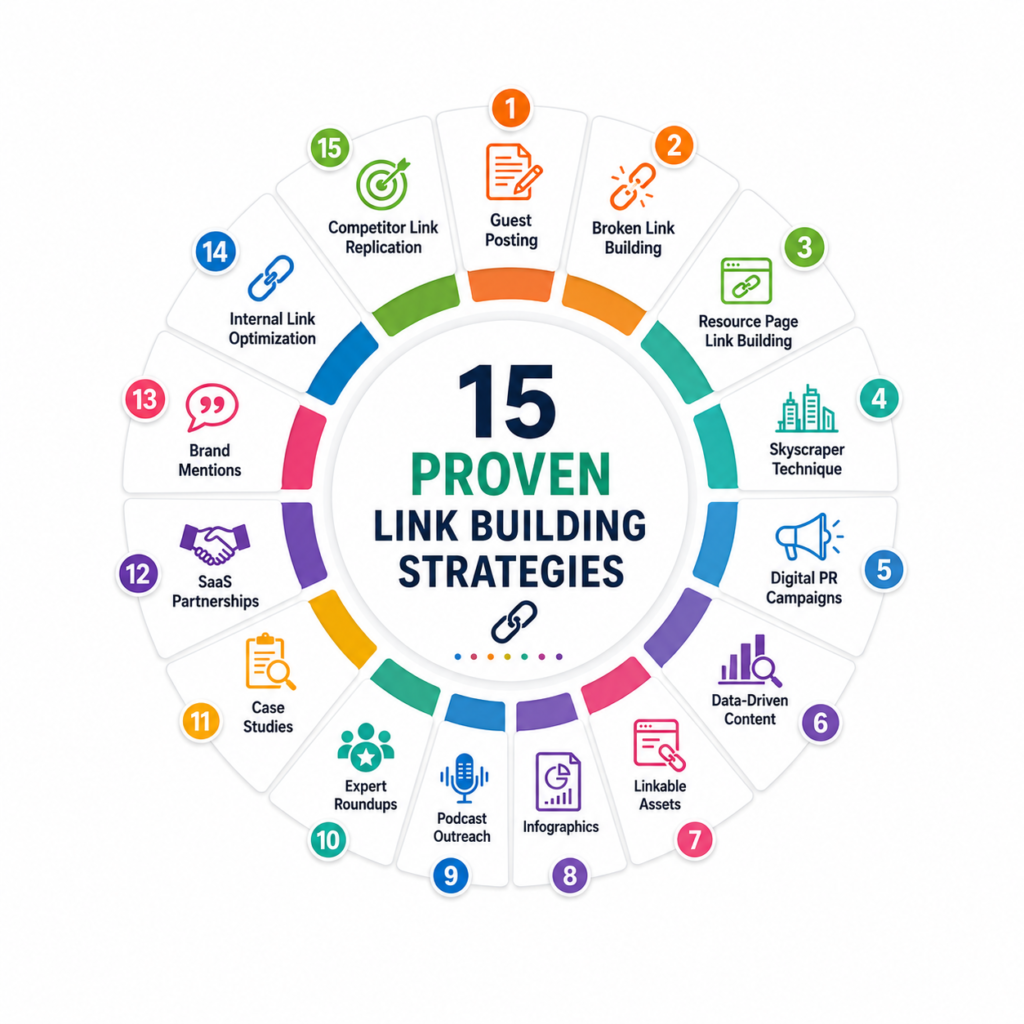
15 Proven Link Building Strategies
Every successful SEO campaign uses a combination of different link-building methods rather than relying on a single tactic.
Below are fifteen proven strategies that continue to generate high-quality backlinks.
1. Guest Posting
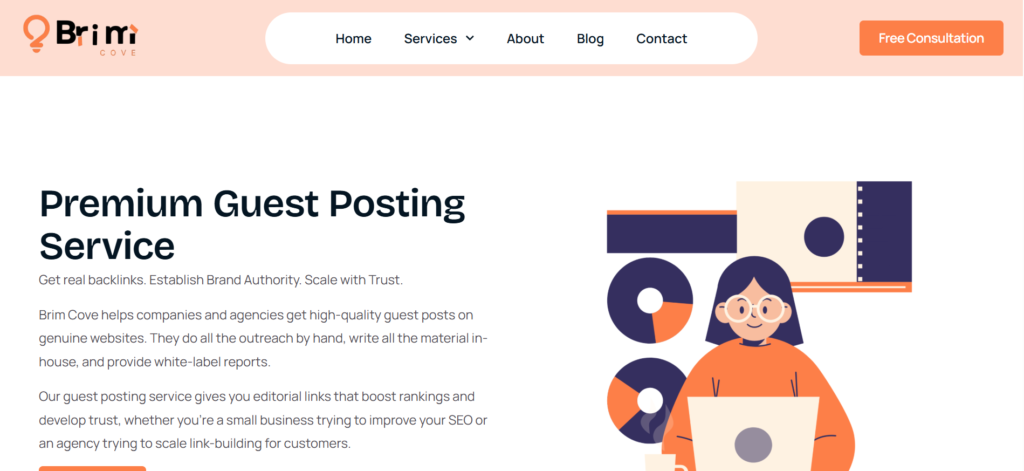
Guest posting involves writing valuable articles for reputable websites within your industry in exchange for an editorial backlink.
How It Works
You identify relevant blogs that accept guest contributions, pitch a useful topic, write original content, and naturally include a backlink where appropriate.
Recommended Tools
- Ahrefs
- Google Search
- Hunter.io
Pros
- High-quality backlinks
- Brand exposure
- Referral traffic
- Industry authority
Cons
- Time-consuming
- Requires strong content
Best For
Businesses looking to build authority while reaching new audiences.
2. Broken Link Building
Broken link building involves finding dead links on other websites and suggesting your content as a replacement.
Website owners appreciate being notified about broken resources, making this one of the most effective white-hat techniques.
Recommended Tools
- Ahrefs
- Check My Links (Chrome Extension)
- Screaming Frog
Pros
- High outreach success rate
- Helps website owners
- Earns contextual links
Cons
- Requires research
- Time-intensive
Best For
Resource pages, educational websites, and blogs.
3. Resource Page Link Building
Many websites maintain pages listing useful resources within specific industries.
If your content genuinely helps readers, you can request inclusion.
Pros
- Highly relevant backlinks
- Long-term referral traffic
Cons
- Competitive outreach
Best For
Guides, templates, calculators, and educational resources.
4. Skyscraper Technique
The Skyscraper Technique involves improving existing popular content by making it more comprehensive, current, or visually engaging.
After publishing the improved version, reach out to websites linking to the older content.
Pros
- Targets proven topics
- Attracts editorial links
Cons
- Requires exceptional content
Best For
Ultimate guides, statistics pages, and long-form educational content.
5. Digital PR Campaigns
Digital PR focuses on earning media coverage through newsworthy stories, data studies, surveys, or industry insights.
Journalists often reference original research, making Digital PR one of today’s strongest link-building approaches.
Recommended Tools
- Google Trends
- HARO (Connectively)
- BuzzSumo
Pros
- Extremely authoritative backlinks
- Brand awareness
- Media exposure
Cons
- Requires creativity
- Competitive
Best For
Growing brands seeking national or international visibility.
6. Data-Driven Content
Original research naturally attracts backlinks because writers prefer citing unique statistics instead of repeating existing information.
Examples include:
- Industry surveys
- Annual reports
- Market research
- Original experiments
Best For
SaaS companies, agencies, technology businesses, and research-focused organizations.
7. Linkable Assets
Linkable assets are resources designed specifically to earn backlinks.
Examples include:
- Free templates
- SEO checklists
- Calculators
- Interactive tools
- Downloadable guides
These resources continue earning backlinks long after publication.
8. Infographics
Well-designed infographics simplify complex information and are frequently shared across blogs and industry websites.
When others embed your infographic, they typically credit your website with a backlink.
Best For
Statistics, processes, comparisons, and research findings.
9. Podcast Outreach
Podcasts continue growing in popularity across nearly every industry.
Appearing as a guest allows you to:
- Build authority
- Reach new audiences
- Earn backlinks from episode pages
- Build relationships
10. Expert Roundups
Invite respected professionals to answer one question related to your industry.
Participants frequently share and link to the finished article.
Example:
“What is your #1 link-building strategy for 2026?”
11. Case Studies
Real-world success stories naturally attract backlinks because they provide practical evidence instead of theory.
Include:
- The challenge
- The solution
- The strategy
- The measurable results
Businesses trust real examples far more than general advice.
12. SaaS Partnerships
If you use software products, partner with complementary businesses.
Possible collaborations include:
- Co-marketing campaigns
- Integration pages
- Partner directories
- Joint webinars
These relationships often generate valuable editorial backlinks.
13. Brand Mentions
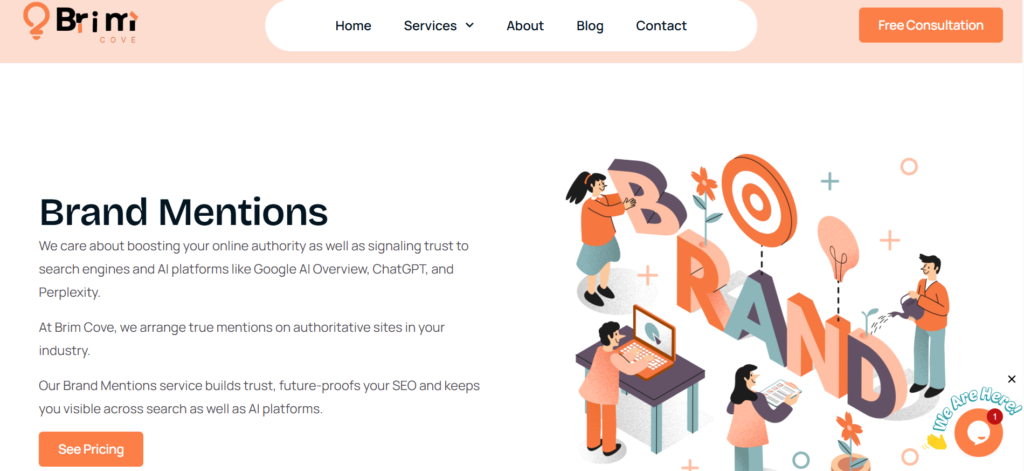
Sometimes websites mention your company without linking back.
Finding these mentions and politely requesting a backlink is one of the easiest ways to improve your backlink profile.
Recommended Tools
- Google Alerts
- Ahrefs Alerts
14. Internal Link Optimization
Although internal links aren’t backlinks, they distribute authority across your website.
Review older articles regularly and link them to:
- Service pages
- New blog posts
- Case studies
- Resource pages
This improves crawlability while strengthening important pages.
15. Competitor Link Replication
Study competitors’ backlink profiles and identify opportunities where your content could also earn placement.
Common sources include:
- Industry directories
- Resource pages
- Guest articles
- Podcasts
- Interviews
Link Prospecting Cheat Sheet
Finding high-quality backlink opportunities is just as important as creating great content. Effective link prospecting helps you identify websites that are relevant, trustworthy, and likely to link to your content.
Instead of reaching out to hundreds of random websites, focus on prospects that align with your niche and audience. A targeted approach improves response rates and results in higher-quality backlinks.
Google Search Operators
Google search operators are one of the easiest ways to discover guest posting opportunities, resource pages, and websites looking for contributors.
Use the following search queries:
| Search Operator | Purpose |
| “keyword” + “write for us” | Find guest blogging opportunities |
| “keyword” + “guest post” | Discover websites accepting guest posts |
| “keyword” + “resources” | Find industry resource pages |
| “keyword” + “useful links” | Locate curated link collections |
| “keyword” + “submit an article” | Find contributor websites |
| inurl:resources + keyword | Search resource pages |
| intitle:”guest post” + keyword | Identify guest blogging sites |
| site:.edu keyword + resources | Find educational resource pages |
| site:.org keyword + links | Locate nonprofit resource pages |
Email Finding Methods
After identifying a potential website, find the right person to contact.
Some effective methods include:
- Visit the Contact or About page.
- Look for the website owner’s email address.
- Check author profiles.
- Search LinkedIn for editors or content managers.
- Use tools like Hunter.io or Apollo.io.
- Review the website’s social media profiles.
Always verify the email address before sending your outreach message.
Prospect Qualification Process
Not every website is worth contacting.
Before reaching out, evaluate whether the prospect meets the following criteria:
- Relevant to your niche
- Receives consistent organic traffic
- Publishes original, high-quality content
- Has a healthy backlink profile
- Is indexed by Google
- Maintains a professional website
- Doesn’t publish spammy or low-quality articles
Focusing on quality prospects saves time and increases your outreach success rate.
Link Outreach Email Templates
Well-written outreach emails significantly improve your chances of earning backlinks. Keep your emails personalized, concise, and focused on providing value.
Guest Post Outreach
Subject: Guest Article Idea for [Website Name]
Hi [First Name],
I recently came across your website and enjoyed reading your content about [Topic].
I have a few article ideas that I believe would provide value to your audience, including:
- [Topic Idea 1]
- [Topic Idea 2]
- [Topic Idea 3]
If you’re accepting guest contributions, I’d be happy to write a unique, well-researched article exclusively for your readers.
Looking forward to hearing from you.
Best regards,
[Your Name]
Broken Link Outreach
Subject: Broken Link on Your Resource Page
Hi [First Name],
While browsing your resource page, I noticed one of the external links appears to be broken.
I recently published a comprehensive resource covering the same topic, and I thought it might be a useful replacement for your readers.
Here’s the link:
[Your URL]
Either way, I wanted to let you know about the broken link.
Thanks for maintaining such a valuable resource.
Best,
[Your Name]
Resource Page Outreach
Subject: Resource Recommendation
Hi [First Name],
I found your excellent resource page on [Topic] while researching the industry.
I recently published a detailed guide that I believe would be valuable for your readers.
If you think it’s a good fit, please consider adding it to your resource page.
Thank you for your time.
Kind regards,
[Your Name]
Link Insertion Outreach
Subject: Additional Resource for Your Article
Hi [First Name],
I enjoyed your article about [Topic] and found it very informative.
I recently published an in-depth guide that expands on one of the points you discussed.
If you believe it would benefit your readers, please consider adding it as an additional resource.
Thanks for your time.
Best regards,
[Your Name]
Link Quality Evaluation Checklist
Not every backlink improves your SEO. Before pursuing a backlink, evaluate the website using the following checklist.
| Evaluation Factor | Why It Matters |
| Relevance | The website should be closely related to your niche or industry. |
| Organic Traffic | Consistent search traffic is a positive quality signal. |
| Topical Authority | Websites with expertise in your niche provide stronger SEO value. |
| Indexation | Ensure Google indexes the website. |
| Spam Score | Avoid websites with excessive spam indicators. |
| Anchor Text Profile | Natural anchor text reduces optimization risks. |
| Outbound Links | Pages overloaded with outbound links pass less authority. |
| Website Quality | Evaluate content quality, user experience, and trustworthiness. |
Modern SEO emphasizes editorial relevance and trustworthy websites over simply chasing high-authority domains. A relevant backlink from a respected niche website often provides more long-term value than an unrelated link from a larger publication.
Common Link Building Mistakes
Even experienced SEO professionals can make mistakes that weaken their backlink profile. Avoiding these common pitfalls will help you build sustainable, high-quality backlinks that support long-term rankings.
Buying Low-Quality Links
Purchasing backlinks from link farms or low-quality websites may produce short-term improvements, but it violates Google’s guidelines and can result in penalties.
Instead, invest in earning editorial backlinks through valuable content and genuine relationships.
Over-Optimized Anchor Text
Using the same keyword-rich anchor text repeatedly creates an unnatural backlink profile.
Maintain a balanced anchor text profile that includes:
- Branded anchors
- Generic anchors
- Partial-match keywords
- Natural phrases
- Naked URLs
A diverse anchor profile appears more natural to search engines.
Ignoring Relevance
A backlink from a highly relevant website is often more valuable than one from a larger but unrelated domain.
Always prioritize topical relevance when evaluating link opportunities.
Using Private Blog Networks (PBNs)
Private Blog Networks are collections of websites created solely to manipulate rankings.
Although they may appear effective initially, they carry significant risk and can result in manual actions or ranking losses.
Sending Generic Outreach Emails
Website owners receive dozens of outreach emails every day.
Generic templates with little personalization are usually ignored.
Instead:
- Mention a recent article.
- Explain why your content adds value.
- Keep your email concise.
- Personalize every outreach message.
Prioritizing Quantity Over Quality
Hundreds of low-quality backlinks rarely outperform a handful of relevant editorial links.
Focus on earning backlinks that improve your authority, referral traffic, and trustworthiness rather than simply increasing your backlink count.
Link Building Tools Cheat Sheet
The right tools can save hours of manual work and help you discover better backlink opportunities.
| Tool | Best Use Case | Key Features |
| Ahrefs | Backlink analysis | Backlink audits, competitor research, broken links |
| Semrush | SEO and link building | Link audits, outreach, keyword research |
| BuzzStream | Outreach management | Relationship management and email outreach |
| Hunter.io | Email discovery | Find and verify professional email addresses |
| Pitchbox | Outreach automation | Scalable outreach campaigns |
| Respona | Link outreach | Prospecting and personalized outreach |
| Google Search Console | Monitor backlinks | Track internal and external links to your website |
Each tool serves a different purpose, and many SEO professionals combine several of them to streamline their workflow.
Link Building Metrics to Track
Building backlinks is only part of the process. Tracking performance helps you understand which strategies are generating meaningful results.
Monitor these key metrics regularly.
Referring Domains
The number of unique websites linking to your content.
A steady increase in referring domains usually indicates a healthy backlink profile.
Backlink Quality
Evaluate the authority and relevance of websites linking to you rather than focusing only on the total number of backlinks.
Organic Traffic
Monitor whether new backlinks contribute to increased organic search traffic.
Improving rankings should ultimately lead to more qualified visitors.
Keyword Rankings
Track the rankings of your target keywords before and after acquiring quality backlinks.
Consistent improvements indicate your strategy is working.
Referral Traffic
Review your analytics to identify backlinks that send actual visitors to your website.
Some editorial backlinks generate valuable referral traffic alongside SEO benefits.
Conversion Rate
Backlinks should contribute to business growth, not just traffic.
Measure:
- Contact form submissions
- Demo requests
- Newsletter sign-ups
- Sales inquiries
- Purchases
These metrics provide a clearer picture of your link-building ROI.
Advanced Link Building Tips
Once you’ve mastered the fundamentals, advanced strategies can help you earn backlinks that competitors struggle to replicate.
Launch Digital PR Campaigns
Create newsworthy stories, industry surveys, or original data that journalists and publishers naturally reference.
These campaigns often generate authoritative editorial backlinks.
Publish Original Research
Unique statistics and research studies consistently attract backlinks because other websites cite them as credible sources.
Annual industry reports and benchmark studies are particularly effective.
Build Statistics Pages
Curated statistics pages become valuable resources for bloggers, journalists, and marketers looking for credible data.
Update these pages regularly to keep them accurate and relevant.
Create Interactive Tools
Free tools solve problems while naturally attracting backlinks.
Examples include:
- ROI calculators
- SEO audit tools
- Cost estimators
- Keyword generators
- Website grading tools
Useful tools often continue earning backlinks for years.
Offer Free Templates
Templates save users time and encourage websites to reference your content.
Examples include:
- SEO checklists
- Marketing plans
- Outreach email templates
- Content calendars
- Audit templates
Participate in Industry Communities
Contributing helpful insights in professional communities builds relationships that can lead to natural editorial backlinks.
Focus on providing value rather than promoting your website.
Frequently Asked Questions
What is link building?
Link building is the process of acquiring backlinks from other websites to improve search visibility, authority, and organic rankings.
How many backlinks do I need?
There is no fixed number. A few high-quality, relevant backlinks often provide more value than hundreds of low-quality links.
Are backlinks still important for SEO?
Yes. Backlinks remain one of Google’s most important ranking signals when they come from trustworthy and relevant websites.
What is white hat link building?
White hat link building involves earning backlinks through ethical methods such as guest posting, digital PR, valuable content, and relationship building.
How long does link building take?
Most campaigns begin showing measurable SEO improvements within three to six months, although results vary depending on competition and website authority.
What is a good backlink?
A good backlink comes from a relevant, trustworthy website, is placed naturally within quality content, and provides value to readers.
Does guest posting still work?
Yes. Guest posting remains an effective white-hat strategy when published on reputable websites with original, high-quality content.
Is buying backlinks safe?
No. Buying low-quality or manipulative backlinks violates Google’s guidelines and can lead to penalties or ranking losses.
What tools help with link building?
Popular tools include Ahrefs, Semrush, BuzzStream, Hunter.io, Pitchbox, Respona, and Google Search Console.
How can beginners build backlinks?
Beginners should focus on creating valuable content, guest posting, broken link building, resource page outreach, and building genuine relationships within their industry.
Conclusion
Building backlinks is no longer about chasing the highest number of links. Modern SEO rewards websites that earn relevant, high-quality backlinks through valuable content, meaningful relationships, and ethical outreach.
By following this Link Building Cheat Sheet, you can create a repeatable process for finding opportunities, evaluating websites, conducting effective outreach, and measuring results.
Remember these key principles:
- Prioritize quality over quantity.
- Focus on relevance instead of authority alone.
- Build relationships, not just backlinks.
- Create content that genuinely deserves to be referenced.
- Stay consistent—successful link building is an ongoing process, not a one-time task.
Whether you’re managing SEO for your own website or working with clients, applying these strategies consistently will strengthen your backlink profile and support sustainable organic growth.
If you’re looking to accelerate your SEO performance with a customized link-building strategy, our team can help. Contact us today to learn how our white-hat link-building services can help your business earn authoritative backlinks, improve search rankings, and drive long-term results.
