
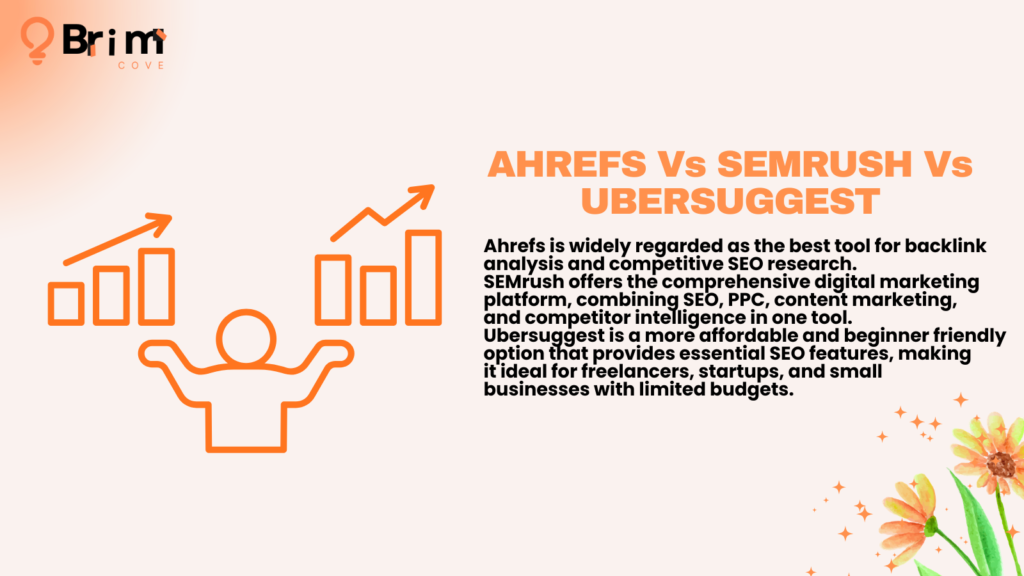
Choosing the right SEO tool is one of the most critical decisions you’ll make for your digital marketing strategy. The market is flooded with options, but three tools consistently rise to the top: Ahrefs, SEMrush, and Ubersuggest. Each platform offers powerful features for keyword research, backlink analysis, and competitive intelligence, but they serve different needs at vastly different price points. This comprehensive comparison of Ahrefs, SEMrush, and Ubersuggest will help you make an informed decision based on your specific requirements, budget, and level of expertise.
The challenge isn’t finding an SEO tool—it’s finding the right one for your situation. Are you a beginner blogger on a tight budget? A freelance SEO consultant managing multiple clients? A digital marketing agency? Your answer determines which tool deserves your investment. This guide cuts through marketing claims and provides an unbiased analysis of each platform’s strengths, weaknesses, and ideal use cases.
Table of Contents
Quick Overview of Each Tool
Ahrefs – The Backlink Analysis Master
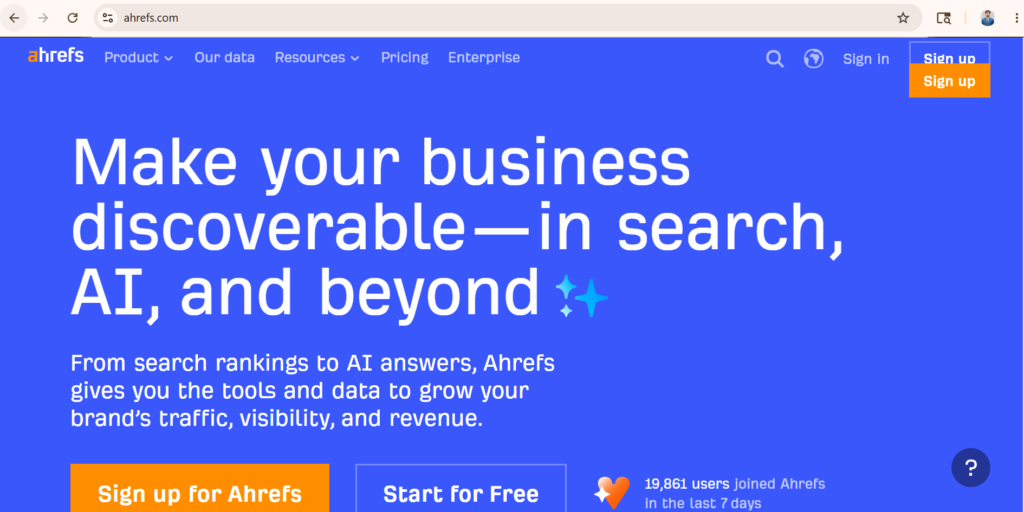
Ahrefs built its reputation on one thing: the most comprehensive backlink database in the world. Founded in 2010, the company focused exclusively on mapping the web and understanding link structures better than anyone else. With over 4 trillion backlinks indexed and constantly updated, Ahrefs remains the gold standard for link analysis. However, Ahrefs is more than just a backlink tool. It includes keyword research, site audits, content analysis, and competitive intelligence. The trade-off is significant: premium pricing starting at $129/month, and a steep learning curve that deters beginners. Ahrefs is built for SEO professionals who prioritize data depth and accuracy above all else.
SEMrush – The All-in-One Marketing Platform
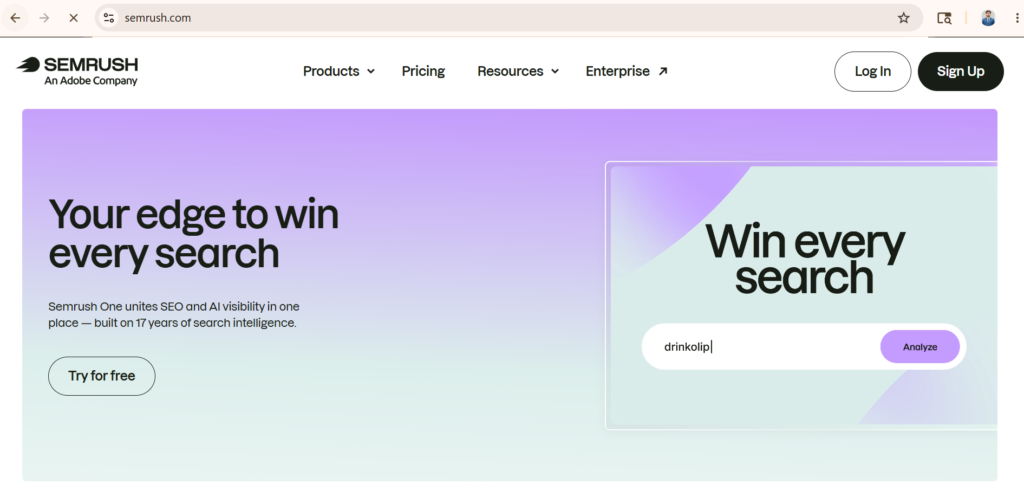
SEMrush launched in 2008 and positioned itself as a complete digital marketing solution, not just an SEO tool. While it excels in SEO, it also covers PPC research, content marketing, social media management, local SEO, and even some e-commerce features. This breadth makes SEMrush the platform of choice for marketing agencies and in-house teams managing multiple channels. The keyword research tool is extensive, the site audit is thorough, and the competitor analysis spans multiple marketing disciplines. The downside is complexity—you’re paying for features you might never use. SEMrush pricing starts at $139.95/month, and it requires investment of time to master effectively.
Ubersuggest – The Beginner-Friendly Budget Option
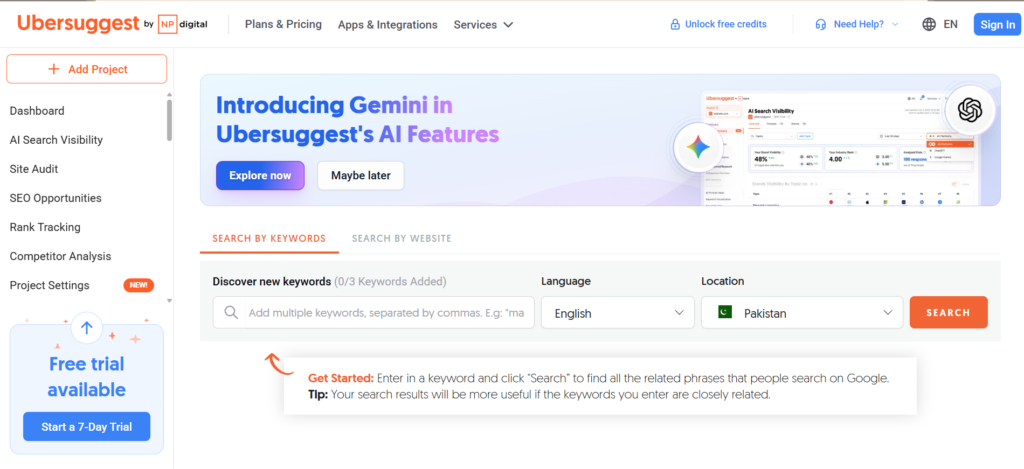
Ubersuggest took a fundamentally different approach when digital marketer Neil Patel acquired it in 2017. Rather than compete on data depth, Ubersuggest focused on simplicity and affordability. The interface is clean, the recommendations are straightforward, and the pricing is difficult to beat—as low as $12/month or even a one-time lifetime payment. Ubersuggest is purpose-built for small business owners, bloggers, and entrepreneurs new to SEO. It covers the essentials: keyword research, site audits, backlink monitoring, and competitor analysis. The trade-off is expected: the data isn’t as deep, the backlink database is smaller, and it’s not suitable for professional agency work in competitive niches.
Feature-by-Feature Comparison: Ahrefs vs. SEMrush vs. Ubersuggest
Understanding how these tools compare across specific features is essential for making the right choice. Here’s a detailed breakdown:
| Feature | Ahrefs | SEMrush | Ubersuggest |
| Starting Price | $129/month | $139.95/month | $12/month |
| Backlink Database | Largest (4+ trillion) | Large & Comprehensive | Small (Limited) |
| Keyword Research | Excellent with Clicks | Excellent (Keyword Magic) | Basic |
| Site Audit | Very Good | Most Comprehensive | Basic |
| Competitor Analysis | Excellent (Link-focused) | Excellent (Multi-channel) | Limited |
| Content Tools | Limited | Excellent | Basic |
| Learning Curve | Steep | Moderate | Easy |
| Free Trial | No | Yes (7 days) | Yes (7 days) |
| Best For | Link Builders & Pros | Agencies & Marketers | Beginners & SMBs |
Keyword Research Capabilities
Ahrefs: Delivers excellent keyword research through its Keywords Explorer tool. The standout feature is the “Clicks” metric, which shows estimated actual clicks on search results—not just search volume. This matters because many keywords have searches but no clicks (featured snippets steal the traffic). You also get keyword difficulty, an overview of SERP features, and historical trends. The data is reliable, and the interface is intuitive once you’re familiar with it.
SEMrush: Offers comprehensive keyword research through the Keyword Magic Tool. The database is enormous—billions of keywords across multiple languages and international markets. You get search volume, keyword difficulty, competitive density, intent classification, and related keyword suggestions. The interface is powerful but information-dense. SEMrush edges ahead for international SEO research, particularly for non-English markets.
Ubersuggest: Provides basic but useful keyword research. You can find search volume, keyword difficulty scores, and related keyword suggestions. The data comes from public sources and is less granular than premium tools. For finding directional trends and validating keyword ideas, Ubersuggest works fine. For serious competitive analysis or ranking forecasting, the limitations become apparent.
Backlink Analysis and Database Quality
Ahrefs: This is where Ahrefs truly dominates. The backlink database is the largest in the industry, with over 4 trillion links updated regularly. You can see detailed information for each backlink: referring domain authority, anchor text, link type (dofollow/nofollow), traffic from the referring page, and historical changes. The Site Explorer tool is incredibly powerful for competitive link analysis. For anyone serious about link building or competitive research, Ahrefs is unmatched.
SEMrush: Maintains a large and continuously updated backlink index. The Backlink Analytics tool is strong and particularly useful for comparing your profile against competitors through the Backlink Gap feature. SEMrush doesn’t have as extensive a database as Ahrefs, but it covers most legitimate backlinks. The strength lies in competitive comparison and actionable insights, not raw data volume.
Ubersuggest: Offers backlink monitoring but with obvious limitations. The database is noticeably smaller, showing fewer total backlinks and referring domains. You can identify top backlinks and get a general sense of your link profile, but the data isn’t reliable enough for serious link-building campaigns. This is Ubersuggest’s weakest feature area.
Technical SEO Site Audits
SEMrush: Provides the most comprehensive technical SEO audit. The crawler checks 130+ technical issues, including crawlability problems, page speed metrics, HTTPS implementation, internal linking structure, and content quality. Reports are detailed and organized by priority. Every issue includes an explanation and recommended fixes.
Ahrefs: Offers a robust Site Audit tool that catches the majority of technical issues. The crawler is fast and reliable, identifying problems with crawlability, indexation, broken links, and on-page factors. It’s slightly less comprehensive than SEMrush on JavaScript-heavy sites, but excellent overall.
Ubersuggest: Includes basic site audit functionality, identifying major issues like broken links, missing meta tags, and duplicate content. It’s adequate for learning SEO basics but lacks the depth needed for serious technical troubleshooting.
Competitor Analysis Tools
SEMrush: Excels at multi-channel competitor analysis. You can see competitors’ organic keywords, paid search strategy, backlink sources, content performance, and advertising tactics. This breadth makes it invaluable for agencies managing multiple marketing channels.
Ahrefs: Focuses on link-based competitive analysis. Discover where competitors are earning links, which content attracts backlinks, and identify link opportunities your competitors haven’t targeted. This is invaluable for link-focused strategies.
Ubersuggest: Shows competitor keywords and backlinks at a high level. Useful for identifying competitive positioning but not detailed enough for strategic decision-making.
Data Accuracy and Database Size: Which Tool Has Better Data?
Data quality separates the premium tools from the budget options. This isn’t a minor difference.
Ahrefs’ Data Advantage: Ahrefs crawls the web more frequently than competitors, with particular strength in backlink freshness. The company updates its index continuously and can often find new links faster than other platforms. For keyword data, Ahrefs uses clickstream data (actual user click patterns) and proprietary modeling, explaining the unique Clicks metric. This data quality advantage is worth the premium pricing if backlinks are your priority.
SEMrush’s Global Coverage: SEMrush maintains massive databases for both keywords and backlinks. The tool excels at international SEO data, tracking keywords across multiple countries and languages. While the backlink database is smaller than Ahrefs, it’s sufficient for most campaigns. The platform’s strength lies in breadth—understanding competitor strategies across multiple channels.
Ubersuggest’s Limitations: Ubersuggest relies on publicly available data and smaller proprietary databases. Updates lag behind premium tools by weeks. Search volume estimates are directionally accurate for validation purposes but unreliable for precise forecasting. For beginners learning SEO, this is acceptable. For professionals managing client campaigns or competitive niches, the gap becomes problematic.
Ease of Use and Learning Curve
Your time investment matters. A tool you can’t master wastes money.
Ahrefs User Experience
Ahrefs has a clean, well-organized interface. However, the tool contains so much data and so many features that the learning curve is steep. New users often feel overwhelmed. The amount of information available for each query—referring domains, anchor text distribution, traffic estimates, link type breakdown—takes weeks to process. Training resources are excellent, but you’ll need them. Expect 3-4 weeks before feeling confident. This is not a tool for beginners without prior SEO knowledge.
SEMrush User Experience
SEMrush balances power with usability. The interface is intuitive and logical, with clear menu structures and helpful tooltips. Most users can perform basic keyword and competitor research within their first session. Advanced features and deeper analysis require more familiarity. The learning curve is moderate—most users reach comfortable proficiency within 1-2 weeks. Training webinars and documentation are extensive.
Ubersuggest User Experience
Ubersuggest prioritizes simplicity above all else. The interface shows only essential information. A complete beginner can pull meaningful keyword and competitor data within minutes. The dashboard is uncluttered, navigation is intuitive, and recommendations are straightforward. There’s virtually no learning curve. Within one session, you’ll understand all major features.
Detailed Pricing Comparison
Price often determines which tool is accessible to you. Here’s the reality of what each platform costs:
┌───────────────────────── 🟦 AHREFS ───────────────────────┐
│ 💰 Entry: $129/mo │
│ 💰 Mid-Tier: $249/mo │
│ 💰 Premium: $449/mo │
│ 🎁 Discount: ~16% Annual Savings │
│ ❌ Free Trial: None │
│ ⭐ Best For: Link Builders & SEO Experts │
└───────────────────────────────────────────────────────────┘
┌───────────────────────── 🟩 SEMRUSH ──────────────────────┐
│ 💰 Entry: $139.95/mo │
│ 💰 Mid-Tier: $249.95/mo │
│ 💰 Premium: $499.95/mo │
│ 🎁 Discount: ~17% Annual Savings │
│ ✅ Free Trial: 7 Days │
│ ⭐ Best For: Agencies & Marketing Teams │
└───────────────────────────────────────────────────────────┘
┌─────────────────────── 🟨 UBERSUGGEST ────────────────────┐
│ 💰 Entry: $12/mo │
│ 💰 Mid-Tier: $20/mo │
│ 💰 Premium: $40/mo │
│ ♾️ Lifetime: $290–490 │
│ ✅ Free Trial: 7 Days │
│ ⭐ Best For: Budget-Conscious Users │
└───────────────────────────────────────────────────────────┘
🏆 QUICK WINNERS🔗 Best Backlink Analysis → Ahrefs
🏢 Best All-in-One Suite → SEMrush
💵 Best Budget Choice → Ubersuggest
Ahrefs Pricing Reality
Ahrefs offers no free tier. The Lite plan costs $129/month (with annual billing) and includes access to core tools with limited projects. Standard is $249/month, and Advanced is $449/month. The company introduced a credit system—some features use monthly credits rather than unlimited access, meaning your actual cost depends on usage. For a freelancer running basic analysis, $129/month is steep. For agencies, the per-user pricing becomes prohibitive (add $129/month per additional user).
SEMrush Pricing Reality
Pro plan starts at $139.95/month ($117/month annually). Guru is $249.95/month. Business is $499.95/month. More features unlock at higher tiers. The company frequently offers promotional pricing to new subscribers. A 7-day free trial is available, so you can test before committing. For a small business, even the Pro plan ($1,680/year) is a significant investment.
Ubersuggest Pricing Reality
Individual plan at $12/month ($132/year) or a $290 one-time lifetime payment. Business plan at $20/month ($240/year) or $390 lifetime. Enterprise at $40/month ($490 lifetime). The lifetime option is unique in the industry—a one-time payment removes recurring costs forever. Free tier available with limited daily searches. For bootstrap founders and solopreneurs, Ubersuggest’s pricing structure is game-changing.
Which Offers Best Value?
Value depends on your situation. For beginners, Ubersuggest’s $12/month offers incredible value. For professionals, Ahrefs’ data quality justifies $129/month if backlinks are your focus. For agencies, SEMrush’s all-in-one approach delivers value across multiple disciplines.
Comprehensive Pros and Cons Analysis
Ahrefs Strengths and Weaknesses
Strengths:
- Industry-leading backlink database with fastest crawl updates
- Unique Clicks metric showing actual traffic potential
- Excellent Site Explorer for competitive link research
- Clean interface once you learn the platform
- No credit system limitations on core features (newer plans do use credits)
- Trusted by leading SEO professionals worldwide
Weaknesses:
- Premium pricing starting at $129/month with no free trial
- Steep learning curve—not beginner-friendly
- Newer credit-based system adds complexity and potential cost variability
- Weaker in non-SEO marketing disciplines
- Per-user add-ons quickly make team subscriptions expensive
SEMrush Strengths and Weaknesses
Strengths:
- Most comprehensive all-in-one platform covering SEO, PPC, content, and social
- Massive keyword database with strong international coverage
- Thorough technical SEO audit with 130+ checks
- Excellent competitor analysis across multiple marketing channels
- 7-day free trial available
- Frequent promotional pricing for new subscribers
Weaknesses:
- A feature-heavy interface creates a moderate learning curve
- Expensive, starting at $139.95/month
- You’re paying for features you might never use
- Backlink database smaller than Ahrefs
- Requires significant time investment to master
Ubersuggest Strengths and Weaknesses
Strengths:
- Most affordable option—$12/month or lifetime deal
- Simplest interface of the three tools
- No learning curve—beginners are productive immediately
- Lifetime pricing option eliminates recurring costs
- Free tier available for basic research
- Includes AI writing tools bundled in plans
Weaknesses:
- Data significantly less deep than premium tools
- Backlink database substantially smaller
- Updates lag behind Ahrefs and SEMrush
- Not suitable for professional agency work
- Limited to competitive niches requiring serious analysis
- Only 12 months of historical data vs. years for competitors
Use Cases: Which Tool Is Best for Different Users?
For Complete Beginners and Solo Entrepreneurs
Start with Ubersuggest. The $12/month entry point is low-risk. You’ll learn SEO fundamentals without overwhelming complexity. The platform teaches core concepts: keyword research, competitor analysis, and backlink monitoring. After 3-6 months, if SEO becomes critical to growth, upgrade to SEMrush. You’ll appreciate the additional features and can apply your foundational knowledge.
For Bloggers and Content Creators
Ubersuggest handles basic keyword planning and content optimization. Use it to find topics your audience searches for and understand the competitive content landscape. If you’re building serious authority and pursuing link-building strategies, add Ahrefs once your blog generates meaningful traffic. This combination—Ubersuggest for planning, Ahrefs for links—is powerful and economical.
For Freelance SEO Consultants and Specialists
Choose SEMrush for breadth or Ahrefs for depth. SEMrush lets you serve clients across multiple disciplines (SEO, PPC, content). Ahrefs, if your focus is exclusively on SEO and link building. Many freelancers use both—Ahrefs for link analysis and SEMrush for broader competitive intelligence. Budget approximately $250-280/month if using both.
For Digital Marketing Agencies
SEMrush is the safest choice. You can serve clients across SEO, paid search, content, and social media. One platform covers multiple disciplines, simplifying client communication. Add Ahrefs if link building is a core service—the superior backlink database justifies the investment. Many top agencies use both platforms.
For Competitive Niches (Finance, Legal, Enterprise SaaS)
Ahrefs becomes essential. In highly competitive verticals, understanding backlink strategies is survival. Competitors likely have sophisticated link profiles you’ll need to deconstruct. Ahrefs’ depth is worth the premium cost in these industries.
For E-commerce and Local Business SEO
SEMrush excels here. The local SEO tools, content marketing features, and multi-location tracking suit e-commerce and local business needs. For pure local SEO, SEMrush is more useful than Ahrefs.
The Final Verdict: Which Tool Should You Choose?
Best Overall Tool for Most Users
SEMrush wins here. If the budget allows, SEMrush is the strongest choice. It covers SEO comprehensively, plus PPC, content marketing, and social media. This breadth provides flexibility as your business grows. The learning curve is manageable. Data quality is excellent. While not the cheapest option, it’s the most versatile.
Best for Beginners and Budget-Conscious Users
Ubersuggest is unquestionably the winner. The combination of simplicity and affordability makes it the obvious starting point. At $12/month or a one-time $290 lifetime payment, the risk is minimal. You’ll learn SEO without financial pressure. Upgrade later as needs evolve.
Best for Link Builders and SEO Specialists
Ahrefs dominates this category. If backlinks are your primary focus, Ahrefs’ data advantage justifies the cost. The backlink database is unmatched. Site Explorer is incredibly powerful. No other tool competes for link analysis depth and freshness.
Best Value for Money
Ubersuggest’s lifetime deal ($290-490) is extraordinary. For bootstrapped businesses and solopreneurs, this changes the economics entirely. You pay once and access the platform forever. This is available nowhere else in the SEO tool market.
Best for Agencies and Teams
SEMrush or Ahrefs, depending on focus. For multi-discipline agencies, SEMrush. For SEO-focused agencies, Ahrefs. Many top agencies subscribe to both, using each for its core strength.
Brief Overview of Alternatives
Moz Pro
Moz introduced Domain Authority, still the industry’s most recognized domain metric. Moz Pro includes Keyword Explorer and Link Explorer, both solid tools. Pricing starts around $99/month. Moz works well for small businesses and is easier to learn than Ahrefs. The backlink database is smaller than Ahrefs but larger than Ubersuggest. Consider Moz if you want something between Ubersuggest and premium tools.
Frequently Asked Questions
Which is better: Ahrefs or SEMrush?
For link analysis, Ahrefs wins decisively. For everything else, SEMrush is broader and more balanced. Your choice depends on priorities. If backlinks drive your strategy, Ahrefs. If you need multi-channel marketing intelligence, use SEMrush.
Is Ubersuggest enough for professional SEO work?
Not as a solo tool. Ubersuggest works for keyword research and basic competitive analysis. However, the backlink data gaps and limited historical information make it unsuitable for serious agency work or highly competitive niches. Combine with Google Search Console and free tools for professional campaigns.
Which tool is best for beginners?
Ubersuggest without question. Lowest cost ($12/month), easiest interface, sufficient features to learn SEO fundamentals. No overwhelming options. Start here, upgrade as you grow.
Can I use free alternatives instead?
Google Search Console and Google Analytics provide excellent data for your own site. Google Trends, Keyword Planner, and Ubersuggest’s free tier offer basic research. For serious competitive analysis, you’ll eventually need a paid tool. Free tools have limitations that become apparent as your SEO complexity grows.
Should I use multiple tools together?
Yes, many professionals use all three: Ahrefs for backlinks, SEMrush for broad competitive intelligence, and Google Search Console for owned data. This combination is comprehensive but more expensive. Start with one tool and add others as your needs grow.
What’s the cheapest way to start with professional SEO tools?
Ubersuggest’s $290 lifetime deal is the cheapest professional entry. If that’s beyond budget, use Google’s free tools to learn the basics. SEMrush offers a 7-day free trial, Ubersuggest has a free tier with daily limits, and Ahrefs has free Webmaster Tools for your own site.
Conclusion
Choosing between Ahrefs, SEMrush, and Ubersuggest requires honestly assessing your situation. Your budget, expertise level, specific needs, and business stage all matter. There’s no universally “best” choice—only the best choice for your situation.
Start here: If you’re uncertain, begin with Ubersuggest’s 7-day trial or free tier. The platform is inexpensive and teaches SEO fundamentals quickly. You’ll learn whether your needs require premium features.
Upgrade strategically: As your business grows and SEO becomes more important, upgrade to SEMrush for breadth or Ahrefs for link depth. Many successful teams use both platforms, each serving distinct purposes.
Don’t overthink it: The time you invest learning your chosen tool matters more than picking the “perfect” platform. Consistent analysis using any quality tool beats inconsistent analysis using the “best” tool.
Remember: these tools are resources that support your strategy, not substitutes for strategy. A clear SEO plan executed consistently with a basic tool outperforms flawless analysis without strategic direction. Choose your tool, master it, and focus on execution.
Your journey in SEO begins with the right tool. Whether you choose Ahrefs, SEMrush, or Ubersuggest, you’re investing in your business growth. Use these platforms as leverage to understand your market, identify opportunities, and make data-driven decisions. The competitive advantage doesn’t come from the tool—it comes from how you use the data it provides.
