
The difference between average and top-ranking websites often comes down to one critical factor: staying up to date with SEO best practices.
SEO changes constantly. Google updates its algorithm multiple times per year. New ranking factors emerge. Old tactics become obsolete. Tools evolve. Best practices shift.
The agencies and businesses that succeed are those that stay informed. And the best way to stay informed is by following the right SEO blogs.
But not all SEO blogs are created equal. Some are outdated, pushing tactics that worked in 2020 but are now ineffective or risky. Some are overly simplistic, offering surface-level advice that doesn’t move the needle. Some are too technical, inaccessible to anyone without a computer science degree.
The best SEO blogs are those that combine authority with accessibility, that provide both cutting-edge research and practical implementation guidance, and that keep you updated without overwhelming you.
This guide walks you through the 10 best SEO blogs in 2026, explains what makes each valuable, shows you which blogs are right for your skill level and goals, and provides a framework for actually learning from them effectively.
Table of Contents
Quick List: The Top 10 SEO Blogs at a Glance
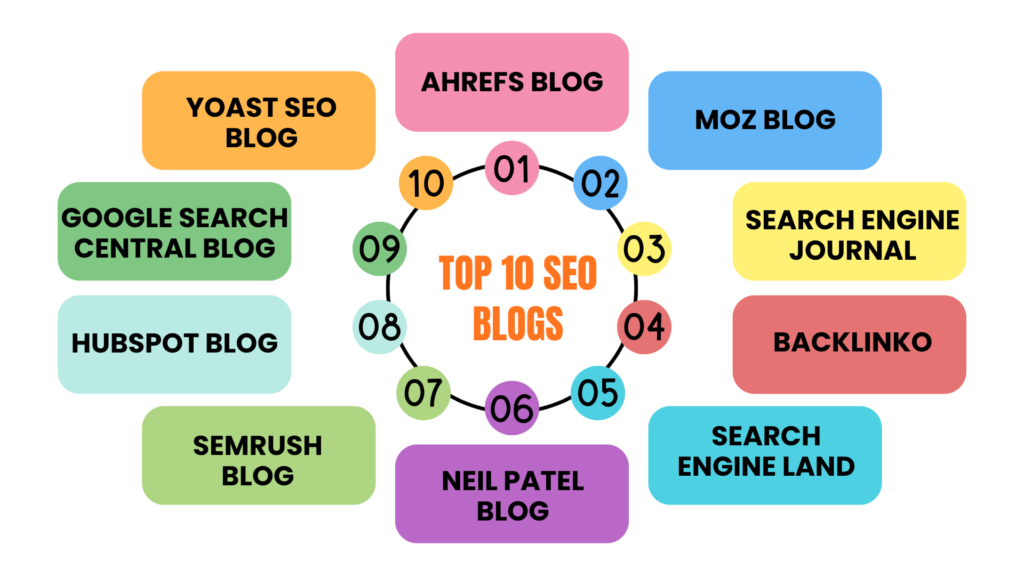
1. Ahrefs Blog
2. Moz Blog
3. Search Engine Journal
4. Backlinko
5. Search Engine Land
6. Neil Patel Blog
7. Semrush Blog
8. HubSpot Blog
9. Google Search Central Blog
10. Yoast SEO Blog
How We Selected These Blogs: Our Criteria
Before diving into individual blogs, it’s important to understand how we evaluated them. This ensures our recommendations are based on objective criteria, not bias or popularity.
We evaluated each blog on:
1. Authority and Domain Reputation
Authority blogs are written by recognized experts, published by established companies, and cited frequently in the industry. We only selected blogs from companies with proven track records and recognized expertise.
2. Content Quality
Quality content is well-researched, thoroughly explained, includes examples or case studies, and provides actionable insights. Fluff and generic advice don’t make the cut.
3. Update Frequency
SEO changes constantly. Blogs that update frequently (weekly or bi-weekly) stay current. Blogs that publish sporadically become outdated quickly.
4. Practical vs. Theoretical Balance
The best blogs balance cutting-edge theory with practical implementation. You need both to succeed.
5. Accessibility
Expert blogs should be understandable by professionals at various skill levels. Overly technical or overly simplistic content limits value.
6. Industry Reputation
We looked at citations, shares, rankings, and recognition within the SEO community to verify that these blogs are actually trusted by professionals.
The Top 10 SEO Blogs: Detailed Breakdowns
1. Ahrefs Blog
Overview: Ahrefs is one of the industry’s leading backlink analysis and SEO tools. Their blog is backed by years of proprietary data and original research.
Best for: SEO professionals, link builders, competitive researchers, and anyone serious about data-driven SEO
Skill level: Intermediate to Advanced
Content focus:
– Backlink analysis and competitive research
– Data-driven case studies
– Advanced ranking tactics
– Technical SEO insights
Why it’s valuable:
Ahrefs publishes original research that many other blogs cite. Their backlink data gives them unique insights into what actually ranks. They test strategies at scale and share results transparently.
Example topics:
– “How to Build Backlinks Without Outreach”
– “1 Million Blog Posts: Which Topic Gets the Most Backlinks?”
– “The Top Pages on the Web Have This In Common”
Who should follow:
SEO professionals, link builders, agencies, and anyone using Ahrefs or wanting to understand competitive backlink analysis. Their content is technical but worth the learning curve.
Update frequency: 2-3 articles per week
2. Moz Blog
Overview: Moz is one of the original SEO software companies (founded in 2004). Their blog is an institution in the industry.
Best for: All skill levels, from beginners to advanced professionals
Skill level: All levels (beginner-friendly to advanced)
Content focus:
– SEO fundamentals
– Algorithm updates and what they mean
– Tool guides and tutorials
– Whiteboard Friday (video content)
– Industry analysis
Why it’s valuable:
Moz explains complex SEO concepts in an accessible language. Their “Whiteboard Friday” series is legendary—entertaining and educational. They break down algorithm updates in ways everyone can understand.
Example topics:
– “What is Domain Authority and How Is It Calculated?”
– “The Beginner’s Guide to SEO”
– “Core Web Vitals: The Technical SEO Guide”
Who should follow:
Beginners learning SEO fundamentals, professionals needing updated explanations of algorithm changes, and teams needing accessible SEO education. Moz is less data-focused than Ahrefs but more accessible.
Update frequency: 3-4 articles per week
3. Search Engine Journal
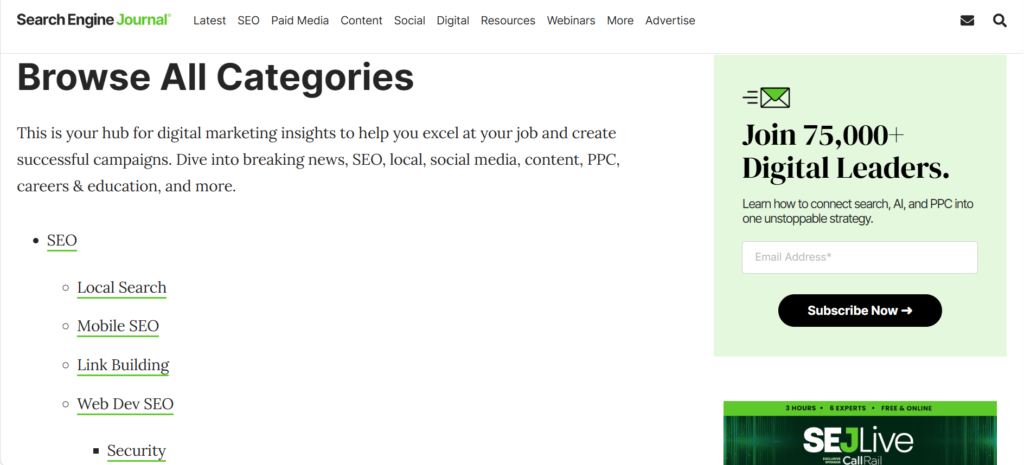
Overview: Search Engine Journal is one of the oldest and most authoritative SEO publications. They cover news, updates, and in-depth analysis.
Best for: Staying current on industry news, understanding algorithm updates, and quick insights
Skill level: Intermediate
Content focus:
– Google algorithm updates
– Industry news
– SEO strategy articles
– Case studies
– Expert interviews
Why it’s valuable:
SEJ is the fastest way to stay up to date on what’s happening in SEO. They break news quickly, explain implications, and provide context. Their expertise makes their analysis reliable.
Example topics:
– “Google’s Latest Core Update: What Ranked, What Dropped”
– “How to Prepare for Google’s Next Algorithm Update”
– “SEO Myths Debunked by Google”
Who should follow:
Anyone who needs to stay on top of industry news. Agencies, SEO professionals, and marketing directors. SEJ helps you understand what changed and why.
Update frequency: 5-10 articles per day
4. Backlinko
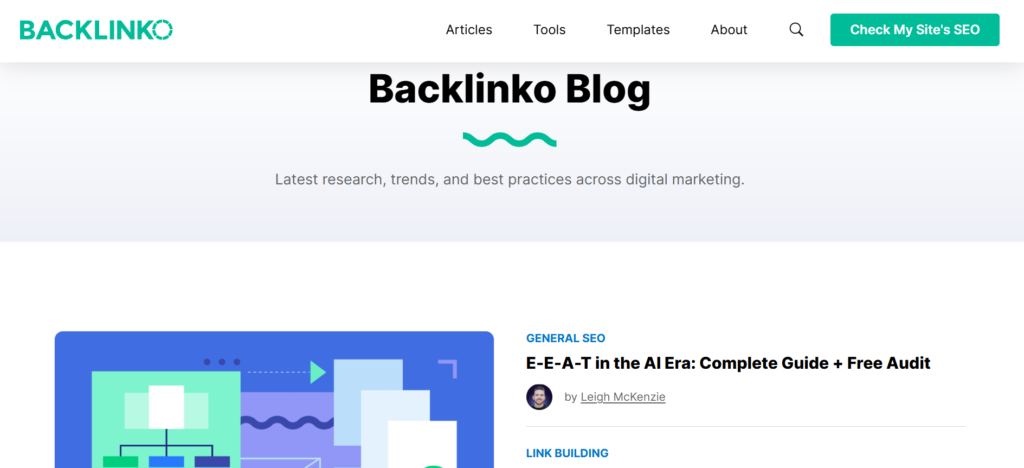
Overview: Founded by Brian Dean, Backlinko is known for massive, in-depth guides backed by data and case studies.
Best for: In-depth learning, data-driven strategies, case study analysis
Skill level: Intermediate to Advanced
Content focus:
– Comprehensive ranking factor studies
– Content strategy and optimization
– Link building techniques
– Detailed guides and tutorials
– SEO case studies with results
Why it’s valuable:
Backlinko’s guides are legendarily comprehensive. A single article might be 5,000+ words with original research, screenshots, and data. They test strategies and share real results.
Example topics:
– “The Definitive Guide to the Google Ranking Factors“
– “SEO Case Study: How I Increased My Ranking From #18 to #1”
– “The Complete Content SEO Guide”
Who should follow:
Anyone seeking in-depth, data-backed explanations. Marketers who want to understand the “why” behind SEO. People who prefer comprehensive guides over quick tips.
Update frequency: 2-3 articles per month
5. Search Engine Land
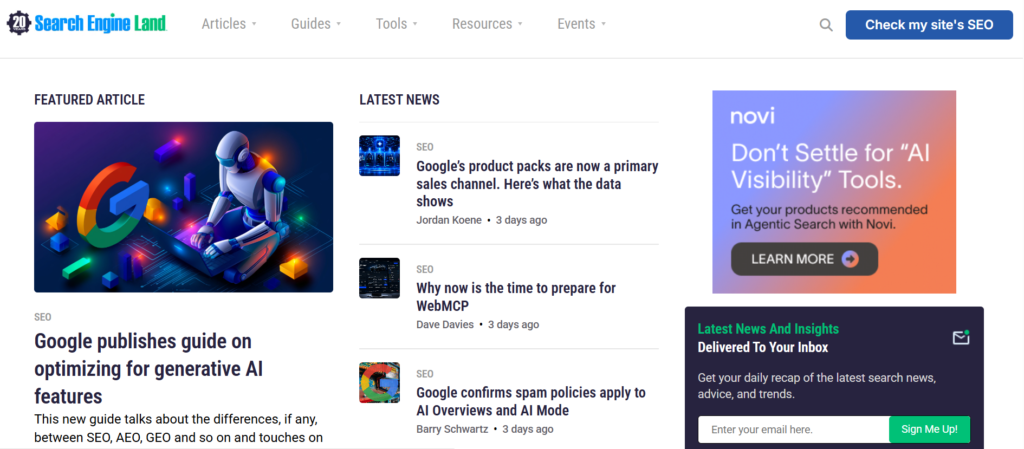
Overview: Part of the Third Door Media family (same as Search Engine Journal), Search Engine Land focuses more on strategy and analysis than breaking news.
Best for: Strategic thinking, industry analysis, framework development
Skill level: Intermediate to Advanced
Content focus:
– Strategic SEO thinking
– Algorithm analysis
– Industry trends
– Expert columns
– Conversion-focused SEO
Why it’s valuable:
SEL goes deeper than news. They analyze what updates mean for strategy, not just what happened. Their expert columns provide perspective from industry leaders.
Example topics:
– “The Future of Google Search: What Marketers Should Prepare For”
– “How to Build a Defensible SEO Competitive Advantage”
– “The Evolution of Core Web Vitals and What It Means”
Who should follow:
Marketing leaders, strategists, and agencies are setting long-term plans. SEL helps you think beyond immediate tactics to long-term strategy.
Update frequency: 3-5 articles per week
6. Neil Patel Blog
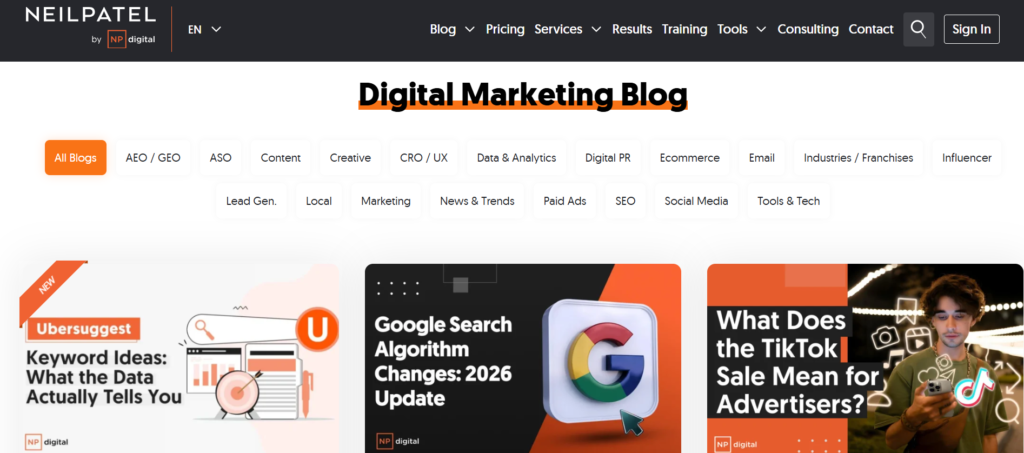
Overview: Neil Patel is a well-known digital marketer with a massive platform. His blog covers SEO, content, and broader marketing.
Best for: Beginners, content marketers, people wanting practical tactical advice
Skill level: Beginner to Intermediate
Content focus:
– Practical SEO tactics
– Content marketing strategy
– Link building how-tos
– Keyword research guides
– Beginner tutorials
Why it’s valuable:
Neil Patel’s content is practical and actionable. Less academic than Backlinko, more accessible than Moz’s deep dives. Great for people who want to implement something today.
Example topics:
– “How to Do Keyword Research: Complete Guide”
– “Link Building Strategies That Work”
– “The Beginner’s Guide to On-Page SEO”
Who should follow:
Beginners learning SEO, small business owners doing their own SEO, and content marketers wanting to improve organic visibility. Neil’s content is applied and actionable.
Update frequency: 5-7 articles per week
7. Semrush Blog
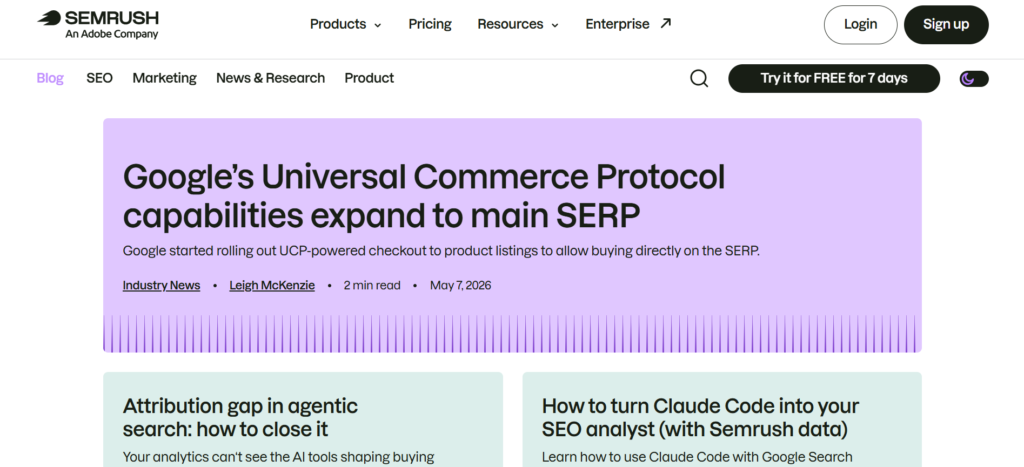
Overview: Semrush is a comprehensive SEO and marketing toolkit. Their blog combines industry expertise with their proprietary data.
Best for: All-in-one marketing education, SEO tools guidance, and competitive analysis
Skill level: All levels
Content focus:
– SEO trends and data analysis
– Content marketing guides
– Paid search insights
– SEO tools comparisons
– Marketing strategy
Why it’s valuable:
Semrush has access to massive search and ranking data. Their trend reports are industry-standard. They cover the full marketing spectrum, not just SEO.
Example topics:
– “2026 SEO Trends Report: What Will Dominate.”
– “The Complete Guide to Competitive Analysis”
– “How to Optimize for Featured Snippets”
Who should follow:
Marketing teams doing SEO and PPC, anyone using Semrush for analysis, and marketers wanting to understand trends and data. Semrush is less beginner-friendly than Neil Patel but more comprehensive.
Update frequency: 5-10 articles per week
8. HubSpot Blog
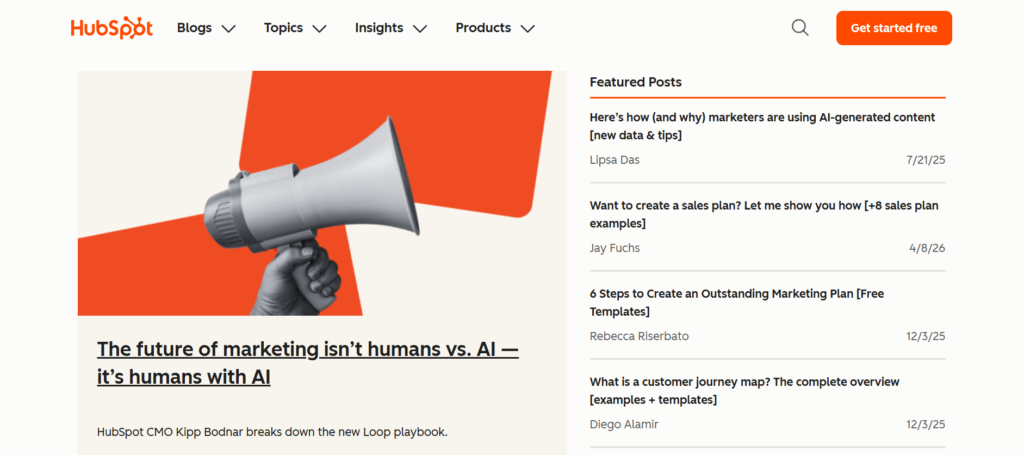
Overview: HubSpot is a marketing automation giant. Their blog covers marketing broadly, but with excellent SEO sections.
Best for: Inbound marketing, content strategy, marketing automation integration with SEO
Skill level: Beginner to Intermediate
Content focus:
– Inbound marketing strategy
– Content marketing and blogging
– Lead generation
– SEO optimization integrated with marketing
– Marketing automation
Why it’s valuable:
HubSpot bridges SEO and marketing. Their content focuses on how SEO drives leads and sales, not just rankings. They teach SEO in the context of business results.
Example topics:
– “How to Create a Content Marketing Strategy That Drives Sales”
– “The Complete Guide to Inbound Marketing”
– “SEO Best Practices for Lead Generation”
Who should follow:
Content marketers, marketing leaders, and anyone doing SEO for lead generation. HubSpot ties SEO to business outcomes.
Update frequency: 10+ articles per week
9. Google Search Central Blog
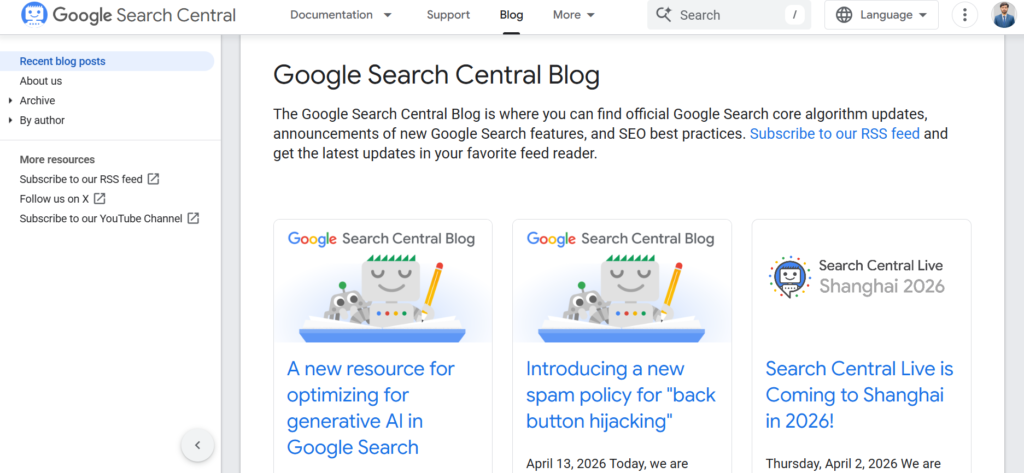
Overview: This is Google’s official communication channel. When Google has announcements, they come here first.
Best for: Official updates, Google’s perspective, staying current on changes from the source
Skill level: All levels (depending on specific posts)
Content focus:
– Official algorithm updates
– Core Web Vitals and performance metrics
– Mobile and web design guidance
– Google Search features
– Technical SEO from Google’s perspective
Why it’s valuable:
It’s the source. When Google announces changes, they explain them here. Understanding what Google communicates is critical. Some posts are technical, others accessible.
Example topics:
– “Helpful Content System Update”
– “Core Web Vitals: Top Opportunities to Improve”
– “Preparing for the August 2026 Core Update”
Who should follow:
Everyone is doing SEO. This is the official source. You need to understand what Google is saying, not just what others interpret it to mean.
Update frequency: 3-5 articles per week
10. Yoast SEO Blog
Overview: Yoast makes one of the most popular WordPress SEO plugins. Their blog focuses on actionable optimization guidance.
Best for: WordPress users, on-page SEO optimization, and content optimization frameworks
Skill level: Beginner to Intermediate
Content focus:
– On-page SEO optimization
– Content optimization frameworks
– Technical SEO for WordPress
– Keyword research and strategy
– Practical implementation guides
Why it’s valuable:
Yoast combines philosophy with practicality. Their “pillar content” and “cluster content” framework is industry-standard. They make complex concepts accessible.
Example topics:
– “Complete Beginner’s Guide to SEO”
– “How to Write SEO-Optimized Content”
– “Technical SEO: Complete Guide”
Who should follow:
WordPress users, on-page optimization-focused marketers, and people wanting structured content frameworks. Yoast is more tactical than strategic.
Update frequency: 2-3 articles per week
Categorized Recommendations: Which Blog for Your Goals?
Best SEO Blogs for Beginners
Start here:
1. Moz Blog (accessible fundamentals)
2. Yoast SEO Blog (practical frameworks)
3. Neil Patel Blog (actionable tactics)
4. HubSpot Blog (business context)
These four blogs explain SEO in understandable language and provide frameworks you can implement immediately.
Best SEO Blogs for Advanced Users
Deep dives:
1. Ahrefs Blog (data-driven strategies)
2. Backlinko (comprehensive research)
3. Search Engine Land (strategic thinking)
4. Semrush Blog (trend analysis)
These blogs assume foundation knowledge and provide cutting-edge tactics and data.
Best for Technical SEO
1. Google Search Central Blog (official guidance)
2. Ahrefs Blog (technical case studies)
3. Yoast SEO Blog (WordPress technical guides)
Best for Content and On-Page SEO
1. Backlinko (content ranking factors)
2. Neil Patel Blog (content optimization)
3. Yoast SEO Blog (content frameworks)
4. HubSpot Blog (content strategy)
Best for Link Building and Authority
1. Ahrefs Blog (comprehensive link research)
2. Backlinko (link building case studies)
3. Neil Patel Blog (link building tactics)
Best for Staying Current on Updates
1. Google Search Central Blog (official announcements)
2. Search Engine Journal (fastest news)
3. Search Engine Land (strategic implications)
4. Semrush Blog (trend reports)
Blog Comparison Table
How to Choose the Right SEO Blog
Based on your skill level:
Beginner? Start with Moz, Neil Patel, and Yoast. These explain fundamentals clearly.
Intermediate? Add Backlinko, Search Engine Journal, and HubSpot for deeper content.
Advanced? Dive into Ahrefs, Backlinko, Search Engine Land, and Semrush for cutting-edge strategies.
Based on your goals:
Want rankings? Focus on Ahrefs, Backlinko, and Yoast (link building and on-page).
Want traffic? Focus on Neil Patel, HubSpot, and Backlinko (content strategy).
Want conversions? Focus on HubSpot, Backlinko, and Search Engine Land (conversion-focused SEO).
Want to stay updated? Follow Google Search Central, Search Engine Journal, and Semrush daily.
Based on your niche:
WordPress site? Prioritize Yoast and Moz.
E-commerce? Prioritize Ahrefs (for competitive link analysis) and Backlinko (for content strategies that sell).
SaaS? Prioritize Neil Patel and HubSpot (for lead generation focus).
Large enterprise? Prioritize Search Engine Land and Ahrefs (for strategic competitive advantage).
How to Actually Learn from These Blogs: The Real Strategy
Reading blogs isn’t learning. Reading and implementing is learning.
Most people read blog articles and forget them within days. The difference between people who succeed with SEO and those who don’t is action.
Step 1: Read with Implementation Intent
Don’t just read blogs casually. Read with the intention of implementing something. Before you finish an article, decide: “What am I going to do differently based on this?”
Step 2: Take Notes
Write down key insights, actionable tactics, and metrics mentioned. Reference these notes when optimizing your site.
Step 3: Follow Case Studies Closely
Case studies are gold. Track what the problem was, what the solution was, what the timeline was, and what the results were. Can you replicate this approach?
Step 4: Test and Measure
Take a tactic from a blog and test it on your own site or a client site. Measure results. Track what works and what doesn’t.
Step 5: Stay Consistent
Don’t jump between blogs constantly. Pick 3-5 core blogs and follow them consistently. Reading one blog deeply and consistently beats reading every blog superficially.
Step 6: Create Your Own Insights
Once you’ve followed blogs for several months, you’ll start noticing patterns. Combine insights from multiple blogs with your own experience to develop your own perspective. This is when you truly understand SEO.
Common Mistakes to Avoid
Mistake 1: Following Too Many Blogs
Reading 20 blogs creates overwhelm and decision paralysis. Pick 3-5 blogs that fit your goals and go deep. Quality of focus beats quantity of sources.
Mistake 2: Not Implementing What You Learn
Reading without implementing is entertainment, not education. Every blog article should inspire at least one change to your strategy.
Mistake 3: Ignoring Google’s Official Communications
Too many people follow industry blogs but skip Google Search Central. Missing official updates means you’re behind the curve.
Mistake 4: Treating All Blogs as Equal
A beginner’s guide from Neil Patel is different from a technical case study from Ahrefs. Know what you’re reading and whether it fits your current needs.
Mistake 5: Not Updating Your Knowledge
SEO changes constantly. Blogs from 2020 might be outdated. Always prioritize recent articles and understand what’s changed since then.
Frequently Asked Questions
How often should I read SEO blogs?
Dedicating 30 minutes per day to reading blogs keeps you current. Mix daily news (Google Search Central, Search Engine Journal) with deeper dives (Backlinko, Ahrefs). Quality focus beats constant reading.
Are these blogs biased?
Partially. Each blog promotes its own tools or services. Ahrefs promotes Ahrefs, Semrush promotes Semrush, etc. This isn’t necessarily bad—their tools inform their insights. Just be aware of potential bias.
Can I rely solely on one blog?
No. Different blogs offer different perspectives. One blog might miss insights that another blog highlights. Following 3-4 blogs gives you a well-rounded education.
How do I know if a blog post is still relevant?
Check the publication date. If it’s over a year old, check if algorithm updates have changed the advice. Revisit foundational content frequently.
Should I trust all blog recommendations?
No. Test recommendations on your own site first. What worked for someone else might not work for you. Data beats anecdotes.
Final Thoughts: Quality Over Quantity
Following the right SEO blogs is critical to staying competitive. But following more blogs doesn’t equal better SEO. Following fewer blogs deeply and implementing consistently beats following many blogs superficially.
Pick your 3-5 core blogs based on your goals and skill level. Read consistently. Implement actively. Track results. Update your strategy based on what you learn.
The blogs in this guide are authoritative, regularly updated, and trusted throughout the industry. Any one of them will improve your SEO knowledge. Together, they’ll keep you at the cutting edge of SEO strategy.
Start with the blogs that match your current skill level and goals. As you grow, expand to more advanced resources. Build your SEO knowledge systematically, not randomly.
This structured approach to learning from blogs is how top SEO professionals stay ahead of the curve.
