
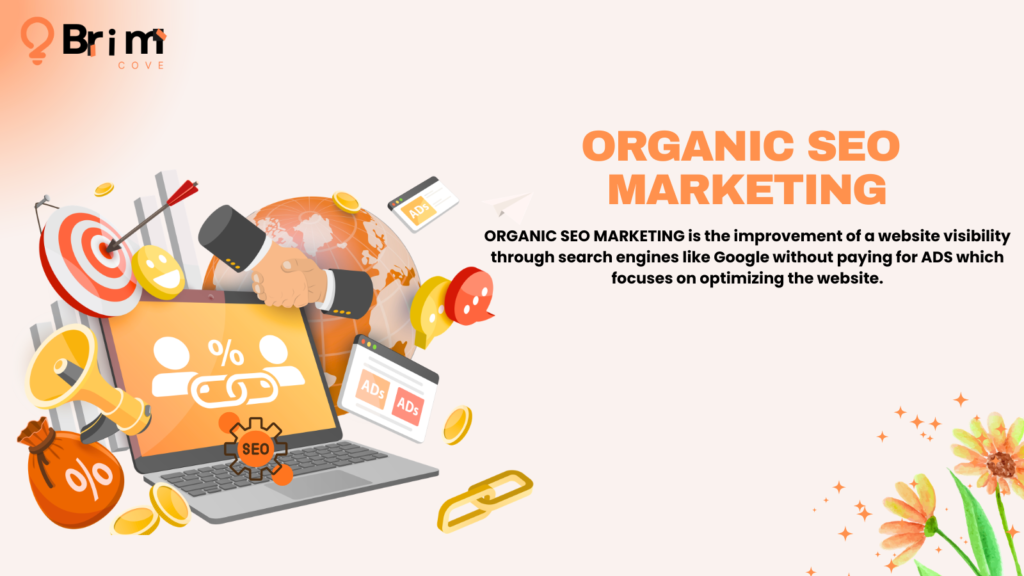
Every business owner I talk to eventually asks the same question: “How do I get steady traffic without constantly paying for ads?” The answer almost always comes back to organic SEO marketing. It’s the long-game approach that turns your website into a reliable source of visitors who actually want what you offer — without the monthly ad spend hanging over your head.
Organic SEO marketing is all about earning visibility in search results through genuine value rather than paid placements. In 2026, with AI-powered search and stricter quality standards, doing it right has never been more important — or more rewarding. Businesses that invest in a smart organic seo strategy enjoy lower customer acquisition costs, higher trust, and traffic that compounds month after month.
This complete guide walks you through everything you need to know. Whether you’re a startup founder, e-commerce manager, local business owner, or marketing professional, you’ll find clear explanations, real-world examples, and step-by-step tactics you can start using today.
What Is Organic SEO Marketing
Organic SEO marketing is the process of improving your website so it ranks higher in unpaid (organic) search results. When someone searches on Google, Bing, or any other engine and clicks a result that isn’t marked “Ad,” that’s organic traffic.
Unlike paid search, where you bid for clicks, organic seo marketing focuses on creating content, improving technical performance, and building authority so search engines naturally recommend your pages.
The difference between organic traffic and paid traffic is huge. Paid traffic stops the moment your budget runs out. Organic traffic keeps coming — often growing — as long as you maintain and improve your site. That’s why so many smart businesses treat organic search marketing as their primary growth engine.
Why Organic SEO Marketing Is Important
Here’s the truth most people discover after burning through ad budgets: organic seo marketing builds real, lasting assets for your business.
First, it creates trust. People instinctively believe the top organic results are the best answers. That credibility turns visitors into customers faster than any ad ever could.
Second, it delivers long-term traffic. Once you rank for a keyword, that position can deliver traffic for years with minimal ongoing effort. I’ve seen clients still getting hundreds of daily visitors from articles they published three years ago.
Third, it’s cost-effective. After the initial investment in content and optimization, the cost per visitor drops dramatically compared to paid campaigns.
Finally, it strengthens brand authority. Every time you earn a top ranking, you reinforce the idea that your business is the go-to expert in your space.
The benefits of organic seo go far beyond traffic numbers — they compound into higher conversions, better brand recall, and stronger customer loyalty.
Organic SEO vs Paid Search Marketing
Let’s break down the real differences so you can decide where to focus your budget:
| Aspect | Organic SEO Marketing | Paid Search Marketing |
| Cost | Higher upfront, lower long-term | Lower upfront, ongoing expense |
| Speed of Results | 3–12 months for meaningful traction | Immediate |
| Sustainability | Traffic continues even if you pause work | Stops instantly when the budget ends |
| Traffic Quality | Highly targeted, intent-driven users | Can include bargain hunters |
| Trust & Credibility | High — seen as earned | Lower — clearly marked as ads |
| ROI Over Time | Compounds year after year | Linear with spend |
| Control | Indirect (through value) | Direct (bidding & targeting) |
Most successful businesses use both, but they lean heavily on organic seo marketing for sustainable growth and paid search for quick wins or testing new offers.
Core Elements of Organic SEO Marketing
On-Page SEO
This is what happens directly on your website. Focus on:
– Writing content that perfectly matches search intent
– Using clear, descriptive headings and subheadings
– Optimizing title tags and meta descriptions
– Strategic internal linking to guide users and search engines
– Creating fast, mobile-friendly pages with excellent user experience
Great on-page work makes every other effort more effective.
Technical SEO
Search engines need to crawl and understand your site easily. Key areas include:
– Fast loading speeds (under 3 seconds)
– Proper mobile responsiveness
– Clean site architecture and XML sitemaps
– Structured data (schema markup) for rich results
– Fixing crawl errors and ensuring all important pages are indexed
Technical issues can silently kill even the best content.
Off-Page SEO
This is everything that happens off your site:
– Earning high-quality backlinks from relevant sites
– Digital PR and brand mentions
– Social signals and community engagement
– Building topical authority through consistent coverage of your niche
Off-page signals tell search engines how the wider web views your brand.
Best Organic SEO Strategies in 2026
The game has evolved. Here are the strategies actually working right now:
– Topical Authority & Content Clusters: Instead of isolated blog posts, build deep clusters around core topics. One pillar page + 10–15 supporting articles creates massive authority.
– Search Intent Optimization: Go beyond keywords. Understand exactly what users want at each stage of their journey and deliver it perfectly.
– E-E-A-T Signals: Demonstrate Experience, Expertise, Authoritativeness, and Trustworthiness through author bios, citations, original research, and transparent sourcing.
– Semantic & Entity SEO: Use natural language that covers related concepts, people, places, and things Google recognizes as entities.
– Helpful Content Focus: Prioritize content that truly solves problems rather than chasing keywords.
These organic seo techniques reward depth and usefulness over tricks.
How to Build an Organic SEO Marketing Strategy
Follow this proven 7-step process:
1. Keyword Research – Identify high-intent terms with reasonable competition using tools like Ahrefs or SEMrush.
2. Competitor Analysis – Study what’s already ranking and find content gaps you can fill better.
3. Content Planning – Map out a 6–12 month calendar of pillar and cluster content.
4. On-Page Optimization – Implement keyword placement, internal links, and UX improvements.
5. Link Building – Earn relevant backlinks through outreach, PR, and content promotion.
6. Technical SEO Audit – Fix speed, mobile, and crawl issues regularly.
7. Tracking & Iteration – Monitor rankings, traffic, and conversions monthly and adjust.
Treat this as a living system, not a one-time project.
Organic SEO Marketing for Different Businesses
SaaS Companies
Focus on long-form comparison guides, case studies, and educational content that addresses buyer pain points throughout the funnel.
eCommerce Stores
Optimize product pages with rich schema, create buying guides, and build category cluster content. User-generated content and reviews become powerful signals.
Local Businesses
Dominate Google Business Profile, create location-specific landing pages, and earn local citations and reviews.
Blogs & Content Sites
Build deep topical authority with comprehensive guides and consistent publishing. Newsletter sign-ups turn traffic into loyal readers.
Agencies
Showcase expertise through case studies, original research reports, and thought leadership content that positions you as the expert.
Best Tools for Organic SEO Marketing
– Google Search Console → Free insights into what Google sees and how it crawls your site
– Google Analytics 4 → Tracks organic traffic behavior and conversions
– Ahrefs → Best for backlink analysis, keyword research, and competitor spying
– SEMrush → Excellent for position tracking and content gap analysis
– Moz → Great for domain authority tracking and on-page recommendations
– Screaming Frog → Crawls your site to find technical issues
Start with the free Google tools, then add one premium tool as you scale.
Common Organic SEO Mistakes to Avoid
– Keyword stuffing instead of natural writing
– Publishing thin, low-value content
– Ignoring search intent and answering the wrong question
– Poor or missing internal linking structure
– Building spammy or irrelevant backlinks
– Neglecting technical SEO until problems appear
– Focusing only on rankings instead of traffic and conversions
Fix these early, and you’ll save months of frustration.
Future of Organic SEO Marketing
In 2026 and beyond, expect:
– More emphasis on AI-generated search overviews (SGE-style)
– Stronger focus on brand signals and entity recognition
– Greater rewards for genuine expertise and first-hand experience
– Search experience optimization is becoming as important as traditional SEO
– Voice and visual search are continuing to grow
The winners will be brands that create truly helpful, authoritative content that stands out even in AI summaries.
Conclusion
Organic seo marketing isn’t the fastest way to get traffic, but it’s still the smartest for most businesses. It builds real assets, earns genuine trust, and delivers compounding returns that paid ads simply can’t match.
Start small, stay consistent, and focus on value. The traffic will follow.
Ready to build a sustainable organic traffic engine for your business? The team at Brimcove specializes in practical, results-driven organic seo strategies that actually work in 2026. Book your free strategy call today and let’s map out a plan tailored to your goals and budget.
FAQs
What is organic SEO marketing?
Organic SEO marketing is the practice of improving your website’s visibility in unpaid search results through content creation, technical improvements, on-page optimization, and authority building. Unlike paid ads, it focuses on earning traffic by genuinely helping users find what they’re looking for. When done well, it creates a steady stream of qualified visitors who trust your brand because they found you naturally. It’s one of the most powerful long-term growth channels available to businesses of any size.
How long does organic SEO take to work?
Most businesses see initial improvements within 3–6 months, with significant results often appearing between 6–12 months. New sites or highly competitive niches may take 12–18 months to reach strong positions. The timeline depends on your starting point, competition level, content quality, and consistency of effort. The good news is that once momentum builds, results compound and become more stable than paid traffic.
Is organic SEO better than paid ads?
It depends on your goals. Paid ads deliver fast results and precise targeting, while organic SEO marketing builds sustainable, cost-effective traffic over time. Most successful businesses use both: paid for immediate revenue and testing, and organic for long-term brand authority and lower acquisition costs. Organic traffic also tends to convert better because users actively searched for solutions rather than being interrupted by ads.
What are examples of organic SEO?
Common examples include ranking for “best running shoes for flat feet” with a detailed comparison guide, appearing in local pack results for “plumber near me” through optimized Google Business Profile and citations, or ranking for educational keywords like “how to choose a CRM” with an in-depth pillar page and cluster content. Each example shows content created specifically to match real user searches.
What is the difference between organic SEO and paid SEO?
Organic SEO earns visibility through value and relevance, while paid SEO (usually called paid search or PPC) buys visibility through advertising platforms. Organic results appear below paid ads and are free to click, building long-term equity. Paid results stop when spending stops. Organic traffic is generally more trusted and converts at higher rates, but requires patience and ongoing work.
How do you build an organic SEO strategy?
Start with clear goals and keyword research. Analyze competitors to find gaps. Create a content plan focused on search intent. Optimize on-page elements and fix technical issues. Earn relevant backlinks through outreach and PR. Track everything with analytics tools and adjust monthly. Treat it as an ongoing system rather than a one-time project. Consistency beats perfection every time.
What industries benefit most from organic SEO?
Almost every industry benefits, but e-commerce, SaaS, professional services, health & wellness, finance, and local businesses see especially strong results. Any niche where people research before buying (which is most of them) rewards strong organic seo marketing. Even highly competitive sectors like insurance or law can win with deep, authoritative content that demonstrates real expertise.
Does organic SEO still work in 2026?
Absolutely — and in many ways it’s more effective than ever. While algorithms have evolved, the core principle remains: create genuinely helpful content that matches search intent and build real authority. Google continues to reward high-quality, user-focused sites. Businesses that treat organic seo marketing as a long-term investment are seeing stronger, more stable results than those relying solely on paid channels.
What are the best organic SEO tools?
Start with the free ones: Google Search Console and Google Analytics 4. For deeper insights, add Ahrefs or SEMrush for keyword and competitor research, Screaming Frog for technical audits, and Moz for domain metrics. The “best” tool depends on your budget and needs — many successful sites thrive with just the Google tools plus one premium platform.
Can small businesses compete with organic SEO?
Yes — often better than large corporations. Small businesses can be more agile, create more authentic content, and target specific long-tail keywords that bigger players ignore. Focus on your local area or niche expertise, publish consistently helpful content, and build genuine relationships for backlinks. Many of the biggest organic success stories started as small operations that outworked everyone else.
How much does organic SEO marketing cost?
Costs vary widely. DIY approaches can run $500–$2,000 per month in tools and time. Hiring a good agency or freelancer typically ranges from $1,500–$8,000 monthly, depending on scope and competitiveness. The real ROI comes from lower long-term customer acquisition costs and compounding traffic. Many businesses see positive returns within 6–12 months when executed well.
What is the difference between organic SEO and content marketing?
Organic SEO focuses specifically on ranking in search engines, while content marketing is broader — it includes blogs, videos, emails, and social content for any channel. Great organic seo marketing almost always includes strong content marketing, but content marketing doesn’t always target search engines. The two work best when aligned.
Can organic SEO marketing replace paid advertising completely?
For some businesses, yes; for others,s no. It can replace paid search for steady lead generation and brand awareness, but many companies keep paid ads for new product launches, seasonal promotions, or retargeting. The smartest approach is usually a mix, with organic seo marketing as the foundation and paid as an accelerator.
