

An SEO directory is a website that collects, organizes, and lists other websites or businesses—usually by category, location, industry, or topic. You submit your site or business profile, and if approved, you get a listing that often includes a link, description, and contact info.
Unlike search engines (Google, Bing) that crawl the entire web automatically and rank based on algorithms, directories are human-curated or moderated lists. They act more like digital yellow pages or resource hubs.
Classic example: DMOZ (shut down in 2017). Modern heavyweights include Google Business Profile, Yelp, Clutch.co (for agencies), Angi (home services), or niche lists like SaaS directories (G2, Capterra) and healthcare provider hubs.
The SEO angle: a good directory can provide a citation (consistent NAP = Name, Address, Phone), a backlink (dofollow in rare cases), faster crawling, or branded exposure.
Table of Contents
Types of SEO Directories
Directories fall into several buckets in 2026:
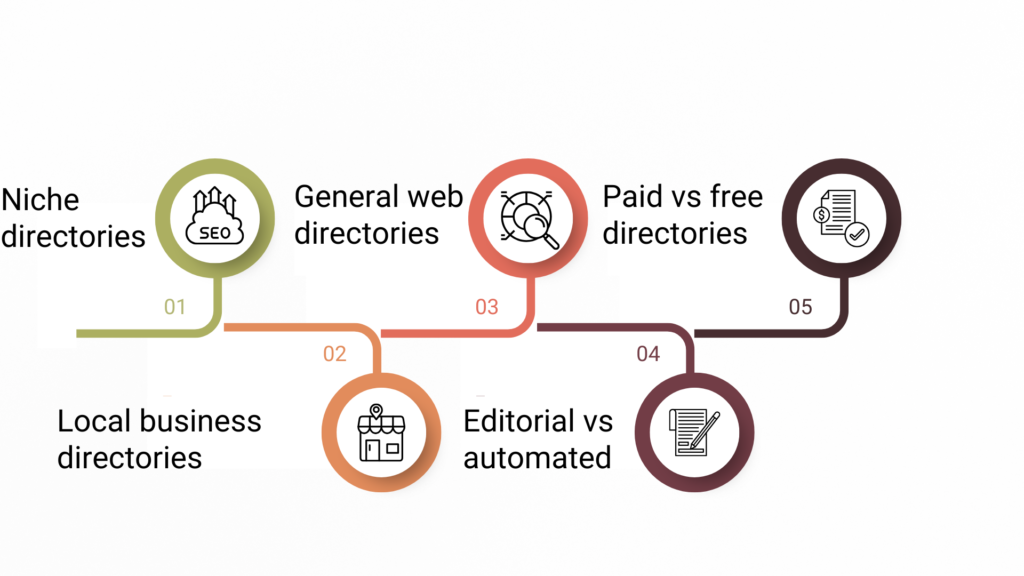
- Niche directories — Industry-specific (Clutch for agencies, G2 for SaaS, Healthgrades for doctors). These carry more weight if they have real users and editorial standards.
- Local business directories — City/state-focused or national with local filters (Yelp, Yellow Pages, BBB, Apple Maps, Bing Places).
- General web directories Broad listings (e.g., older ones like BOTW or newer general ones). Most have lost value due to low traffic and spam.
- Editorial vs automated — Editorial = human review (higher quality); automated = instant approval (usually spammy).
- Paid vs free directories — Paid often include verification, featured spots, or priority placement; free rely on self-submission.
How SEO Directories Affect Rankings
Directories can influence SEO in small but specific ways:
- Link equity — High-quality ones with real DR and traffic can pass minor juice if dofollow and contextual. Most are nofollow or low-value now.
- Citations & entity signals — Consistent NAP across trusted directories strengthens Google’s understanding of your business as a real entity—especially important for local pack rankings.
- Indexing help — New sites get crawled faster when listed on indexed, authoritative directories.
- Local visibility — Strong citation profiles boost proximity + prominence signals in Google Maps/Local Pack.
When they harm:
- Low-quality/spam directories create unnatural link patterns → algorithmic devaluation.
- Excessive submissions (especially irrelevant) look manipulative.
- Google’s spam policies flag “unnatural links” from low-authority, over-optimized sources.
Google doesn’t outright ban directory links, but low-quality ones get ignored or hurt more than help.
Benefits of Directory Submissions
Selective submissions still deliver:
- Local visibility boost — Consistent NAP helps you rank higher in the local pack and Maps (many case studies show 20–40 spot jumps after cleaning 15–30 core citations).
- Citation building — Strengthens entity trust; Google uses third-party confirmations to verify legitimacy.
- Brand exposure — Niche directories like Clutch or G2 drive targeted referral traffic and credibility.
- Faster indexing — Useful for brand-new domains or location pages.
- Baseline authority — A few high-DR niche placements add small but safe equity.
Risks of Low-Quality Directories
The downsides are real:
- Spam signals — Links from auto-approve, keyword-stuffed, or PBN-like directories trigger unnatural patterns.
- Manual penalties — Rare but possible if part of a clear scheme (e.g., hundreds of low-quality links).
- Over-optimization — Too many irrelevant links dilute topical authority and raise outbound ratio flags.
- Wasted effort — Most low-quality submissions yield zero ROI and can make your profile look suspicious in tools like Ahrefs.
How to Evaluate a Directory (Checklist)
Before submitting anywhere, run this quick vetting:
✔ Real organic traffic (check Ahrefs/Semrush estimates—not just DR)
✔ Pages indexed in Google (site:domain.com shows healthy number)
✔ Editorial review process (manual approval mentioned)
✔ Relevant niche or geography (matches your business)
✔ Clean backlink profile (no sudden spam spikes)
✔ No excessive outbound links per page (avoid link farms)
✔ Active moderation (recent updates, real reviews)
✔ No captcha fatigue or instant approval promises
If 5+ checks pass → worth considering. Fewer than 3 → skip.
Step-by-Step: How to Submit to an SEO Directory
- Research directories — Start with known good ones (Google Business Profile, Yelp, Bing Places, Apple Maps, Facebook). Then search for niche ones (e.g., “SaaS directory submission” or “healthcare provider directory”).
- Prepare NAP consistency — Use exact same Name, Address, Phone everywhere (check Moz Local or BrightLocal for mismatches).
- Write optimized description — 100–300 words, natural keywords, human-sounding, include value proposition.
- Choose proper category — Match your business precisely (avoid “general” if possible).
- Submit manually — Fill forms yourself, add photos/logo, verify ownership if asked.
- Track submissions — Simple spreadsheet: Directory URL, Submission Date, Status (Approved/Pending), Link/Citation URL, Notes.
Free vs Paid Directories
| Factor | Free Directories | Paid Directories |
| Review Process | Often automated or minimal | Usually editorial/manual |
| SEO Value | Low to medium (citations mostly) | Medium (if reputable; sometimes dofollow) |
| Spam Risk | Higher (easy for spammers) | Lower (if vetted and selective) |
| Cost | $0 | $20–$300+ (one-time or recurring) |
| Approval Time | Instant to weeks | Days to weeks |
| Features | Basic listing | Featured spots, verification badge, priority |
| Best For | Core local citations | Niche credibility & exposure |
Metrics to Track Directory SEO Performance
Monitor these monthly/quarterly:
- Referral traffic from directory links (Google Search Console → Channels)
- Local pack rankings (Google Business Profile insights or tools like Local Falcon)
- Branded search growth (GSC impressions/clicks for business name)
- Indexation status (site:yourdomain.com + directory URL)
- Citation consistency (use Moz Local or Yext scans)
- Any manual actions or spam warnings in Search Console
Best Practices for Modern Directory SEO
- Use selectively — 15–40 high-quality ones max (focus on Tier 1 + niche)
- Prioritize reputable platforms (Google, Yelp, industry leaders)
- Combine with broader strategy (guest posts, content, reviews)
- Keep NAP perfect — one typo can confuse entity signals
- Refresh listings yearly — update photos, hours, services
- Avoid automated tools — manual = natural
Common Mistakes to Avoid
- Bulk submissions to 100+ low-quality lists
- Using submission software or bots
- Ignoring niche/geographic relevance
- Submitting to deindexed or spammy sites
- Inconsistent NAP across platforms
- Expecting big ranking jumps from directories alone
Conclusion
SEO directory submissions aren’t the powerhouse tactic they were 10–15 years ago, but they’re far from useless in 2026. The right ones—selective, reputable, relevant—still strengthen local signals, citations, trust, and indexing without drama. The wrong ones waste time and can quietly hurt.
Bottom line: quality over quantity every single time. Clean your core citations first, add a handful of strong niche ones, then shift effort to real link building (guest content, niche edits, relationships).
If your directory profile feels messy or you’re unsure what’s helping vs hurting, drop your domain at Brimcove.com/contact. We’ll run a quick citation + link audit and show you exactly where to focus for the biggest clean wins—no fluff, just actionable steps.
FAQs: SEO Directory Submissions in 2026
What is an SEO directory?
An SEO directory is a curated website that lists businesses or websites by category, location, or industry, often providing a link, citation, or profile. Unlike search engines, they’re human-moderated lists that can support local SEO and trust signals when high-quality.
Are SEO directories still effective in 2026?
Yes, selectively. High-quality, relevant ones help with local pack rankings, citations, entity trust, and indexing. Mass submissions to low-quality directories are ineffective or harmful.
Do directory submissions help SEO?
They can help locally (NAP consistency, citations) and provide minor link equity from reputable sources. They’re foundational for local SEO but won’t drive competitive keyword rankings alone.
What is the difference between a directory and a search engine?
Search engines crawl the web automatically and rank via algorithms. Directories are curated lists with manual or moderated submissions, acting more like organized resource hubs or yellow pages.
Are free SEO directories worth it?
Some are—core ones like Google Business Profile, Yelp, Bing Places offer strong citation value for free. Many free niche ones are low-quality or spammy; vet carefully.
How many directories should I submit to?
Aim for 15–40 high-quality ones (Tier 1 local + relevant niche). Quality beats quantity—more than 50–100 usually adds little value and raises spam risk.
Can directory links hurt your website?
Yes—if from low-quality, spammy, or irrelevant directories in large numbers. They can create unnatural patterns, dilute authority, or trigger devaluation. Stick to vetted, relevant ones.
What are the best types of directories for local SEO?
Top ones: Google Business Profile, Yelp, Bing Places, Apple Maps, Facebook. Then niche/local ones like BBB, Angi, or industry-specific lists with real users and editorial standards.
