
High-quality editorial backlinks have become one of the most valuable assets in SEO. Unlike purchased links or large-scale guest posting campaigns, editorial mentions are earned because journalists find your expertise valuable enough to include in their stories.
That is where a HARO Link Building Service comes in.
Instead of manually monitoring journalist requests every day, businesses can outsource the entire process to experienced Digital PR professionals who identify relevant opportunities, craft expert responses, and secure editorial backlinks from trusted publications.
A successful HARO campaign is about much more than earning links. It helps position your brand as an industry authority, generates referral traffic, strengthens Google’s E-E-A-T signals, and creates lasting relationships with journalists.
In this guide, you’ll learn how HARO works, why businesses outsource it, how to evaluate service providers, common mistakes to avoid, pricing considerations, and whether investing in a HARO Link Building Service is the right decision for your business.
Table of Contents
What Is a HARO Link Building Service?
A HARO Link Building Service helps businesses earn editorial backlinks by responding to journalist requests on behalf of clients.
Instead of buying links or requesting guest post placements, these services identify media opportunities where journalists are actively looking for expert sources. When a pitch is selected, the journalist may mention your company and include a backlink to your website.
Unlike traditional link building, HARO focuses on earning coverage rather than requesting it.
A typical service handles every stage of the process, including:
- Monitoring journalist requests
- Finding relevant opportunities
- Evaluating whether each request is worth pursuing
- Writing high-quality responses
- Managing submissions
- Tracking published placements
- Reporting campaign performance
Many companies outsource HARO because the platform requires constant monitoring and quick responses. Journalists often receive dozens—or even hundreds—of pitches for a single request, making quality and timing critical.
Example: Imagine a SaaS company specializing in cybersecurity software.A journalist is writing an article about common cybersecurity mistakes and requests quotes from industry experts. A HARO agency quickly prepares a concise, data-backed response from the company’s founder. If selected, the article may be published on a respected technology website with the founder’s quote and a backlink to the company’s website. The result is an editorial backlink earned because the expertise added value to the article—not because someone paid for placement.
How HARO Link Building Works
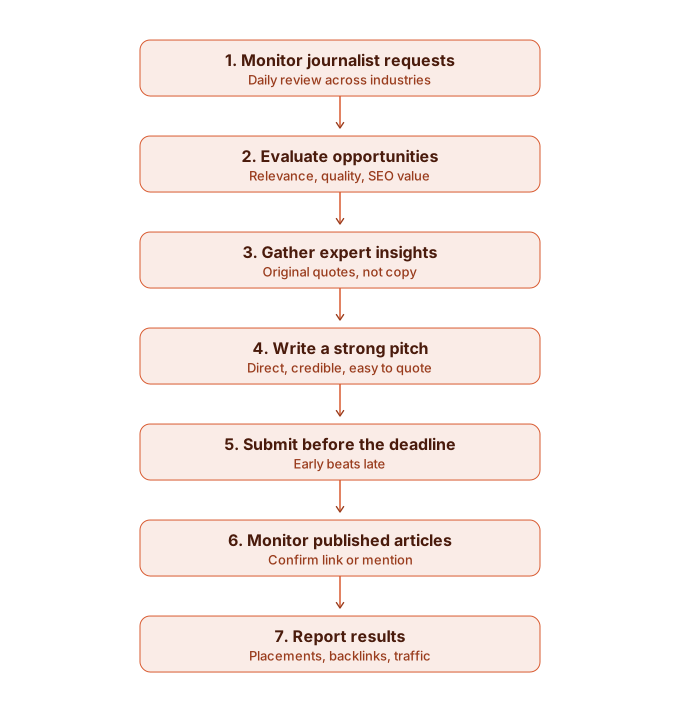
Although every agency has its own workflow, successful campaigns usually follow the same process.
Step 1: Monitor Journalist Requests
Journalists publish requests seeking expert opinions across hundreds of industries. A HARO specialist reviews these requests daily to identify opportunities relevant to the client’s expertise. Speed matters because many journalists stop reviewing submissions once they receive enough quality responses.
Step 2: Evaluate Opportunities
Not every request deserves a response. Experienced agencies evaluate opportunities based on factors such as:
- Topic relevance
- Publication quality
- Editorial standards
- Audience fit
- Likelihood of acceptance
- Potential SEO value
Skipping irrelevant opportunities allows more time for pitches with stronger chances of success.
Step 3: Gather Expert Insights
The best HARO responses are based on genuine expertise rather than generic marketing copy. Agencies often interview founders, subject matter experts, or internal specialists to collect original insights that journalists can quote directly. Original experiences usually perform far better than broad advice copied from existing articles.
Step 4: Write a Strong Pitch
A HARO response should answer the journalist’s question immediately. Strong pitches typically include:
- A direct answer
- Relevant experience
- Supporting examples
- Credible statistics (when appropriate)
- Clear language
- Professional formatting
Journalists rarely have time to edit lengthy promotional responses. The goal is to make their job easier.
Step 5: Submit Before the Deadline
Most journalist requests have strict deadlines. Submitting early often increases the chances of being reviewed before the inbox becomes crowded. Late submissions rarely receive consideration.
Step 6: Monitor Published Articles
If a response is selected, the agency tracks publication and confirms whether the article includes a backlink, brand mention, or both. Not every successful quote results in a link because editorial decisions remain entirely with the publisher.
Step 7: Report Results
Professional HARO services provide transparent reporting that typically includes:
- Opportunities reviewed
- Pitches submitted
- Published placements
- Earned backlinks
- Referring domains
- Domain authority or authority metrics
- Referral traffic where available
Consistent reporting helps businesses evaluate campaign performance over time.
Why Businesses Hire HARO Agencies
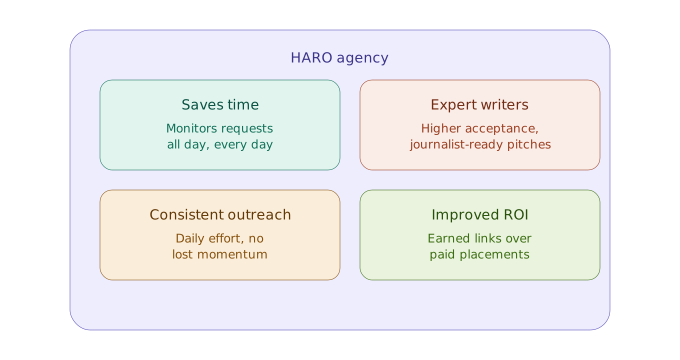
Managing HARO internally can become overwhelming, especially for busy founders and marketing teams. Professional agencies streamline the process while improving the quality of submissions.
Saves Significant Time:
HARO requests arrive throughout the day. Reviewing hundreds of opportunities, selecting relevant ones, interviewing experts, writing responses, and tracking placements can consume many hours every week. Outsourcing allows businesses to stay focused on operations while specialists manage outreach.
Better Pitch Quality:
Experienced HARO writers understand what journalists want. Instead of promotional language, they create concise responses that answer questions directly and provide useful insights. This significantly improves the likelihood of publication.
Higher Acceptance Rates:
No agency can guarantee placements. However, experienced teams generally achieve stronger results because they know:
- Which opportunities to pursue
- How journalists evaluate responses
- What makes a quote publishable
- How to present expert opinions effectively
Consistent Outreach:
Successful HARO campaigns require daily effort. Many businesses lose momentum after a few weeks because monitoring requests becomes difficult alongside other marketing tasks. Professional agencies maintain consistency throughout the campaign.
Access to Experienced Writers:
Great HARO responses require more than SEO knowledge. They require journalism-style writing. Professional agencies often employ writers experienced in:
- Digital PR
- Editorial writing
- Media outreach
- Storytelling
- Founder positioning
This combination produces stronger pitches than generic SEO copywriting.
Improved Return on Investment:
Instead of paying for questionable backlinks, businesses invest in earning editorial mentions that can provide:
- SEO value
- Brand credibility
- Referral traffic
- Media exposure
- Long-term authority
Editorial placements often continue delivering value long after publication.
Benefits of HARO Link Building
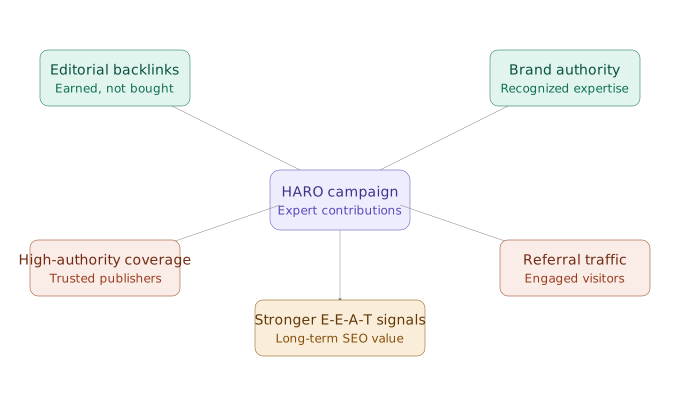
A well-managed HARO campaign delivers benefits beyond backlinks alone.
Editorial Backlinks
HARO backlinks are earned because journalists consider your contribution valuable. Editorial links are generally more trusted than links acquired through manipulative tactics.
Greater Brand Authority
Being quoted by respected publications strengthens your reputation. Even readers who never click your website begin associating your business with expertise. Over time, repeated media mentions build credibility within your industry.
High-Authority Media Coverage
HARO opportunities often come from established publishers covering business, technology, finance, healthcare, SaaS, marketing, and many other industries. Appearing in respected publications can significantly strengthen your online presence.
Referral Traffic
Readers interested in your expertise may visit your website directly from published articles. Although referral traffic varies by publication, visitors arriving through trusted editorial content are often highly engaged.
Stronger E-E-A-T Signals
Google emphasizes Experience, Expertise, Authoritativeness, and Trustworthiness. Editorial mentions from respected publications help reinforce these signals by demonstrating that independent sources recognize your expertise. While no single backlink guarantees rankings, consistent editorial recognition supports broader SEO efforts.
Long-Term SEO Value
Unlike temporary advertising campaigns, editorial backlinks can continue generating value for years. They may contribute to:
- Higher domain authority
- Improved topical authority
- Increased organic visibility
- More natural backlink opportunities
- Stronger brand recognition
The greatest value comes from earning links naturally through expert contributions rather than attempting to manipulate search rankings.
How to Choose the Best HARO Link Building Service
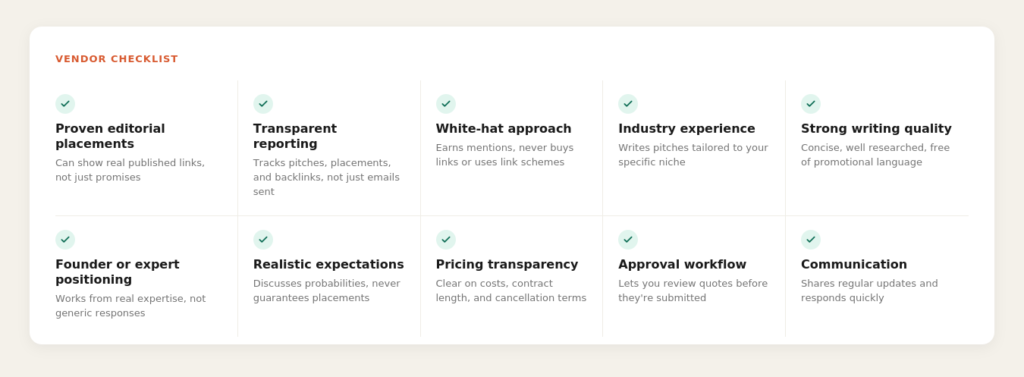
Not all HARO providers deliver the same quality. Some focus on genuine journalist outreach, while others rely on shortcuts that can hurt your SEO.
Use this checklist when comparing agencies.
Proven Editorial Placements:
Ask for examples of published placements. Reputable agencies should be able to show links or screenshots from previous campaigns without making unrealistic promises.
Transparent Reporting:
A trustworthy provider explains:
- Opportunities reviewed
- Pitches submitted
- Placements earned
- Backlinks acquired
- Media mentions
- Campaign progress
Avoid agencies that only report the number of emails sent.
White-Hat Approach:
The agency should follow Google’s guidelines by earning editorial mentions rather than purchasing backlinks or participating in link schemes. Ask how they source opportunities and whether journalists choose placements independently.
Industry Experience:
Different industries require different writing styles. A SaaS company, healthcare provider, and legal firm all need pitches tailored to their audience. Choose an agency with experience in your niche whenever possible.
Strong Writing Quality:
Request sample responses.
Good HARO pitches are:
- Concise
- Helpful
- Well researched
- Easy to quote
- Free from promotional language
Poor writing dramatically reduces acceptance rates.
Founder or Expert Positioning:
Journalists prefer quotes from real experts. A good agency works closely with founders or subject matter experts instead of inventing generic responses. This creates more authentic and publishable content.
Realistic Expectations:
Be cautious of agencies promising guaranteed placements. HARO is competitive, and journalists make the final decision. Reliable providers discuss probabilities rather than guarantees.
Pricing Transparency:
The agency should clearly explain:
- What’s included
- Reporting frequency
- Contract length
- Additional costs
- Cancellation policy
Hidden fees often indicate poor business practices.
Approval Workflow:
Many businesses want to review responses before submission. Ask whether you can approve quotes or provide additional insights before pitches are sent.
Communication:
Consistent communication matters. Choose a provider that shares updates regularly and responds quickly to questions.
Red Flags to Avoid
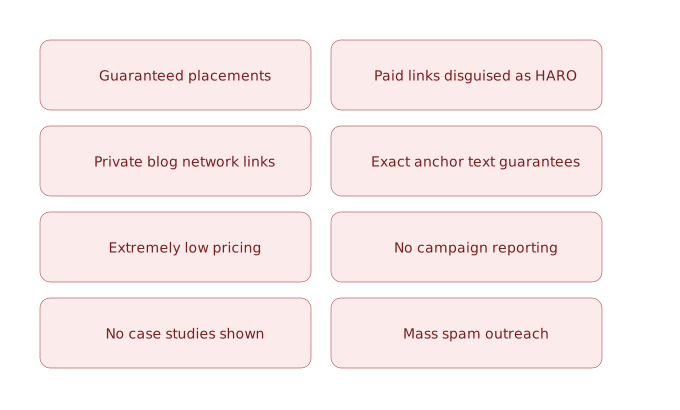
Not every HARO service follows ethical practices. Watch for these warning signs.
Guaranteed Placements:
No agency can guarantee publication because journalists decide which sources to quote. Promises such as “Guaranteed Forbes backlinks” should raise concerns.
Paid Editorial Placements Disguised as HARO:
HARO is based on editorial selection. If an agency offers guaranteed placements in exchange for payment, those opportunities are unlikely to be genuine HARO campaigns.
Private Blog Networks (PBNs):
Some providers advertise HARO while actually building links through low-quality networks. Ask where backlinks come from. Editorial media mentions are very different from PBN links.
Exact Anchor Text Guarantees:
Journalists decide how to reference sources. Agencies cannot control anchor text without influencing editorial decisions.
Extremely Low Pricing:
Quality HARO campaigns require experienced writers, researchers, and account managers. Very cheap services often rely on templates and mass submissions.
No Campaign Reporting:
You should know exactly what work has been completed.
Transparent reporting builds trust and demonstrates accountability.
No Case Studies:
While agencies may keep some client campaigns confidential, they should still provide examples of successful work.
Mass Spam Outreach:
HARO is about quality—not volume. Sending hundreds of generic pitches rarely produces consistent results.
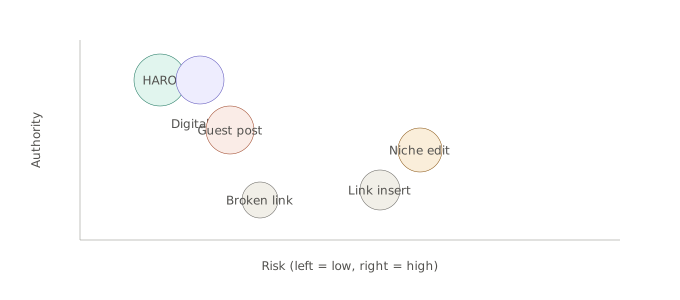
HARO vs Other Link Building Strategies
Different link-building methods serve different purposes.
| Strategy | Authority | Scalability | Risk | Cost | Best For |
| HARO | Very High | Medium | Low | Medium–High | Editorial media coverage |
| Guest Posting | High | High | Low | Medium | Industry blogs |
| Link Insertions | Medium–High | Medium | Medium | Medium | Existing content |
| Broken Link Building | Medium | Medium | Low | Medium | Resource pages |
| Digital PR | Very High | Medium | Low | High | Brand campaigns |
| Niche Edits | Medium | High | Medium | Medium | Contextual backlinks |
Each strategy has strengths.
Many successful SEO campaigns combine multiple approaches instead of relying on a single tactic.
HARO vs Qwoted vs Featured
HARO is no longer the only platform connecting journalists with expert sources.
Several alternatives have become popular.
| Platform | Best For | Main Advantage |
| HARO | Broad media opportunities | Large journalist network |
| Qwoted | Expert positioning | High-quality professional opportunities |
| Featured | Thought leadership | Easier submission process |
| Help a B2B Writer | B2B companies | Marketing and SaaS opportunities |
HARO:
Offers opportunities across many industries and remains one of the best-known journalist request platforms.
Qwoted:
Focuses on connecting verified experts with journalists, making it especially valuable for executives and industry specialists.
Featured:
Allows experts to answer questions from publishers and build authority through published contributions.
Help a B2B Writer:
Primarily serves B2B technology, SaaS, and marketing companies looking for targeted media opportunities. Many agencies monitor multiple platforms instead of relying solely on HARO, increasing the number of relevant opportunities available for clients.
HARO Pricing
Pricing varies depending on campaign scope, competition, and the level of service provided.
Common pricing models include:
- Monthly retainers
- Campaign-based pricing
- Custom enterprise packages
Several factors influence pricing:
- Industry competitiveness
- Number of expert profiles
- Volume of pitches
- Writing complexity
- Reporting requirements
- Account management
Higher-quality services generally cost more because they involve experienced Digital PR specialists, skilled writers, and personalized outreach rather than automated submissions.
Businesses should evaluate value rather than choosing the lowest price.
One placement from a respected publication may provide significantly greater long-term value than dozens of low-quality backlinks.
Is HARO Worth It?
For many businesses, yes—but only when expectations are realistic.
Does HARO Still Work?
Yes.
Journalists continue seeking expert sources for news stories, industry analysis, and feature articles.
However, competition has increased, making quality responses more important than ever.
How Long Does It Take?
Results vary.
Some businesses secure placements within weeks, while others require several months of consistent outreach.
Editorial link building is a long-term investment rather than an overnight solution.
What Success Rate Is Realistic?
Acceptance rates depend on:
- Industry
- Expertise
- Pitch quality
- Competition
- Publication standards
No reputable agency promises every submission will be published.
Is HARO Safe?
Yes—when practiced ethically.
Because journalists independently choose sources, HARO aligns with Google’s preference for naturally earned editorial links.
Can Small Businesses Benefit?
Absolutely.
Journalists value expertise, not company size.
Founders with genuine experience often compete successfully against much larger brands by providing useful, original insights.
Common HARO Mistakes
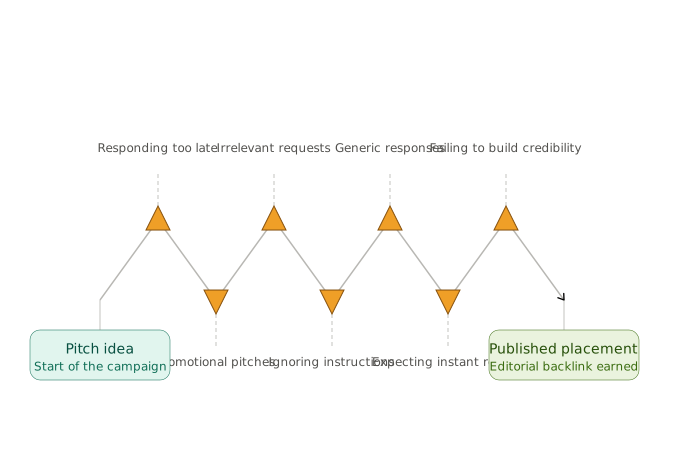
Even experienced marketers make mistakes that reduce their chances of earning editorial backlinks. Avoid these common pitfalls to improve your campaign results.
Responding Too Late:
Journalists often receive dozens of responses within hours. Delayed submissions are less likely to be reviewed.
Writing Promotional Pitches:
HARO isn’t an advertising platform. Journalists want useful insights, not product pitches. Focus on answering the question rather than promoting your business.
Replying to Irrelevant Requests:
Submitting pitches outside your area of expertise wastes time and lowers your chances of success. Only respond to queries where you can provide genuine value.
Ignoring Instructions:
Many journalists specify word counts, formatting requirements, or the type of expert they’re looking for. Failing to follow instructions can lead to immediate rejection.
Using Generic Responses:
Copy-and-paste answers rarely stand out. Tailor every pitch to the specific request and publication.
Expecting Instant Results:
HARO is a long-term Digital PR strategy. Consistent outreach typically produces better results than expecting immediate placements.
Failing to Build Credibility:
Include relevant credentials, years of experience, or notable achievements to help journalists trust your expertise.
Frequently Asked Questions
What is a HARO Link Building Service?
A HARO Link Building Service manages journalist outreach on behalf of businesses by identifying relevant media requests, writing expert responses, submitting pitches, and tracking editorial placements that may include backlinks.
Is HARO still effective?
Yes. HARO remains an effective Digital PR strategy when used consistently with high-quality, expert-driven responses. Success depends on relevance, timing, and the quality of your pitches.
How much does HARO cost?
Pricing varies depending on campaign scope, industry, reporting requirements, and the level of support provided. Most professional agencies offer customized pricing instead of fixed packages.
How long does HARO take to produce results?
Some businesses earn placements within a few weeks, while others may need several months of consistent outreach. Editorial coverage depends on journalist selection rather than guaranteed placements.
Can HARO improve SEO?
Yes. HARO can improve SEO indirectly by earning editorial backlinks, increasing brand visibility, driving referral traffic, and strengthening your website’s authority.
Are HARO backlinks dofollow?
It depends on the publication. Some websites provide dofollow links, others use nofollow attributes, and some may include only a brand mention without a hyperlink.
Can I do HARO myself?
Yes. Many businesses manage HARO internally, but it requires daily monitoring, strong writing skills, and consistent effort. Outsourcing can save time and improve efficiency.
Is HARO considered white-hat SEO?
Yes. HARO follows white-hat SEO principles because journalists independently choose which expert responses to publish based on editorial merit.
What industries benefit most from HARO?
HARO works well for SaaS companies, technology businesses, healthcare providers, finance professionals, legal firms, e-commerce brands, agencies, consultants, and other businesses with subject matter expertise.
Can startups benefit from HARO?
Absolutely. Journalists often value unique insights and real-world experience more than company size. Startups with knowledgeable founders can earn valuable editorial coverage.
Conclusion
A HARO Link Building Service is one of the most effective ways to earn high-authority editorial backlinks through genuine expertise rather than paid or manipulative tactics.
The best campaigns focus on identifying relevant journalist opportunities, crafting thoughtful responses, and consistently providing valuable insights that publishers want to feature. While results aren’t guaranteed, successful HARO campaigns can strengthen brand authority, generate referral traffic, improve E-E-A-T signals, and support long-term SEO growth.
When choosing a provider, prioritize transparency, proven experience, quality writing, and ethical outreach practices over unrealistic guarantees or cheap pricing. A trustworthy agency will explain its process clearly, provide detailed reporting, and set realistic expectations about editorial placements.
If your business wants to build a stronger backlink profile through trusted media coverage, consider requesting a consultation or campaign audit to determine whether a professional HARO Link Building Service aligns with your SEO and Digital PR goals.
