
HARO (Help A Reporter Out) has been the go-to platform for journalists seeking expert sources for over a decade.
But here’s the reality: HARO alternatives have become increasingly valuable.
The original platform faces significant challenges: overcrowded query feeds, low response rates for regular users, intense competition from thousands of other sources, and a subscription model that costs $150+/year.
Meanwhile, newer platforms specifically designed for PR professionals, backlink builders, and thought leaders are emerging with better features, higher success rates, and more targeted opportunities.
If you’re looking for HARO alternatives, you’re not alone. Thousands of PR professionals, content marketers, and SEO specialists are exploring other platforms that offer better ROI, easier navigation, and higher-quality journalist connections.
This guide covers the best HARO alternatives available in 2026, how they compare, and how to choose the right one for your specific goals.
Table of Contents
What is HARO & Why Look for Alternatives?
Understanding HARO
HARO is an email-based platform that connects journalists, podcasters, and content creators with expert sources.
Here’s how it works:
1. Journalists post queries (usually 3 times per day)
2. Sources receive emails with these queries
3. Sources submit relevant answers (usually with contact info)
4. Journalists select the best answers and feature them in articles
5. Sources get quoted, linked, and promoted
It’s a legitimate way to build authority, earn backlinks, and get media coverage.
Why the Original HARO Has Limitations
The original HARO has limitations which faces challenges to some extent.
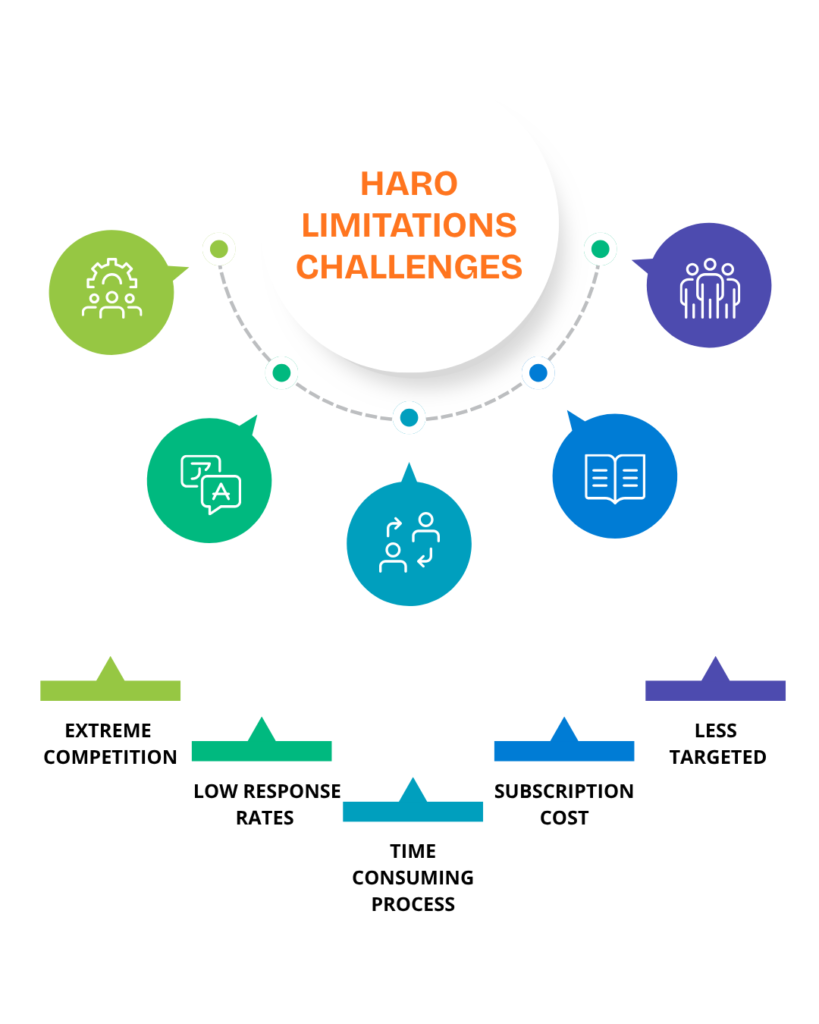
Challenge 1: Extreme Competition
Each query receives 50-300+ responses from sources worldwide.
Your answer competes against hundreds of others. Standing out is incredibly difficult.
Challenge 2: Low Response Rates
Even experienced HARO users report that only 1-2% of their responses result in published mentions.
That means submitting 100 responses to potentially get quoted 1-2 times.
Challenge 3: Time-Consuming Process
Checking emails 3x daily, reviewing queries, crafting personalized responses—this takes 5-10 hours per week for professional results.
Challenge 4: Subscription Cost
HARO premium costs $150+/year. If you’re not getting published frequently, ROI is questionable.
Challenge 5: Less Targeted
HARO serves journalists across ALL industries and niches.
You might be perfect for a query, but it’s overshadowed by 200 other responses.
Best HARO Alternatives for 2026
Here are the most effective HARO alternatives, with a detailed analysis of each.
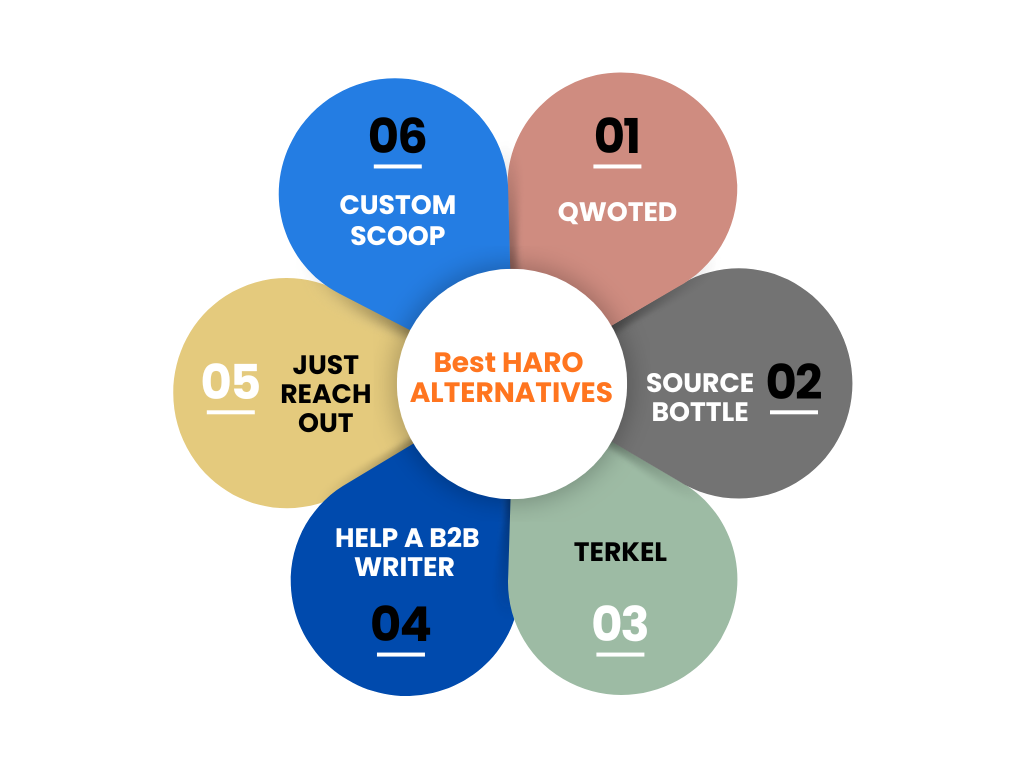
Alternative 1: Qwoted
What it is: A journalist-source matching platform specifically designed for higher-quality connections.
How it works:
1. Journalists post more specific, curated queries
2. Qwoted matches journalists with relevant sources based on expertise
3. Sources receive fewer, more targeted opportunities
4. Direct communication between journalist and source
Key features:
– Targeted pitch matching (not mass queries)
– Lower volume of opportunities (but higher quality)
– Direct journalist relationships
– Media coverage tracking
Pros:
– Much less competition than HARO (10-30 responses vs 300+)
– Higher quality journalist connections
– Better success rate (5-10%)
– More transparent matching algorithm
Cons:
– Smaller journalist network than HARO
– Fewer daily queries
– Premium tier required for best features
– Requires a complete, detailed profile
Best for: Thought leaders with specific expertise, PR professionals seeking quality over quantity, niche industry experts
Pricing: Free with premium options ($99+/month)
Success rate: 5-10% of submissions result in coverage
Alternative 2: SourceBottle
What it is: A platform connecting journalists with expert sources, optimized for PR and media relations.
How it works:
1. Journalists post queries on the platform
2. Sources can browse and respond to relevant queries
3. Direct messaging with journalists
4. Analytics tracking
Key features:
– Custom source profiles with credentials
– Query browsing and filtering
– Direct journalist contact
– Media coverage tracking
– Mobile app available
Pros:
– Good balance of opportunity volume and quality
– User-friendly interface
– Strong journalist community (especially UK-based)
– Analytics show which queries convert
– Affordable pricing
Cons:
– Smaller than HARO (fewer queries)
– Slightly slower response times from journalists
– Limited integration with other tools
Best for: UK-based PR professionals, small agency operators, industry experts seeking balanced volume
Pricing: Free or premium ($29-99/month)
Success rate: 3-8% of submissions result in coverage
Alternative 3: Terkel
What it is: A research platform that connects survey creators with expert respondents and sources.
How it works:
1. Researchers post questions/surveys
2. Sources submit detailed answers
3. Researchers publish findings with source attribution
4. Sources get quoted and linked in research articles
Key features:
– Research-focused (surveys, interviews, data)
– Long-form answer format
– Direct researcher relationships
– Citation tracking
– Content library
Pros:
– Less competition (more niche)
– Higher-quality answer requirements (better coverage)
– Opportunities for thought leadership
– Good for building backlinks (research-based)
– Relatively newer platform (less saturated)
Cons:
– Fewer daily opportunities than HARO
– Requires longer answer format (more time)
– Smaller audience reach
– Newer platform (fewer journalists)
Best for: Industry experts, data-driven professionals, thought leaders, B2B companies, consultants.
Pricing: Free to participate (researchers pay)
Success rate: 8-15% of submissions result in coverage
Alternative 4: Help a B2B Writer
What it is: A platform specifically designed for B2B writers to find and connect with expert sources.
How it works:
1. Writers post specific source requests
2. Sources pitch their expertise
3. Writers directly contact sources
4. Sources contribute to articles/case studies
Key features:
– B2B focused (less consumer-oriented)
– Specific role-based matching
– Writer requests are very targeted
– CMS integration tools
– Networking opportunities
Pros:
– Highly targeted (B2B focus)
– Lower competition (niche audience)
– Higher success rate (10-20%)
– Good for thought leadership
– Quality writer relationships
– Affordable
Cons:
– Smaller platform (fewer queries)
– Limited international writers
– Requires specific B2B expertise
– Less mainstream visibility
Best for: B2B experts, SaaS professionals, enterprise solution providers, consultants, technical experts
Pricing: Free with premium features ($49-99/month)
Success rate: 10-20% of submissions result in coverage
Alternative 5: JustReachOut
What it is: An outreach platform combining journalist databases with pitch distribution.
How it works:
1. You access journalist/media contact databases
2. Search for relevant journalists in your niche
3. Send custom pitches directly
4. Track campaign results
5. Integrated media monitoring
Key features:
– Journalist database (50,000+ contacts)
– Email campaign tools
– Pitch templates
– Media monitoring
– Analytics dashboard
Pros:
– Complete control over outreach (you contact journalists directly)
– Larger journalist network
– Better for proactive pitching (not just responding)
– Good analytics
– No competition (direct pitching)
Cons:
– Requires more work (you initiate all contact)
– Higher outreach skills needed
– Better for agencies than individuals
– Requires email marketing experience
Best for: Agencies, marketing teams, companies with regular PR needs, proactive communicators
Pricing: $99-299/month (subscription required)
Success rate: 5-15% depending on pitch quality
Alternative 6: CustomScoop
What it is: A journalist monitoring and connection platform that alerts you to relevant media requests.
How it works:
1. Set up keyword alerts for your expertise
2. Receive real-time alerts when journalists seek sources
3. Quick-respond to opportunities
4. Track results
Key features:
– Real-time journalist alerts
– Keyword-based matching
– Quick response capability
– Media coverage tracking
– Integration with other tools
Pros:
– Real-time alerts (beat other sources)
– Automated matching
– Clean interface
– Good for time-sensitive coverage
– Affordable
Cons:
– Smaller journalist network
– Alert quality varies
– Requires quick responses
– Less community aspect
Best for: Busy executives, time-sensitive industries, reactive responders, breaking news experts
Pricing: $79-199/month
Success rate: 5-10% of responses result in coverage
Comparison Table: HARO Alternatives at a Glance
How to Choose the Right HARO Alternative
Selecting the right platform depends on your specific goals, budget, and expertise.
Decision 1: What’s Your Primary Goal?
For backlinks/SEO:
– Best: Terkel, Qwoted, Help a B2B Writer
– Why: Research-focused platforms tend to get more links
For thought leadership/authority:
– Best: Qwoted, SourceBottle, Help a B2B Writer
– Why: Quality publications, credible journalists
For brand awareness:
– Best: HARO, JustReachOut, CustomScoop
– Why: Larger reach, more coverage opportunities
For time efficiency:
– Best: CustomScoop, SourceBottle, Help a B2B Writer
– Why: Less competition, quicker processes
Decision 2: What’s Your Budget?
Under $50/month:
– Best: SourceBottle ($29/month), Terkel (free)
– Also consider: HARO ($150/year = $12.50/month)
$50-100/month:
– Best: Help a B2B Writer ($49-99/month), Qwoted ($99/month)
– Good balance of features and cost
$100-300+/month:
– Best: JustReachOut ($99-299/month), CustomScoop ($79-199/month)
– Full-featured platforms with more control
Decision 3: What’s Your Expertise Level?
Beginner:
– Best: SourceBottle (easiest), Help a B2B Writer (most targeted)
– Why: Clear interfaces, fewer queries to sort through
Intermediate:
– Best: Qwoted, Terkel, CustomScoop
– Why: Good balance of opportunity and quality
Advanced/Agency:
– Best: JustReachOut (full control), Qwoted (enterprise features)
– Why: Agencies need scalability and control
Tips to Succeed With HARO Alternatives
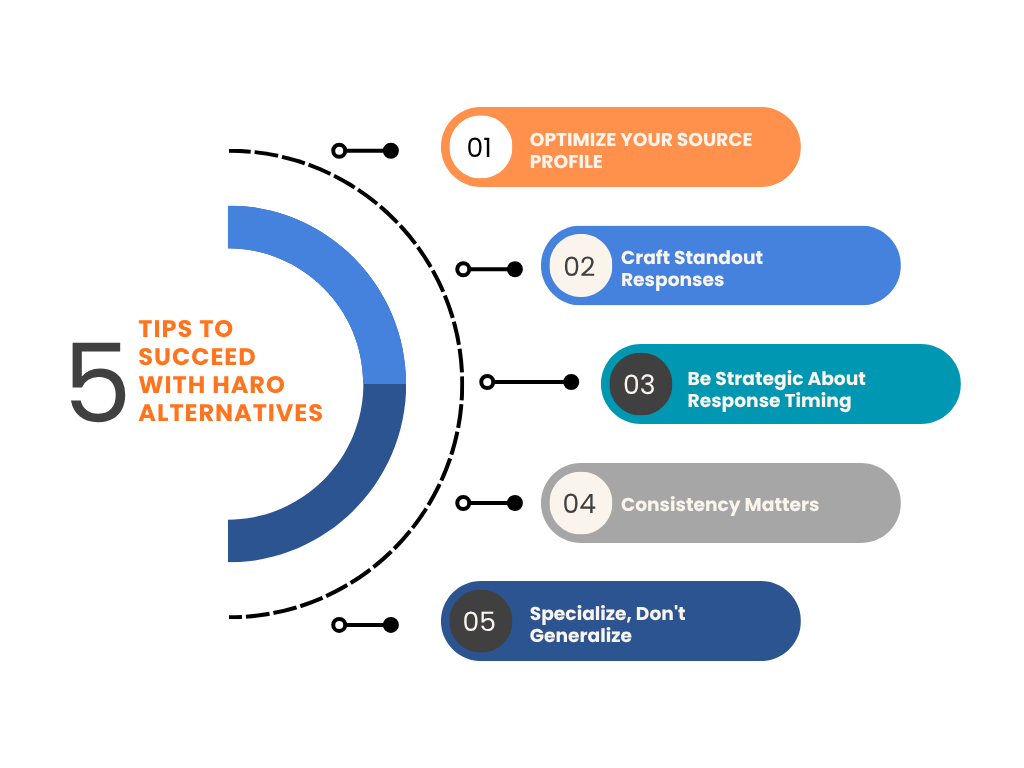
Tip 1: Optimize Your Source Profile
Most platforms succeed based on profile quality.
What to include:
– Clear expertise statement (what you’re an expert in)
– Relevant credentials and experience
– Past media appearances
– Professional photo
– Website/social links
– Specific industries you serve
Why it matters: Journalists review profiles before selecting sources. A weak profile = fewer selections.
Tip 2: Craft Standout Responses
Your response quality determines selection likelihood.
Best practices:
– Answer the exact question (don’t go off-topic)
– Keep it concise but comprehensive (150-300 words ideal)
– Lead with the main point
– Include relevant data or examples
– Use clear language (avoid jargon)
– Make it quotable (journalists want to use your words verbatim)
Example of strong response:
“The primary challenge small businesses face with email marketing is list quality, not tool selection. We work with 500+ small businesses annually, and 70% have list quality issues. The solution isn’t a premium tool—it’s implementing proper validation. We recommend starting with list cleaning before upgrading tools.”
Tip 3: Be Strategic About Response Timing
When you respond matters.
Best practices:
– Respond within 2 hours of query (you’ll be fresher in the journalist’s mind)
– Avoid responding during off-hours (the middle of the night looks suspicious)
– Check when journalists typically work (usually 9 am-5 pm their timezone)
– If the deadline is tight (6-12 hours), respond immediately
– For longer deadlines (3+ days), respond within the first 4 hours
Tip 4: Consistency Matters
One response is luck. Consistent responses build journalist relationships.
Best practices:
– Respond to 2-5 relevant queries daily
– Build a list of “favorite” journalists (those who repeatedly quote you)
– Follow up with journalists who quoted you (build relationships)
– Ask journalists for referrals to other outlets
– Consider recurring columns or features
Tip 5: Specialize, Don’t Generalize
Platforms succeed best when you’re the obvious expert.
Better approach:
– Target queries in your specific niche
– Skip queries outside your wheelhouse
– Build a reputation in one area before expanding
– Become known as “the” expert in something narrow
Common Mistakes to Avoid
Mistake 1: Sending Generic Responses
Generic responses get ignored or skipped.
Fix: Customize every response. Reference the journalist’s work if possible. Show you understand what they’re looking for.
Mistake 2: Targeting Irrelevant Queries
Responding to anything just to get coverage is counterproductive.
Fix: Only respond to queries where you’re genuinely the best source. Quality over quantity.
Mistake 3: Weak, Unfocused Answers
Long, rambling answers don’t get quoted.
Fix: Lead with your main point. Keep to 150-300 words. Make it quotable.
Mistake 4: Poor Profile Information
Journalists can’t select you if they can’t find relevant info.
Fix: Complete profile with credentials, expertise areas, past media appearances, and a photo.
Mistake 5: Ignoring Follow-Up Opportunities
If a journalist quotes you, that’s a relationship opportunity.
Fix: Follow up after publication. Thank them. Build the relationship for future features.
Mistake 6: Expecting Immediate Results
Some professionals get discouraged after 1-2 weeks of no results.
Fix: Commit to 30 days minimum. It takes time to build momentum. Professional average: 3-4 weeks before first publication.
HARO Alternatives Comparison: Which Is Best?
Best Overall: Qwoted
– Highest quality connections, success rate, balanced pricing
Best for Beginners: SourceBottle
– Easiest to use, affordable, good journalist community
Best for Backlinks: Terkel
– Research-focused content, high link potential, free to participate
Best for B2B: Help a B2B Writer
– Highly targeted B2B writers, the highest success rate, and affordable
Best for Agencies: JustReachOut
– Full control, journalist database, scalable, full features
Best for Breaking News: CustomScoop
– Real-time alerts, quick responses, good for time-sensitive experts
Frequently Asked Questions
What are the best HARO alternatives?
Top alternatives: Qwoted, SourceBottle, Terkel, Help a B2B Writer, JustReachOut, and CustomScoop. Choice depends on your goals and budget.
Are HARO alternatives worth it?
Yes, HARO alternatives worth it if you choose the right one for your goals. Success rates are typically 3-15% (vs 1-2% for HARO), making them better ROI.
Which is best for beginners?
SourceBottle is the most beginner-friendly. Clear interface, affordable, good community. Terkel is also good if you have research-focused expertise.
How long until I get published?
Typically, 2-4 weeks with consistent responses. Some people see results in 1 week, others take 6-8 weeks. Consistency matters more than speed.
Can I use multiple platforms simultaneously?
Yes. Many professionals use 2-3 platforms simultaneously (e.g., Qwoted + Terkel + Help a B2B Writer).
Which platform has the most opportunities?
HARO (original) has the most daily queries. Among alternatives, Qwoted and SourceBottle have the most volume.
How much time does this take?
Plan on 2-5 hours per week for best results. Less if you’re selective about which queries to respond to.
Do I need to be a big brand to succeed?
No. Individual experts, small consultants, and niche specialists often succeed better than big brands. Journalists prefer accessible experts.
Conclusion
HARO alternatives have become genuinely competitive with the original platform. In many cases, they offer better ROI, higher success rates, and more targeted opportunities.
The best choice depends on your specific situation:
– Want quality over quantity? Choose Qwoted
– Want ease of use? Choose SourceBottle or Help a B2B Writer
– Want backlinks? Choose Terkel
– Want complete control? Choose JustReachOut
– Want real-time alerts? Choose CustomScoop
The most successful PR professionals don’t choose just one platform. They combine 2-3 platforms based on their goals, ensuring consistent media coverage and sustained authority building.
Start with one platform that matches your goals. Give it 30 days of consistent effort. Then expand to additional platforms as needed.
The key to success with any platform is the same: targeted expertise, quality responses, and consistency.
Do that, and you’ll build authority faster than ever before.
