
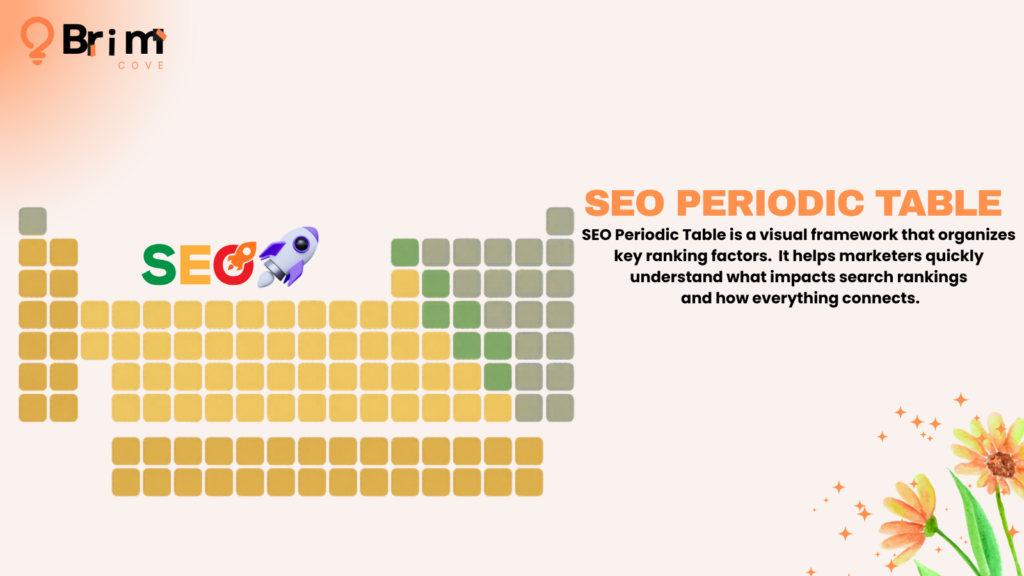
Every SEO professional eventually discovers the Periodic Table of SEO — a clever way to organize the dozens of signals Google uses to rank pages. What started as a fun visual from Search Engine Land back in 2011 has evolved into a practical framework that helps marketers focus on what actually moves the needle in 2026.
Unlike traditional checklists that feel overwhelming, the periodic table groups SEO elements into clear categories (Content, Technical, Authority, User Experience, and more). Each “element” represents a real ranking factor or signal you can influence.
This guide goes far beyond a simple list. You’ll get an updated 2026 version with modern additions like AI Overviews, entity SEO, and search experience optimization. I’ll explain every major category with real-world examples, show you exactly how to apply each element, and give you a practical 90-day plan plus a downloadable checklist. Whether you’re a beginner or an experienced SEO, this is the most complete resource you’ll find.
What Is the Periodic Table of SEO?
The Periodic Table of SEO is a visual framework that organizes key ranking factors and signals into categories, similar to the periodic table in chemistry. Each “element” is represented by a symbol (like Q for Quality Content or S for Site Speed) and grouped by theme.
The original idea was simple: make SEO less intimidating by showing that everything connects. In 2026, it’s more relevant than ever because Google’s algorithm now evaluates hundreds of signals at once — from content helpfulness to user satisfaction to AI-generated summaries.
The table doesn’t claim to be Google’s official list (no one outside Google knows the exact formula). Instead, it’s a battle-tested model built from years of testing, algorithm updates, and real campaign data. It helps you see the big picture instead of chasing the latest trend.
Why the Periodic Table Still Matters in 2026–2027
Google’s updates have become more frequent and more focused on user value. Core updates, Helpful Content updates, and the shift toward AI Overviews mean old tactics (keyword stuffing, thin content, PBNs) no longer work. The periodic table gives you a stable foundation that adapts to these changes.
It forces you to balance all categories instead of obsessing over just backlinks or keywords. Sites that use this framework consistently see steadier rankings, better, higher-quality, faster recovery after algorithm updates.
In short, it turns SEO from guesswork into a repeatable system.
The Modern Periodic Table of SEO (2026–2027 Edition)
Here’s the updated structure with the most important elements grouped by category. I’ve added new 2026 signals like AI content detection and search experience optimization.
Content Signals
Q – Quality | D – Depth | R – Relevance | F – Freshness | E – E-E-A-T |
U – Uniqueness | An – Answers User Intent | Cl – Clarity | Mm – Multimedia
Technical & Architecture Signals
C – Crawlability | S – Site Speed | M – Mobile-First | Ur – Clean URLs | Sc – Structured Data | Ca – Canonicalization | Js – JavaScript SEO | Ar – Architecture
Authority & Trust Signals
Ib – Inbound Links | Ex – External Citations | T – Trust | A – Authority | Br – Brand Signals | Cr – Creator Authority
User Experience & Engagement Signals
It – Intent Matching | Ae – Accessibility | Sa – Satisfaction | Tc – Task Completion | Ly – Locality (for local SEO)
Performance Signals
Cv – Core Web Vitals | Rv – Responsiveness | Vs – Visual Stability | Ue – User Engagement Metrics
AI & Emerging Signals (New for 2026)
Ai – AI Content Quality | Sge – SGE/AI Overview Readiness | En – Entity Understanding | Br – Brand in AI Answers
Content Signals Explained
Content is still king — but the definition of “good” content has changed.
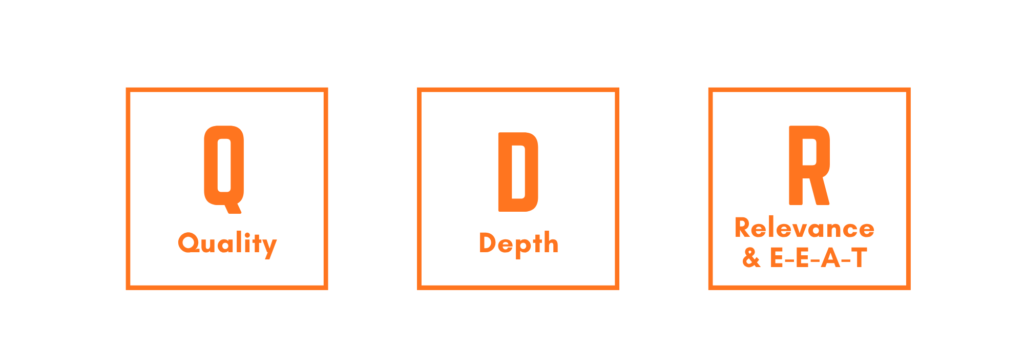
Q – Quality
Google’s Helpful Content system rewards content that demonstrates real expertise and solves problems completely. Thin, AI-generated filler content gets demoted.
D – Depth
Longer isn’t automatically better, but comprehensive coverage of a topic (including related questions) wins. Aim for depth that matches or exceeds top-ranking pages.
R – Relevance & E-E-A-T
Experience, Expertise, Authoritativeness, and Trustworthiness are now core ranking signals. Author bios, citations, and first-hand knowledge matter more than ever.
Technical & Architecture Signals
Even the best content fails if Google can’t crawl or understand it.
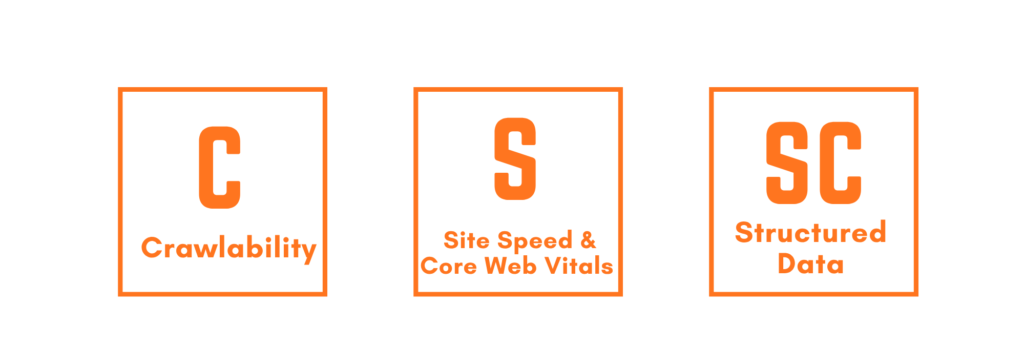
C – Crawlability
Clean internal linking, XML sitemaps, and proper robots.txt ensure all important pages get indexed.
S – Site Speed & Core Web Vitals
Pages that load fast and feel stable rank higher. Use PageSpeed Insights and fix Largest Contentful Paint, Cumulative Layout Shift, and Interaction to Next Paint.
Sc – Structured Data
Schema markup helps Google understand context and enables rich results in search.
Authority & Trust Signals
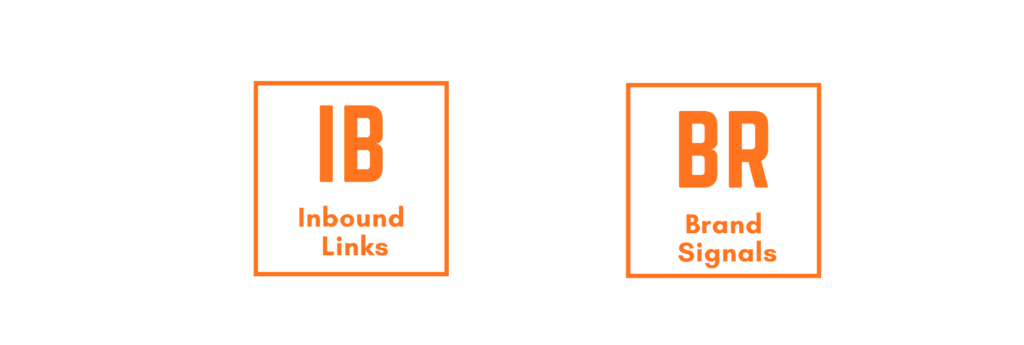
Ib – Inbound Libnks
High-quality, relevant backlinks remain powerful — but relevance and natural placement matter more than raw quantity or DR.
Br – Brand Signals
Mentions, searches for your brand name, and direct navigation traffic all strengthen authority.
User Experience & Engagement Signals
Google measures how real people interact with your pages. High dwell time, low bounce rate, and good click-through rates from search results are strong positive signals.
Performance Signals
Core Web Vitals are now direct ranking factors. Pages that feel fast and stable on mobile win more clicks and better positions.
AI & Emerging Signals in 2026–2027
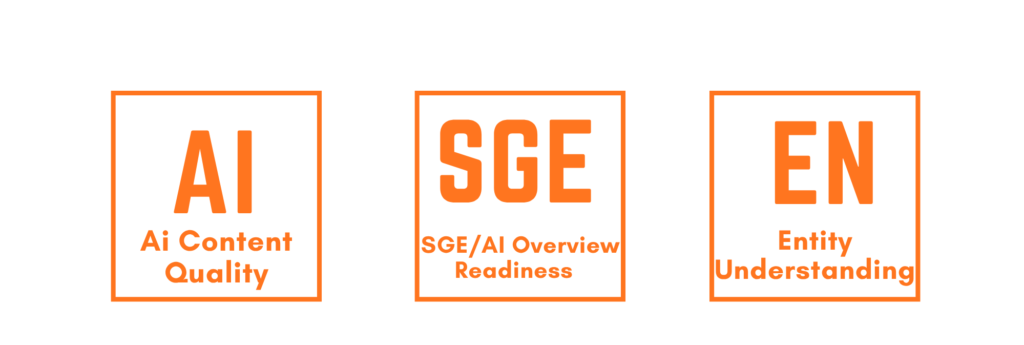
Ai – AI Content Quality
Google can detect low-effort AI content. Focus on human oversight, original research, and personal experience.
Sge – SGE/AI Overview Readiness
Content that answers questions clearly and is well-structured has a higher chance of appearing in AI summaries.
En – Entity Understanding
Build entity relationships (people, places, things) through consistent mentions, schema, and authoritative sourcing.
How to Use the Periodic Table in Your SEO Strategy
1. Audit your current site against each category.
2. Score yourself (1–10) on every major element.
3. Prioritize quick wins (technical fixes, content updates).
4. Build a 90-day plan focusing on 2–3 categories at a time.
5. Track progress monthly with rankings, traffic, and user metrics.
90-Day Implementation Plan
Days 1–30: Technical & Performance audit + fixes
Days 31–60: Content depth and E-E-A-T improvements
Days 61–90: Authority building and user experience optimization
Common Mistakes to Avoid
– Treating the table as a checklist instead of a balanced system
– Focusing only on links while ignoring user signals
– Ignoring AI readiness and structured data
– Updating content without refreshing technical elements
Conclusion
The Periodic Table of SEO is more than a pretty chart — it’s a proven framework for building sustainable rankings in 2026 and beyond. By balancing all the major signals instead of chasing single tactics, you create a site that Google wants to rank and that users want to visit.
Start with an honest audit using the categories above. Small, consistent improvements across multiple elements will compound into much stronger results than any single “hack.”
Ready to put the Periodic Table of SEO to work for your business? The Brimcove team specializes in turning frameworks like this into real growth. Book a free SEO audit and let’s build a strategy that lasts.
FAQs
What is a periodic table of SEO?
The periodic table of SEO is a visual framework that organizes all the key ranking signals and factors into logical categories, similar to the chemistry periodic table. Each element represents something Google evaluates — from content quality to site speed to user engagement. It helps marketers see the big picture instead of getting lost in hundreds of individual tactics. The modern version is updated for 2026 to include AI signals and E-E-A-T.
Why does SEO have a periodic table?
It was created to make SEO less overwhelming. Instead of a chaotic list of 200+ ranking factors, the table groups them into clear categories with symbols. This makes it easier to audit sites, plan content, and explain strategy to clients or teams. In 2026, it’s even more useful because Google’s algorithm has become more complex with AI integrations.
How is SEO in 2027 different from earlier versions?
By 2027, expect even stronger emphasis on AI-generated search summaries, entity understanding, and user satisfaction metrics. Helpful content and E-E-A-T will carry more weight. The periodic table evolves to include these new signals while the core categories (content, technical, authority, user experience) remain the foundation.
What are the main categories in the SEO periodic table?
The main categories are Content Signals, Technical & Architecture, Authority & Trust, User Experience & Engagement, Performance (Core Web Vitals), and emerging AI & Entity signals. Each category contains multiple specific elements you can influence.
How can beginners use the SEO periodic table?
Start by auditing your site against the major categories. Pick one weak area (like site speed or content depth) and improve it first. Use the table as a monthly checklist. It’s a great learning tool because it shows how everything connects instead of treating SEO as separate tasks.
Do search engines use this table directly?
No — Google doesn’t officially use or endorse any periodic table. It’s a community-created model based on years of testing and observation. However, the elements it lists are based on real ranking signals that Google does evaluate.
What practical benefits does the periodic table offer?
It helps you prioritize work, spot gaps quickly, explain SEO to stakeholders, and build more balanced strategies. Teams using it report fewer “flavor of the month” mistakes and steadier ranking growth over time.
How often should this SEO periodic table be updated?
Review and update your personal version every 6 months or after major Google updates. Core categories stay stable, but new signals (like AI readiness) get added as they become important.
Does AI SEO belong on a periodic table?
Yes — AI content quality and SGE readiness are now essential signals. They fit under emerging categories because Google actively detects low-effort AI content and rewards human-first, helpful material.
What are the most important elements for ranking?
No single element dominates, but Content Quality, E-E-A-T, Site Speed, and Relevance consistently have the biggest impact. Focus on balance across categories rather than obsessing over one.
Can the periodic table improve local SEO?
Absolutely. Locality, citations, reviews, and local user signals all have their place in the table. Local businesses benefit hugely from applying the framework to Google Business Profile optimization and location-specific content.
Is there a tool for generating an SEO periodic table?
There isn’t an official automated tool, but you can create one in spreadsheets or use templates from SEO communities. Some agencies offer customized versions for clients.
How to measure progress using SEO periodic table elements?
Track rankings, organic traffic, and conversion rates before and after improvements in each category. Use tools like Google Search Console, Ahrefs, and PageSpeed Insights. Review every quarter and adjust focus areas.
Can focusing on fewer elements still boost rankings?
Yes — especially if you fix major weaknesses first. Improving just site speed and content depth often delivers bigger gains than spreading effort thinly across everything. Start with your lowest-scoring categories.
Are all elements equally important?
No. Content quality and E-E-A-T usually have more weight than minor technical details. However, ignoring any category long-term creates weak spots that algorithms eventually punish.
How to learn the periodic table of SEO quickly?
Print or save the visual chart. Spend one week auditing your site against each category. Then pick one category per month to improve. Pair it with daily reading of Google’s official guidelines and SEO news sites.
What mistakes to avoid when using the periodic table?
Don’t treat it as a rigid checklist or chase every element equally. Avoid outdated elements from older versions. Most importantly, don’t forget that real user value always trumps mechanical optimization.
Do backlinks still matter in the periodic table?
Yes — they remain a major authority signal, but relevance and natural placement matter more than quantity. They sit in the Authority category alongside brand signals and trust factors.
What’s the difference between a factor and a signal?
A factor is something you directly control (like page speed). A signal is what Google infers from many factors combined (like overall page quality). The periodic table mixes both for practical use.
How to integrate the periodic table into your SEO workflow?
Add it to your monthly audit checklist. Use it when planning content calendars, technical fixes, and link-building campaigns. Share it with clients or teams to align everyone on priorities. Review it after every major Google update.
This 2026 version of the Periodic Table of SEO is designed to be your go-to framework for years to come. Use it consistently, focus on user value, and you’ll build rankings that last through algorithm changes.
